Afternoons with Mary: “On my Mind and In My Spirit”

After nine long years of procrastination and skittishness, I’ve worked up the gumption to share the story of my rekindled relationship with the beloved caregiver of my youth. The story will unfold in several chapters. If you’d like to read the origins of this journey, just click here: I Am Mae Mobley


On a steamy afternoon during the troubled summer of 2016, I finally worked up the courage to call Mary Darian, the intrepid woman who half-raised me. Though I loved Mary dearly, I’d failed as an adult to stay in close touch. As each ringy-dingy sounded, I worried, whispering my introductory lines again and again. A waste of energy this. Mary knew my voice immediately—“Angel Face, is that you?” I pictured the tall, confident young woman who used to drive me to McDonald’s for a Big Mac after middle school, and let go a grateful sigh. I was no longer a school girl, of course, and Mary had long moved on from being our family’s housekeeper, but her voice still brimmed with warmth and affection.

I caught her up on family this and thats. We exchanged stories about my mother—“Now she was a real lady … ” Mary gave a chuckle. “And what a seamstress!” She’d long admired my mother’s knack with a needle, and one of her lively descriptions came to mind: Your mother made a white jacket for her new formal gown with shells around the midriff … she once penned to me at summer camp. Wow! When the lady moves, she gets momentum and never stops … I think she’s going to wear it with her sexy red sandals!

Though Mary had never much liked talking about herself, she finally told me she’d recently had a fall. “But Lou took such good care of me I’m already back on my feet!” Lou is Mary’s daughter, as loyal and kind as they come, and I noted as much. Hesitant again in light of this news (was this the time to worm my way into Mary’s life?), I took a deep breath and asked if I might drop by for a visit. “Why sure, anytime!” she said. Then a pause. “Well, anytime other than Wednesdays … I still get out for my Bible study on Wednesdays.” Smiling, I suggested the following Thursday and our plans were set.

Eighty then, Mary lived alone in the home in west Atlanta that she and her husband had moved into in the late sixties. A one-story with wood siding and four inviting windows across the front, I’d been there as a child. As I drove between sprawling azaleas lining the driveway and parked beneath the shade of a generous hardwood, I found it as cozy and comfortable as it was back then, only better. Previously a neutral cream, it had been painted a bright banana yellow. The shutters and trim, dark navy before, had gone lime green. The effect was bold and welcoming, as if the house itself wore a wry grin for neighbors and strangers alike. Perfect, I thought. Mary through and through.
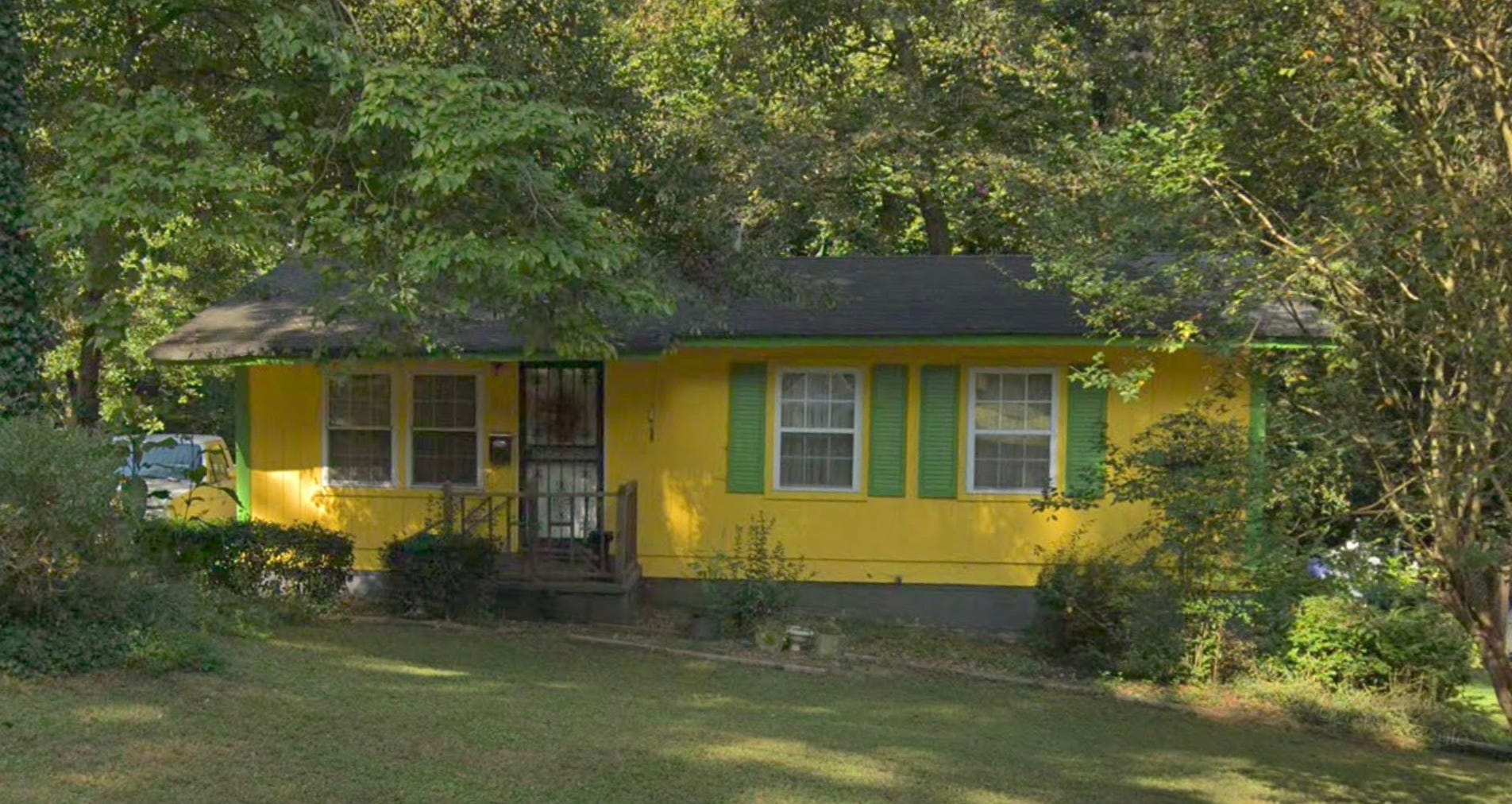
Mary’s home for over fifty years

“Come on in!” Mary said with a yelp of pleasure, and squeezed me tight. As we walked inside, she limped a little and gripped the back of a chair. I winced, reached to help, but she brushed it off. We sat side-by-side on her couch and studied the faces, many of them Mary-like, smiling out from the abundance of photos in her living room. One by one, she proudly identified family—the three sons I’d once known now become men, the late husband I never met, the many beloved grandchildren and great-grandchildren and of course, Lou, who showed up toward the end of our visit, sacks of groceries spilling from her arms as she corralled her little granddaughter through the door.

Mary had visitors most every day, family and more. She bragged on her neighbors and beaming, described the teenaged boy from her church who dropped in often to check on her. We reminisced about my parents. She asked about my children and my writing and just like that, the gap of years since we’d spent time together fell away. We joked about my older brothers’ teenaged exploits of long ago, and she said how sorry she was about the oldest, Ed, who’d been gone nine years.

“Your mama called me,” she said, her eyes damp. “More than once after he passed. Just to talk. A mother shouldn’t have to lose her child.”

“No, she shouldn’t,” I agreed, my voice wobbly. Mary took my hand and I mentioned that I’d been thinking about her a lot recently … “Especially since I rewatched The Help. Have you seen that movie?”

“Sure have,” Mary said, her tone wary.

“You know, it has its faults but it made me realize I never took the time to really get to know you … ” I began to sweat. “I guess what I’m trying to say is I’d like to learn your story, Mary. It’s something I should have done a long time ago. I’d like to know about you and your past, the way you’ve always known about me and mine.”

Her soft gaze clouded in bemusement, maybe disbelief. It wasn’t like Mary to be at a loss for words, and I looked away. Maybe I was being pushy. Maybe I should have kept my mouth good and shut.

“Well, honey,” she said finally, grinning. “It’s not all that interesting of a story, but I can probably come up with a thing or two.”

I laughed in relief, and we agreed I should return in two weeks armed with pen and paper and I-phone microphone. I wasn’t sure exactly what I would do with what she chose to share—blog? book? keep in my heart?—but I left excited about what lay ahead and hurried home to call my sister in Pennsylvania. Ten when our parents hired Mary at eighteen, JoJo loved Mary too, if in a different, maybe even deeper, way.
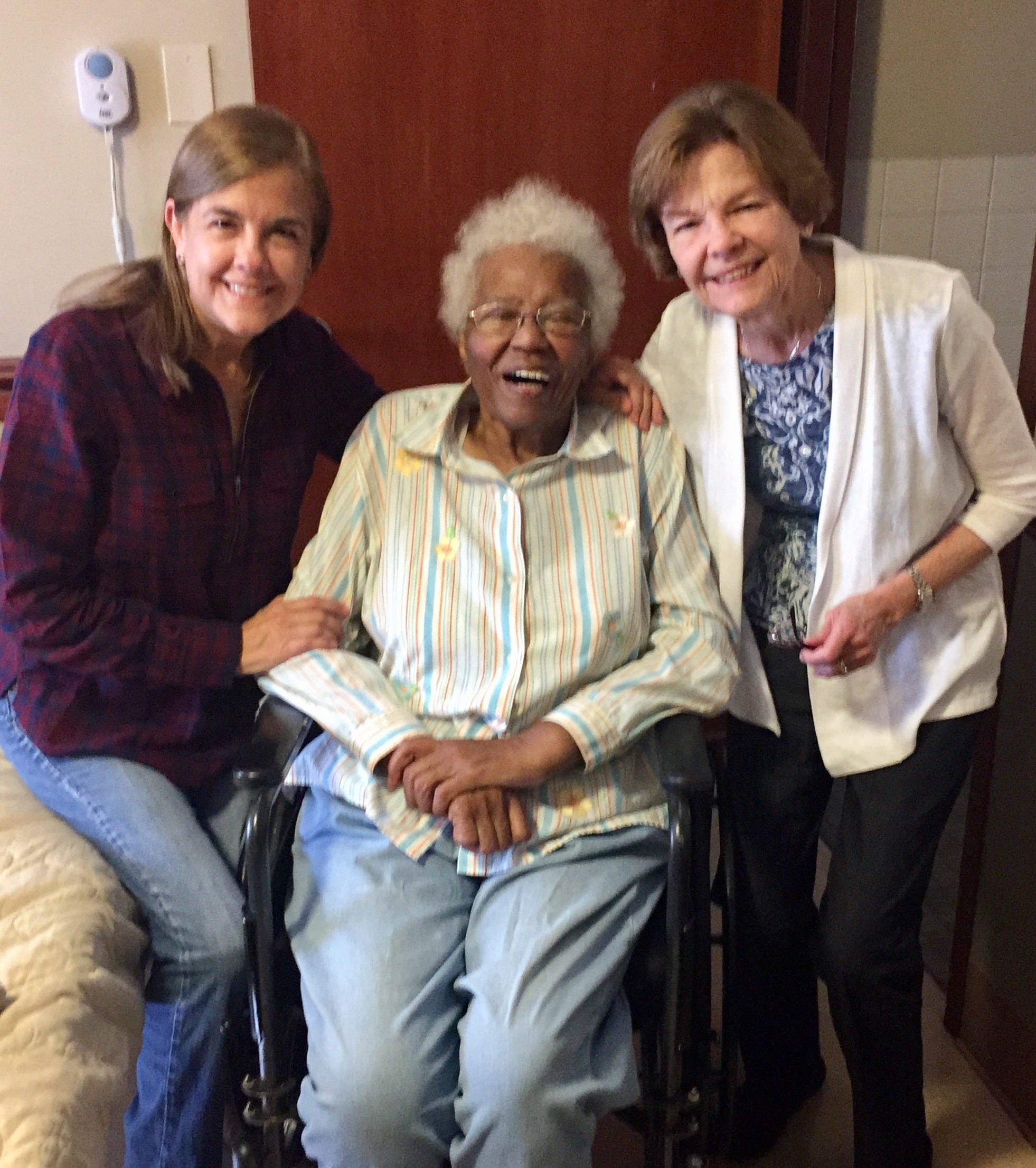
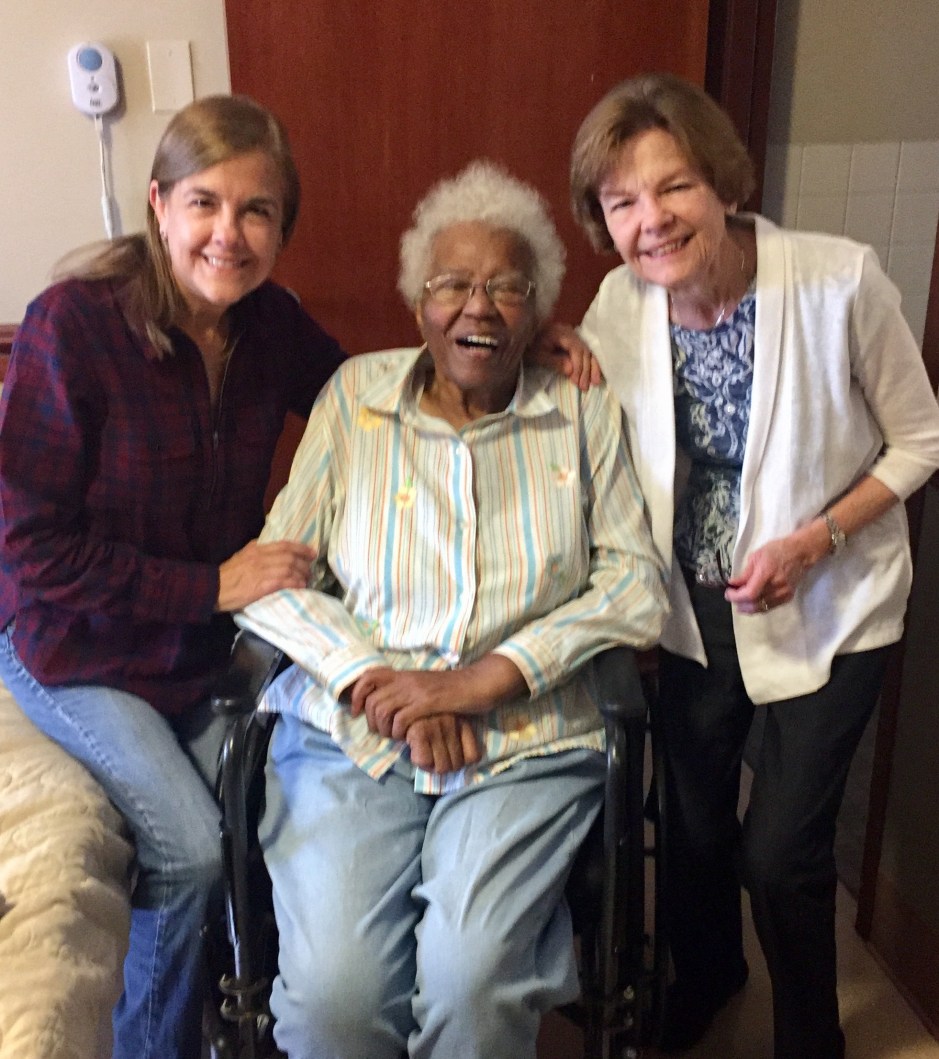
My sister and I visit Mary on her 81st birthday, November 11, 2016

A week later, Mary called, her voice subdued and full of pain, to cancel our get-together. Her oldest son, Lewis, Jr, had suddenly passed away of a heart attack, at fifty-seven. It was almost eerie, given what we’d recently said about mothers losing sons—such a cruel twist of time—and my heart ached for her. The fact that she’d lost her husband decades before in the same way and at roughly the same age only deepened her sorrow. My brother George and I attended Lewis’s funeral, a service filled with music and laughter and tears. During one of the soulful hymns, Mary, seated in a wheelchair in the front row, reached her hand toward Lewis’s casket and swayed in easy rhythm with the music. She was a woman of strong faith, among the strongest I’ve known, and I remember feeling that the air in the church seemed to shift, as if Lewis’s spirit had joined Mary’s own, and settled in to stay.

Not long after Lewis’s death, Mary had another stroke. I visited a couple of times at her rehab facility, once on her birthday when JoJo was in town, but we agreed to hold off with the note-taking and the rest until she grew stronger. The stroke had slowed Mary’s speech and in truth, I wondered if it might be best to leave well enough alone. We were back in touch, friends again, and Mary should save her energy to heal and live her best life. In the span of a few weeks, she’d given me a glimpse into her family life—who could ask for more? Tough as ever, Mary had something else up her sleeve. The next March, she reported she was much improved and ready to start getting together, only I would have to come to Lou’s house while she recuperated, which was peachy with me.

And so it began. Lou welcomed me to her home on our appointed day, and Mary, the walker she was learning to use close at hand, gestured me to join her on the couch.

“Angel Face,” she said, her trademark smile tinged with emotion. “His story has been on my mind and in my spirit.”

His story?” I asked.

“My daddy’s,” she said, touching the tight white curls around her still- smooth face. “I want to tell you my daddy’s story.”

She held up two pages of blue cursive notes written in the hand I knew from her letters, if a little uneven. I longed to hear about Mary’s life, and felt a touch disappointed.

“I’ve been trying to get it all down,” she said. “But I’m such a slow writer these days!”

“It’s hard for her …” Lou chimed in from the kitchen. “She spent days on it!”

Awed, I scanned Mary’s pages and it hit me: by sharing her father’s journey, she would be sharing her own in a manner she was comfortable with. Besides, do any of our lives make sense without the larger story of our parents and grandparents and on back?

“He was born in Hurtsboro, Alabama,” Mary began.

Hurtsboro—then a town of less than 900 residents wedged into a far southeastern lip of the state, deep in the Cotton Belt. Hurts to stay but it hurts to leave, Mary once quipped. The 1910s and 20s. The legacy of legalized slavery still shrouded the South, and Jim Crow was flexing his muscles. Mary’s father, Jimmie Lee Cochran, lived with his sister and their mother and grandmother on a white man’s farm. As early as the third or fourth grade, Mary explained, her father, “the man of the house,” often had to leave school early to go home and work the fields. Children being children, his classmates took note, in heartbreaking fashion, but a certain little girl understood Jimmie Lee’s predicament, and that would make all the difference.

Mary tells this best, so I’ll sign off for now with the brief clip above (apologies for the poor editing and annoying oohs and aaahs) in which she describes the moment her mother-to-be, Lue Milla James, first felt a pang of love for the boy who would become Mary’s father.

Shaking off the Dust

When I launched this site a decade ago (!), I expected to share a few posts about the exhausting, cathartic, sometimes funny and strangely exhilarating process of cleaning out my parents’ attic. One damp box of mid-20th century toothpicks led to another, and thanks to support and input from readers like you, I learned that sharing family stories not only kept my late parents alive, it sustained me through the joys and sorrows of the years that followed.

In that spirit, and because honestly, how much more can be said about faded photographs and mildewed button boxes, I’ve decided to creak shut the attic door and launch a new site. It’s called “Why the World Wags,” and in it, I plan to wax on about well, whatever grabs me as I move along through life. Ten years on (!!!) from that first post here in “My Mothers’ Attic,” I find myself teetering at the edge of what some call the golden years. Has there ever been a more obvious euphemism? Golden in the sense of being burnished by life perhaps, but there are days when the world around me seems cast in the gray light of dusk. And yet! At other times, that world seems to sparkle in a way I rarely noticed when I was younger–when a bluebird lights on a leafy branch in our back garden, his feathers aglow with morning light, or when I’m able to revisit a place I’ve come to love, like the brilliant waters off the coast of Belize pictured above, or when my toddler granddaughter reaches for me, smiling, and calls my name (which at her bidding, seems to be “Gaga”).

Golden moments, every one.

If you’d like to join me on my continued journey, here is the first newsletter/post from the new site. I’ll be migrating some of my more popular posts from here to there, usually with some editing, but I’ll leave the Attic open a good while, too. To visit the new site itself, just click below. If you like what you read, consider subscribing (s’il vous plaît!)!

https://marthamattinglypayne.substack.com/

Thanks for reading, always, and I hope to see you in Why the World Wags!

A decade! Maybe that explains the shocking loss of melanin 🙂

Smoke Got in My Eyes

Dreamy pre-teen moi. Photo courtesy of my mother’s attic 🙂

Is wist a word? The OED says not, but I would argue for its inclusion. As an early teen, I was the walking definition of wistful, meaning, quite literally full of wist. Let’s consider possible synonyms … Was I instead melancholy? Nope, the feeling was less gut-gripping than that, yet stronger than longing. Reflective? No way. That suggests an intellectual hankering, which believe me, was years away. But I leaned hard into the wistful in those unsettled days. I was absolutely captive to if not wist, then wistful-ness? So clunky, that word. Plus the emphasis is wrong, less the wist, more the ness.

Shall we delve into a few of my favorite musical selections of the era? There was Carole King’s “Too Late Baby,” and Jimmy Buffet’s “Havana Daydreaming,” and for sure James Taylor’s “Fire and Rain.” Wist, wist, wist … And let’s not forget “Smoke Gets in Your Eyes,” a remake by the Platters that was an oldie even in my day. I adored it ne’ertheless. I distinctly remember, after a date that went poorly, meandering up my darkened hallway to my father’s study to spin it on the family turntable. Certain I would never date again, I slumped to the window and stared out at our front lawn, moonlight in the weeds. I may have actually shed a tear, so wrapped up was I in my manufactured teenaged angst.

Yet these numbers pale one and all beside the song that gave perfect voice to what was bottled up inside me, a little ballad by the soon-to-be forgotten group, Looking Glass—

Brandy, you’re a fine girl, what a good wife you would be, but my life, my lover, my lady, is the sea …

Is it regret I hear in these lines? Does regret equal wist? No, not really. At least regret is not precisely what “Brandy” evoked for me. It certainly wasn’t sorrow—what did I know of sorrow at age fourteen? But each time my radio played that quick guitar twang, then the riff on the keys followed by “doo doo ‘n doo doo,” my belly quivered and my heart swelled. I would crank up the volume and sing along with great gusto. And no verse bewitched me more than the last: At night, when the bars close down, Brandy walks through a silent town, and loves a man who’s not around …

Oh, the heartache! The delicious pain! This woman, this lovely barmaid, strong and independent yet imprisoned by love for a sailor she could never have. Even now I can feel it, the … the … the wist, for heaven’s sake! One refrain and I’m a skinny girl with long stringy hair who longed for curves ample enough to attract the one swaggering boy everyone yearned to make out with. Yep, there I stand in the dark corners of a fellow middle schooler’s smoky rec room while my friends, maybe a few enemies, roll around on the couch or slow-dance to “Stairway to Heaven.” I lean against the wall, less flower than sprout, and shut my eyes so that I might better conjure, and draw strength from, my precious Brandy—footsore, coins in the pocket of her apron—as she lays that whiskey down. Looped around her neck of course is a braided chain made of finest silver from the north of Spain. And it bears the name of the man Brandy loves! A man (her sailor!) who brought gifts from far away but made it clear he couldn’t stay.

How silly I was, a silly girl looking for love in all the wrong places. Unless maybe, just maybe, what I really hungered for wasn’t puppy love, or even romance. Maybe I couldn’t get enough of “Brandy” because of its poetry–a stretch, sure, but with apologies to any real poets out there, bear with me. Pop tune it may be, but the lyrics and the melody blend perfectly to create a certain mood (right?). A mood, I believe, that reflects and heightens the emotion its songwriters sought to convey. At the very least there’s this: Perhaps in those confounding years of my youth, I longed–without realizing it, mind you–for a sort of experience that was as yet out of my reach. As she pulled beers and served those sailors as they talked about their homes, Brandy took me with her, to that faraway fishing village by the sea where a spunky young woman could make it on her own (albeit without love). The lyrics, the harmonies that bolster them, rustled up in me not only the wobbly ache of the teenaged crush, but the exhilaration of finding oneself in an unfamiliar place or situation, the joy touched with loneliness that solitary travel, for example, can trigger, and that several years on, I would come to know myself, and to treasure.

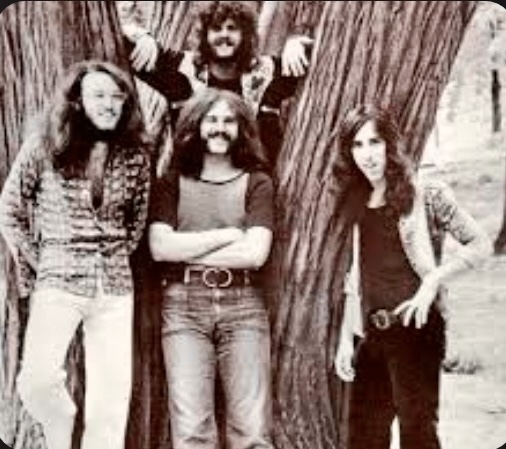
Looking Glass, the rockers whose one-hit wonder tattooed my teenaged heart.

So maybe my pre-pubescent self, my mind (my soul?), stood in awe of the power of the artist, the power to make words and rhythms work so effectively in tandem that they forge emotion out of air. Magical thinking? Could be, but to believe it, that at some level even then I hoped to imprint others with words the way Looking Glass imprinted me, gives me great solace.

“Brandy,” to conclude, has staying power. When a band cranked her up during a wedding reception I attended recently, I embarrassed myself by jumping and spinning (partner-less), circling my arms overhead and shouting every last syllable at full volume. The crowd of mostly twenty-somethings around me danced and sang along, too, if with slightly less passion.

All wist and wistfulness aside, “Brandy” continues to transport me, as all good art should. A couple of her introductory notes sound through my Pandora app, and I’m right back on that western bay, where I can feel the ocean fall and rise, and see its raging glory.

Note: This post grew out of a writing prompt my friend and fellow writer, Mai Al-Nakib, shared with our beloved writing group in June (thanks Mai!):

“Think of a song that meant something to you as a teen … Why did it mean so much? Does it still? Explore it in writing… “

If you have a second, drop in a comment below about a song you once loved that can still bring a little lump in the throat. I’d love to hear from you! And be sure to check out Mai’s latest book, An Unlasting Home, a gorgeous and expertly researched multi-generational novel: https://www.barnesandnoble.com/w/an-unlasting-home-mai-al-nakib/1139827261

Home at Last

Like her father, once Mary earned the right to vote, she never missed the chance. Here she fills out her absentee ballot in October of 2018 for Georgia’s gubernatorial election.

Some of you met Mary Darian in “I Am Mae Mobley,” one of my early posts here in My Mother’s Attic. In part an outcry against an upsurge in race-related killings during the summer of 2016, that piece is at heart a tribute to Mary–the woman who helped my mother rise to the Herculean task of raising six children. Since I launched this blog, Mae Mobley continues to garner far more views than any other Attic post–testimony to Mary’s captivating character. In that earlier piece, I lamented that during the two decades Mary worked for our family, I failed to learn much about her life. I vowed then to make amends for this, to reach out to Mary, though I was more than a little nervous about cold-calling after so many years of silence. I might have known that was a waste of emotional energy. In the years that followed, in spite of facing one personal challenge after another, Mary shared detail after detail about her story, and more broadly, her family’s story, which to her were one and the same.

One morning not too long before the pandemic hit, I went to see Mary at the nursing home where she’d recently moved. Her room was small but comfortable–a sink and closet against one wall, a twin bed at the center, a broad window at the far side, the ledge below crowded with photos of her grand- and great-grandchildren. Mary’s devoted daughter, Lou, had a bird-feeder installed just outside the window so Mary could enjoy sparrows and robins and fiery red cardinals as they flitted about. By this point in her life, Mary was confined to a wheel chair, though I was soon to learn that in her case, confined did not apply.

I breezed through the door a little earlier than usual to find no Mary in sight. I heard a scuffle on the far side of the room and stepped closer. She had wheeled herself into the narrow space between bed and radiator and crouched low over her knees, her head nearly hidden between the bed and bedside table.

“Mary?” I asked, trying to control the worry in my voice. “Can I help?”

“Oh!” she said, her voice bright with enthusiasm as she looked up. “Angel Face!” (the pet name she coined for me as a baby). “Come on over here!”

I did just that. Mary craned about and reached her long arms around my neck. That’s when something shiny flashed in her lap–a long, thin metallic tool.

Celebrating Easter. April 2022

“Just give me a minute …” she said, ducking head under table again. “While I find my Puh …”

“Here, can I get it for you?” I asked, though I wasn’t sure what I was looking for. Her paper? Her pillow? I tried to maneuver between wheelchair and radiator but the space was tight, the bedside table happily cluttered–a card illustrated in blue crayon, a tub of Vaseline, a small glass vase filled with Alstroemeria, a stack of word puzzle books and a red leather Bible, its pages well-thumbed.

“What is it you need, Mary?”

No answer, just more poking at that shelf.

“Ah, here it is!” she cried at last. Turning, she sat up straight, her expression devilish and triumphant. “My Ponds!”

She held out the stick, which I then could see had a grip handle at one end and a sort of claw at the other, not unlike the mechanism in that arcade game in Toy Story (The claw is our master … ). Caught firmly in Mary’s claw was a jar of Ponds cold cream, same pale green cap and tulip logo as the ones my mother used to keep on her vanity table.

With easy dexterity, Mary twisted open the jar, scooped out a finger full, and chatting all the while, began massaging the silky cream into her still-smooth complexion. Her task complete, I offered to return the jar to its shelf. She laughed, waved me away, and did it herself, metal claw re-extended. Then she nabbed her hairbrush from the drawer, dropped it in her lap, and wheeled over to the sink. One of her feet–slightly swollen–nearly collided with the corner of the bed frame as she went.

“Mary, your leg–is it ok?”

“Oh that …” she mumbled as she set the hairbrush at the edge of the sink. “Some kind of blood clot in that old leg.” Then she plucked a cloth from a towel rod, wet it generously, and ran it across her short thick curls before brushing them out.

“Ok, now …” she went on, patting her head and smiling at my reflection in the mirror. “That’s better. I never know what it’ll look like in the mornings.” Then guttural laughter as she spun her chair around to face me. “Now tell me … What have you been up to?”

I gathered my thoughts, but before I got a word out, her eyes flew open wide and she cried, “Wait a minute! … I forgot my teeth!”

With that, and without a wrinkle of embarrassment, Mary spun back around, tugged a set of dentures out of a cup and slathered them with toothpaste. While she gave them a sturdy brushing under the faucet, I marveled at the independence, the lack of self-consciousness, and the serene acceptance of the time-consuming rituals of growing old that she possessed.

“Your mama liked Ponds, too,” she mused. “You know …” She paused and turned to me, that devilish smile restored. “She may have been the one who got me started with it!”

Whether this was true or its inverse–that Mary actually introduced my mother to Ponds–didn’t matter. This was a habit they shared, one I hadn’t known about, and something soft padded into my heart. Not a visit passed between us that Mary didn’t turn our conversations back to my parents, or one of my siblings–to those days she was part of the everyday workings of our busy household. She loved especially to wax on about my mother’s expertise as a seamstress, but then she’d been doing this since my summer camp days. Your mother made a white jacket for her new formal gown with shells around the midriff … she penned in a letter she sent off to Camp Merrie-Woode. Wow! When the lady moves, she gets momentum and never stops … Then, one of her witty after thoughts–I think she’s going to wear her sexy red sandals.

Back then, ten years old and homesick, I likely cried to read this, but it was a good cry. Mary was enfolding me from a distance into the home life I loved. I understand now that during our recent visits, she was doing much the same. Her smiles, her laughter, her stories, were keeping my mother, my father, in short, my childhood alive. She did me as much good–no, probably more–than I did her.

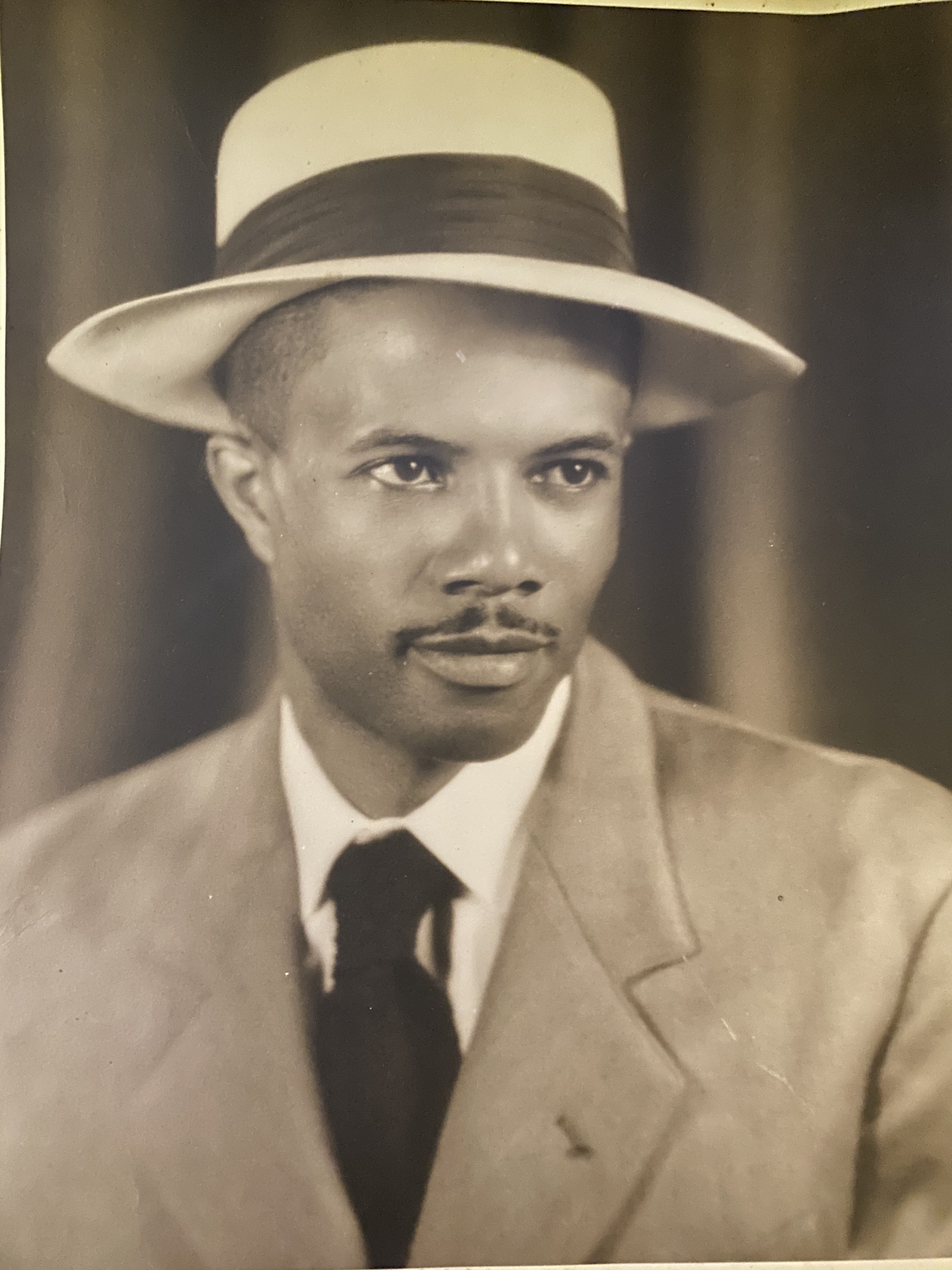
Mary’s father, Jimmie Lee Cochran, as a young man.

Though she lost her mother very young, Mary was eager to share her father’s story, too. In the 1920s, when he was hardly more than a child, Jimmie Lee Cochran worked the cotton fields of Hurtsboro, Alabama, where he lived on a farm with his mother and grandmother. In 1939, when Mary was four, Jimmie Lee came within an inch of being lynched. After a narrow escape, he managed to slip away to Atlanta, where he built a long career with Southern Railway. More importantly, a decade later Mary’s father brought her and her younger siblings to the home he’d built–literally built with his own hands–for his family. The twists and turns of Jimmie Lee Cochran’s story, and Mary’s alongside, paint a shimmering picture of courage, devotion to family, and perseverance. It’s a story that could fill a book. Maybe someday it will.

Born in 1935 in Hurtsboro, Mary Cochran Darian moved on from this world on April 18th, 2023. She worked those Alabama cotton fields herself before graduating from Atlanta’s Booker T. Washington High. She married her sweetheart, Lewis Darian, and after twenty years with our family moved on to an administrative career at Crawford Long Hospital. Through it all, Mary took care of people–her four children, her physically disabled brother, her neighbors and grandchildren, her church family (to them she was “Mother Darian”) and me and … well, the list goes on. Her family held a “Homegoing Celebration” last week at her beloved church. The service left room for sorrow but had joyful music aplenty and tributes full of love and hope meant to speed Mary along on her journey to the place she firmly believed was her true home. I think everyone who spoke of Mary mentioned that infectious smile that so warmed me during our visits in her last years. I’ve mentioned the knack Mary had for helping me laugh away my little girl challenges and preteen angst. Her ability to smile and laugh herself through the many trials of aging was to me more remarkable. My mother had her strengths, but facing old age with grace was not one of them. She raged against the dying of the light, and though there’s something to be said for that, the way Mary kept her spirits high in spite of the slings and arrows fortune tossed her way not only eased her days, it lightened the hearts of those who cared for her.

The pastor who gave Mary’s eulogy asserted that her smile set an important example. If you love God, he suggested, the least you can do is smile for the world to see. Mary’s resting face was a smile, a natural one, broad and vibrant in a way that said, Watch out because here comes a laugh, a big one straight from the belly! The photo below offers proof. I can hear my brothers and my father laughing with Mary even now.

Mary returns for a much-anticipated visit with my family, sometime in the 1980s.

The cover of Mary’s Homegoing tribute booklet features a couple of her favorite phrases. “I expect a miracle every day,” reads one of them. For those who consider miracles to be only raising the dead or turning water into wine, this may sound like hyperbole. Like the wisest among us, Mary knew that the simplest things could be miracles: The touch of her first great-great grandchild settling into her lap; the familiar taste of the meals Lou prepared at home and brought to her room; the right to vote safely and the freedom to shop where she pleased and sit at the front of the bus (freedoms she had to wait until age thirty to enjoy); the weekly Bingo games (she won a lot) with other residents in the nursing home common room; a skittish bluebird in the morning sun, darting close for a nibble from her feeder before the pushier birds moved in.

Miracles every one, just as Mary was to all who knew her. She is home now, flights of angels singing her to her rest.

Mary with her daughter, Lou Darian Qualls, on Mother’s Day, 2022

A Tale of Two Cousins

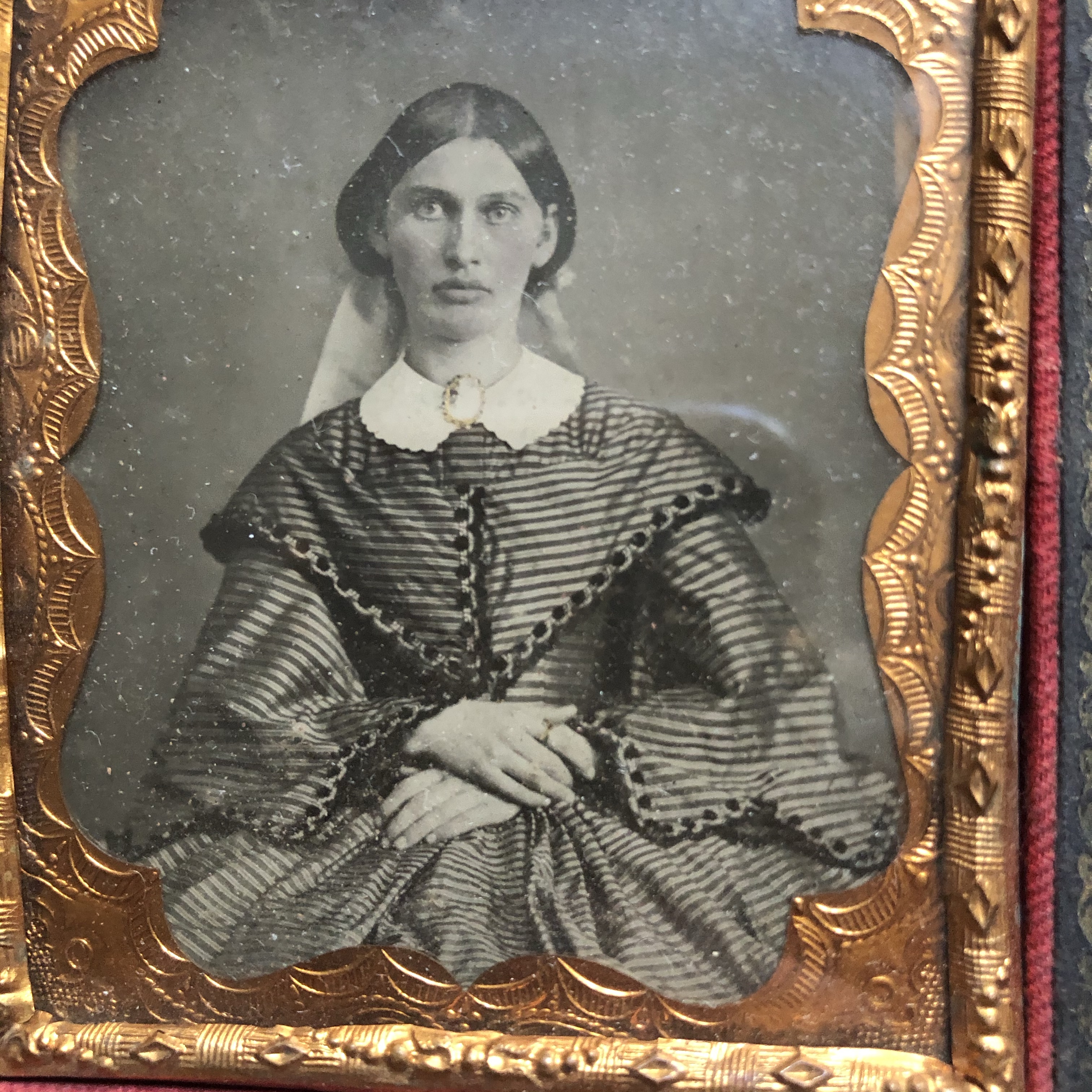
During a late sweep through the dark corners of my mother’s attic, I stumbled upon a moldering shrine to one of my paternal great-aunts. Louise Bickers, a.k.a “Weezer,” was a feisty single woman whom I loved like a grandmother. With affectionate if drowsy interest, I dragged over a rickety wooden stool and dusted off her leftovers—stacks of limp letters, photos with curled edges, family trees scribbled on yellowed paper, and a decomposing shoebox of daguerreotypes.

Stumped? So was I. An early form of photograph produced by “fuming” mercury vapor onto silver-plated copper, the daguerreotype was introduced in 1839 and became obsolete by the 1860s. The 1860s! And there I sat, a hundred and fifty-plus years later, with several in passable shape. I ran my finger along the hammered tin frames, eyed the elaborate clothing, the formal, sometimes severe gazes. Where did these people—certainly family—live? What did they do? My curiosity piqued, I tucked the least fusty samples into a fresh plastic bin beside far too many of Weezer’s letters and photos and family trees, and moved on.

During the pandemic’s endless, vacant shut-in hours, I fetched up those family trees, rebooted my Ancestry.com membership, and typed in name after name. It was fun, by 2020 standards, learning how to create profiles for my long-lost blood kin and search for relevant documents and photos. When a grainy image of one of my great-great grandfathers popped up, I knew immediately it was—you got it—a daguerreotype. I fished out Weezer’s frames to compare and contrast. None of the faces matched exactly, but they favored, as my mother would say.

At once piercing and playful, my second great grandfather’s gaze seems especially, hauntingly, familiar. Born in 1825, Thomas Blake Bourne descended from a long line of tobacco planters in Calvert County, Maryland, a leg of land that kicks out into the Chesapeake Bay. The Census of 1850 valued his property at $2,500, equivalent to about $150,000 today, making his a healthy if small farm for its time. I can’t pinpoint the farm’s exact location, but odds are it was on or near Eltonhead, a tobacco manor along the instep of the county’s watery foot, tracts of which had belonged to Bournes since the late 17th century.

Thomas Blake Bourne, Lieutenant of the “CSA” and my second great grandfather

A city girl, I smiled to picture my great-great grandparents, Thomas and Margaret Louisa, living their quaint, rural 19th century lives. Soon a marriage record surfaced from May of 1848, a photo of Thomas’s gravestone, the inscription honoring him as “… a devoted husband and father, true to his friends and his country,” and a certificate proving that his maternal grandfather, Colonel Joseph Blake, fought in the American Revolution. Cool. I’m a DAR. I felt all rosy with pride. Then something else, less than quaint, caught my eye—a Slave Schedule, an appendix to the 1850 Census in which enslavers identified their “human property,” not by name but according to age, sex and color. I blanched, my ancestral pride dissolving as I counted the tick marks beside Thomas’s name: an even ten, six black males and four black females between the ages of six and forty-five.

I attached the Slave Schedule to Thomas’s profile and clicked back to his daguerreotype. That playful grin … might it be more a cunning smirk? My forehead heavy in my palm, I called my daughter in New York.

“We are from the South, Mom,” she said, unsurprised.

“But your grandfather came from humble roots,” I argued. “And Maryland’s hardly the South …”

“I know, Mom,” she said gently, knowingly. “But even small farmers enslaved workers back then.”

Which I knew, but this was our family, a whole different ballgame. I hung up and returned, dull eyed, to my laptop screen. Lined up in the right margin, I noticed tiny circular photos I’d missed before, profiles of other genealogists who’d saved Thomas Bourne’s image. I hovered over one, then another and another, and a pattern emerged—many belonged to people of color. What’s more, the family tree associated with each profile included a common ancestor, a man named Louis H. Bourne.

With clammy fingers, I typed Louis’s information into the Ancestry search engine. My first hit was the Census of 1860, which lists Louis H. Bourne, born 1830, as a “mulatto” head of household and farm laborer in Calvert County. More hits revealed that by 1880, Louis and his wife, Margaret, had purchased over thirty acres of land and settled down to farm tobacco in Island Creek, a breezy community along the Patuxent River that lies about fifteen miles from where Thomas Blake Bourne lived with his family. 

Calvert County in the Colonial Era

Or used to live. In 1855, amid rumblings of the war to come, Thomas had moved his household—including three children and at least nine enslaved persons—across four rivers and the Mason-Dixon line to a manor house near the James River in Virginia, a state he surely wagered would prove friendlier to his future as a planter. Eight years and three children later, Thomas enlisted to fight for the confederate states. He was thirty-eight. Around the same time, Louis H. Bourne, thirty-two, signed on with the Union Army. And so it was that second cousins, as I believe they were, took up arms against each other in a war rooted in misconceptions and greed. Were Thomas and Louis aware of this? I suspect so. It was a much smaller world then and Thomas still had family aplenty in Calvert County. Both men survived, though my great-great grandfather would die suddenly ten years later, the youngest of his nine children only eleven years old.

As intrigued as I was conflicted, I reached out to a few folks whose trees included Louis Bourne. Responses were scarce, but eventually I heard from Florencetine “Tina” Bourne Jasmin of Baltimore County. I hesitated–what right did I have to barge into her life?–then dove in and wrote to her that we could be related, somehow, through Louis Bourne.

“Oh my gosh,” Tina responded. “I’ve been hoping to find someone who might know something about my great grandfather!!!” Smiling again, I shared a little about my family. Tina sent photos of her son and daughter and grandchildren. She told me Louis Bourne had remained—thrived—in Island Creek until his death at seventy, as did many of his children, and some of theirs, and theirs and theirs right up to the present. Louis and Margaret had eleven children, among them trailblazers who stared down the fetters and hostilities of the Reconstruction and Jim Crow eras. One of their sons, Ulysses Grant Bourne, was among the first black physicians to practice in Frederick, Maryland. A grandson, James Franklyn Bourne, Jr, was the first black judge to serve on the district court for Prince George’s County. Quite a legacy, an improbable triumph in fact, and this was only the beginning.

Louis H. Bourne, 1830-1900

At some point, I told Tina I regretted the unspeakable abuses my ancestors had visited on hers. “This history is beyond our control,” she mused. “I want to believe our ancestors are pleased with us for trying to reconcile our past.” Awed by her tolerance and wisdom, I thanked her and we dug in, working to make sense of our family ties. Tina quickly shared her best clue–a digital copy of Louis’s death certificate which names his mother as “Gracey Mason,” and his father as “James Bourne.” James Bourne? Thomas’s father, my third great grandfather, was named James. But then so was his oldest son, and his first cousin, James Jacob Bourne. Which James fathered Louis? And did he enslave Gracey Mason and the son they shared? Hard to know. A pair of 19th century Calvert County courthouse fires destroyed wills and bills of sale that might have given us proof.

We called in help. Tiffinney Green of Baltimore, Delma Bourne-Parran and Patrice Evans of Prince Frederick, and another cousin in California, all descendants of Louis Bourne, joined our search. The emails flew. We shared trees, unpacked oral history. Hoping to discover shared DNA, we spit in vials, waited, and waited some more.

From the will of Jacob Bourne, my 5th great grandfather.

The results: Delma, Patrice and Tiffinney each match with at least one of my distant white Bourne cousins. And the kicker–Patrice’s sister and I share DNA. Heartened by this proof of our kinship, we analyzed and drew charts and at last wagered that James Jacob Bourne (1791-1850), an enslaver of twenty-two, most likely fathered Louis H. Bourne. This means our common direct ancestor is my fifth great-grandfather, Jacob Bourne (1721-1771), whose will survives with a full inventory attached. In the same figurative breath as a tea kettle, three old sickles, and the spinning wheel in the corner, Jacob names Grace, age forty-five, as one of several enslaved people to be “gifted” to his sons. Might this Grace have had a granddaughter who was passed down the line to James Jacob? It was common after all for baby girls to be named for a grandmother.

My ethnicity compared with that of a person of color who shares DNA with both Patrice Evans and me.

Due to those courthouse fires, for months we had little else to go on. Then Tiffinney found a Grace Mason, born 1807, listed in a Calvert County registry of Free African-Americans in 1832. She lived with a Hannah Mason, age forty. A Louis Mason, age two (just Louis Bourne’s age), also appears in the registry and seems to have been part of Grace’s household. Grace and Louis Mason then disappear. Free people of color were often servants in households that enslaved others, and our hunch is that Grace Mason worked for James Jacob Bourne. Maybe at some point, say when Louis was a child, James took in Grace and their son, maybe even enslaved them in some sort of twisted effort to control them. Did Louis Mason then become known as Louis Bourne? Did James Jacob later free his son who should have been free all along?

We’ll likely never know the full truth. The fact that Louis shows up in the 1860 Census means he was a free man well before Maryland officially emancipated its enslaved. Hannah Mason, the woman listed alongside Grace in the 1832 Registry, provides another clue. Louis’s 1860 household included a Hannah Mason, age seventy-four. Though the years don’t quite match up, they’re close enough for that era to suggest that Hannah was Louis’s grandmother, and that her daughter–Louis’s mother, Grace–died young.

Unless James Bourne sold Grace off.

“I pray that was not the case,” Tiffinney wrote to me.

I pray so, too.

Much work remains. Most of my family lines run back to the colonial era, where other fraught relationships lie in wait. Tiffinney and I have DNA matches in common that suggest we may also be kin through my Mattingly side, and I’m in touch with another young woman directly descended from Colonel Joseph Blake. Looks like the Colonel’s son had his violent way with her third great grandmother.

Broome’s Island at the mouth of Island Creek, not far from where Louis Bourne farmed tobacco and raised his eleven children.

In May, my sister, JoJo, and I visited Calvert County. We researched alongside Tina and Tiffinney, and after, the four of us gathered for dinner with Patrice, Delma, and Marietta Bourne Morris, who still lives in Island Creek. We bored each other with family stories. We laughed over wine and margaritas. Humbled, JoJo and I accepted the kindnesses these women offered. Strong one and all, they overlook with seeming ease the troubled origins of our relationship and accept us as family. I’m proud to call them cousins, hopeful that Louis and James Jacob, Thomas and Grace Mason and my great aunt Weezer are indeed pleased.

Moving forward, I’m not naïve enough to expect from others the open-hearted welcome I’ve received from the Bournes. It’s nothing I deserve. One thing seems certain—this is not a tale of two cousins. It’s a tale of hundreds, thousands—dark-eyed and green and blue; blonde, red-haired, brunette; Irish and Bantu and Latin, Nigerian and Welsh and Congolese. Our skin shines ebony and alabaster and every hue between, and our cells quiver with the tangled threads of those who came before us, our human race.

Family

Postscript: If this sort of research project interests you, message me below or through Facebook. I’m happy to share tips and links to resources. There are many!

She Who Taught Me to Read

Screen Shot 2020-03-21 at 1.38.15 PMHonestly, I’m not sure this is true, that my mother taught me to read. I recall lying belly-down on a thick-piled prickly rug (an Oriental, as Mom used to call them in the days before we knew better), sounding out words in The Little Engine That Could. But the rug in question covers the floor of my father’s library, and it is my father, crunching numbers at the desk above me, who comes to my aid when phonetics fail and I stumble over a word. 
The thing is, “learning to read” involves much more than figuring out a diphthong (“bl” plus “UE” equals blue?!?), or understanding that “th” ends up sounding like whatever it is (“I think I can, I think I can,” said the little blue engine). Learning to read means coming to love the musty smell of an old paperback, the grainy touch of its spine, the voices both lyrical and rational that speak from the pages of any book, even an e-book. Learning to read means finding your proper posture. For my mother, this meant perched with straight back, ankles crossed and feet up, whether tucked, tickly, behind me on the couch or buried under her bedcovers. Learning to read means losing yourself to the story, soaking it in through your pores so deeply that the satisfaction of reaching the conclusion to a well-crafted tale feels not unlike the sensation of discovering someone you’ve long loved from afar loves you back. And when the tale ends, when you must surrender your book’s characters and plot twists and precise lovely language back to its well-thumbed pages, it’s as sweet a sorrow as love lost.

But my father. It’s not that he didn’t read. Daily reading was part of the routine that sustained him. His day at the office complete, the dinner dishes rinsed and racked, he carried his Wall Street Journal and the Atlanta papers to his armchair in our family room and settled in. He read his papers pretty much cover to cover, but he wasn’t much into fiction. At one point in late middle age he became enamored with Ferrol Sams, a Georgia novelist whose most successful book, Run with the Horsemen, told a coming-of-age story about a young boy growing up during the Depression, much as my father did. Other than that, I don’t remember a single fictional title in Dad’s lifetime bibliography. He may have shored me up with the fundamentals, provided the scaffolding for the life in words I would build, but it was my mother who proved true the adage, Children Do What You Do, Not What You Say. Mom read everything, everywhere: den, kitchen, bedroom; trains, planes, automobiles; mountain cabins, hotel rooms, beach.

Yesterday was her birthday, number 101 were she still with us, and with COVID19 running roughshod over our world and everyone in it, I have more time to read. It’s one of the things that helps me stop obsessing (did I wash my hands after touching that banister? Wipe down that counter where my son just scarfed down a sandwich? Did I, did I, did I?) I’m glad, in a way, that my parents aren’t around during these troubled times. My mother, as my sister reminded me this morning, couldn’t abide talking about one’s health, or illness in general (what else is there to talk about now?). And my father lost his mother to the 1918 Flu Pandemic, the only other health crisis in modern history to grip the entire planet as ruthlessly as COVID19. Dad always claimed he couldn’t remember his mother’s illness or death. He was only four at the time, but I fear some long-repressed and terrifying images might have resurfaced for him, were he around to try and survive this scourge.

image
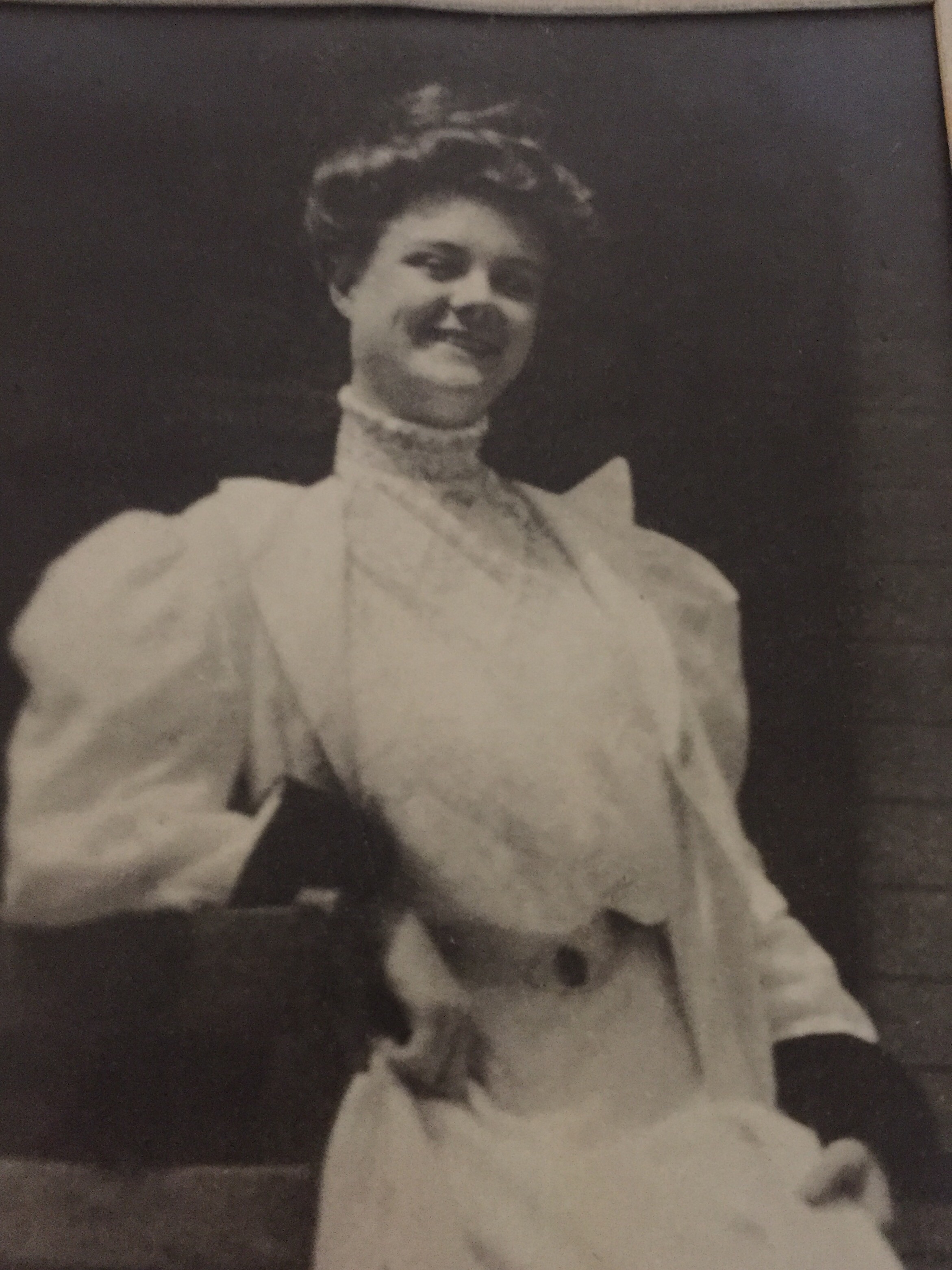
My grandmother, Frances Bickers Mattingly, circa 1908.

My grandmother Mattingly was a lovely woman, as you can see here. She died, pregnant with her fourth child, at age thirty. Unlike COVID19, the 1918 pandemic killed mostly strong young adults. Though I never knew her, I miss my grandmother somehow, and always have. With all this idle time on my hands, I miss my father, and especially my mother, during this, her birth week. The less we’re occupied, the more strong emotions rise to the surface I suppose. And though it seems wrong, selfish to speak it, I miss getting together with friends. I miss eating out and going to movies and plays and damn it, it’s spring. Of all entertainments, I miss baseball the most.

We–that is those fortunate enough to have so far avoided the virus–have lost something we desperately need: camaraderie, breaks to the routine. But I have what Mom left me, a love of books to help pass the shut-in hours. And I’m most grateful.


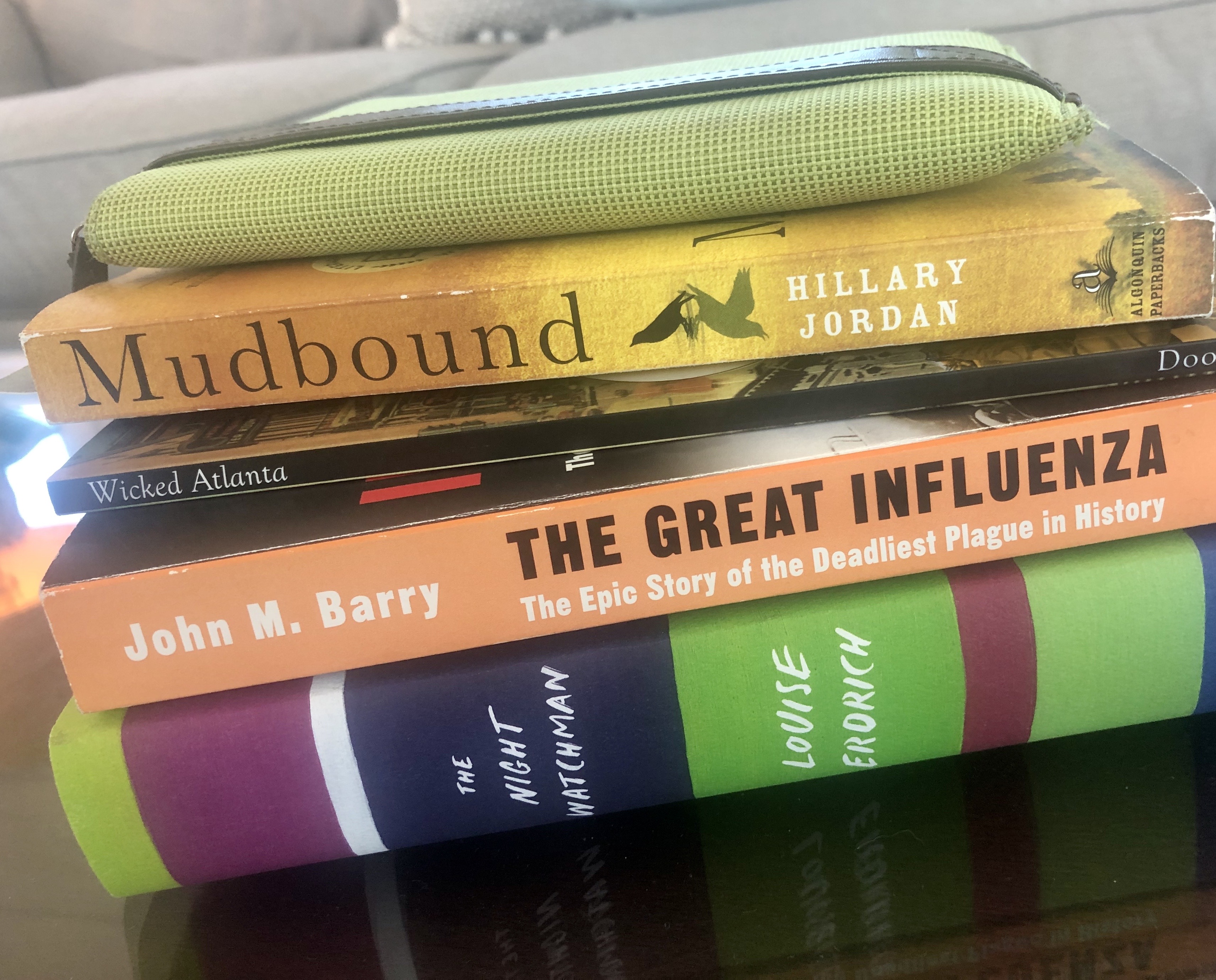
BOOKS
My current bookshelf

Not Your Mother’s Oldsmobile

IMG_0362
Eyewitnesses to the crime

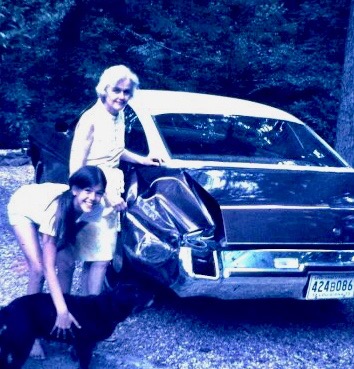
Exhibit A: Me—twelve, Mom—fifty-four, family pooch—we’ll call it six. Her name, the dog, was Butchie, largely because the Mattingly dogs who preceded her, all male, were called Butch—Butch the first, Butch the second … George Foreman style, and if the tradition can be feminized, why not? The car (or perhaps victim?)—a convertible Cutlass, circa 1970. It belonged to my brother George (imagine that, Mr. Foreman), mid-twenties at the time and two years married to his lovely wife, Connie. Wait, it’s possible Connie brought the Cutlass in question to the marriage, a sort of dowry-like perk. Memory fails, but let’s go with that. It makes a better story, and for sure, I’ll never forget the happy couple’s gnashing of teeth after the incident that left their racy little Olds bashed at the hip …

Late spring or early summer, from the looks of my outfit, sunset of my seventh grade year, and apparently I’d set my sights on the Twiggy award (all arms, legs, and stringy hair). Late afternoon, as I recall, and I’m hanging out in our family den, a bag of potato chips and onion dip close at hand, maybe huddled over a pre-Algebra problem, maybe watching a “Brady Bunch” re-run, most likely fresh off the (rotary) phone from lamenting to a similarly pre-pubescent friend that my crush-of-the-month only had eyes for Laura or Cynthia or one of three other classmates more Bridgette Bardot-like, even at twelve, than Twiggy.

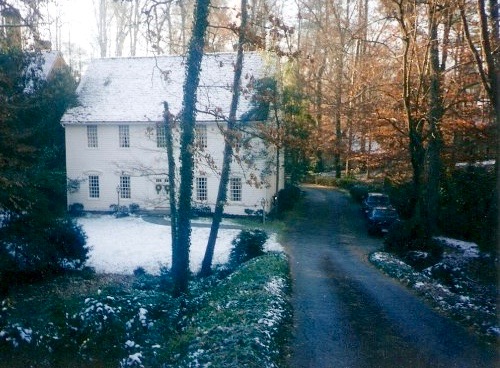
Suddenly, a high-pitched scream outside, at first faint then gaining volume like an oncoming train. I drop pencil and Lays and bolt out the back door, Butchie at my heels, to driveway’s edge. Our driveway (see Exhibit B below), ran about forty yards straight down at a precipitous angle from the street to our house in a hole, as I used to call it, a hole created in some long ago millennium by the babbling creek that flowed five to ten yards, give or take, to the right of said driveway. Just below driveway’s crest, a pile of mail in her arms and pocketbook swinging at her elbow, my mother chases as if to rein in with magical maternal powers her lemon yellow Electra, a popular boat-like Buick of the day. The Buick rolls merrily along, self-driven, ten feet ahead of her. I grab Butchie’s collar and freeze. The car seems more runaway cartoon buggy than dangerous projectile, and I sense in my mother’s screams more panicked embarrassment than fear. Sure enough, the hulking Buick all but eases over the wide drain at driveway’s base, where rainwater sluices away on a stormy day. Rather than careen toward the pup and me, she veers right, groaning, and comes to a cacophonous yet somehow graceful stop, her fall, so to speak, broken by the unlucky Cutlass situated in the handy parking slot my father cleared years before above the picturesque creek.

1254_1068097746778_2572_n
The Electra’s treacherous path (note double parking slot to the right)

“Two cars! Two cars!” my mother hollers, spectator pumps slapping gravel and knees knocking beneath the hem of her skirt. Two car crash, she means, and the fact that she, whose exercise regimen features climbing steps and roaming the mall, has survived this descent without serious injury is perhaps most astounding of all. Her arms are empty now, spilled purse and mail littered across the drive, and she flails those arms overhead like a mad wing walker flashing his orange baton on a tarmac. I think I smile a little even then, because honestly, though this will be an expensive mistake, one that might have been tragic, it really is funny.

Moments before, the Electra’s trunk stuffed with grocery bags, Mom pulled over the raised lip that joined driveway to street and stopped, as she’d done countless times before, to fetch the mail. She mashed the emergency brake with her quad A, size 6, foot, opened the door, stepped out to the mailbox, and, ooh la la, there she went, Old Electra, smelling the barn and waiting for neither man nor dreamy woman. The gear shift, my mother surely thought. Did I put it in Park? She did not, and thus did the yellow workhorse begin her joyride home, happily slowed by that emergency brake. How was she to know my brother’s muscle car had claimed her favorite stall?

I wish whoever snapped this Kodak moment had included old Electra, whose escapade left her with quite a shiner (think of the Instagram likes Mom might have earned!), but otherwise, I love the old crash photo, grainy and blued as it is. I love the dense foliage in the background that was the leafy oak that used to shade my friends and me in the creek below as we hopped from rock to boulder, building dams and creating imaginary villages. I love the tall tree trunk to the right, one of so, so many towering pines in our Georgia yard. I love having a pic of Butchie, RIP ole girl, with her graying beard, and mostly, I love the amused look on my mother’s face, the hint of guilty delight that says she owns this crazy humiliating moment, much the way she owned others during her long wacky years of rearing six children.

It’s funny, I don’t remember much anger associated with the Cutlass caper—check that, George was pretty stoked, but who could blame him? I associate with it instead one of my father’s exasperated shrugs and the eye roll that often followed. Needless to say, our family weathered troubles much more serious over the years than a two-car crash (though how it must have stumped our insurance agent–who/what was at fault?). We weathered times that in the moment weren’t funny at all, but somehow, most of our dysfunctional moments did, in the retelling at least, dissolve into laughter.

It was all about sense of humor, and the fact that my mother and father managed to keep theirs, through better and much worse and even as they aged and life grew close and dark. That legacy is something I thank them for, every day.

A Rose for Miss Louise

fullsizerender-16
A few of the more colorful selections from my Aunt Louise’s hat collection

I was seventeen the first time I read “A Rose For Emily,” William Faulkner’s eerie tale of tribute to a spinster with attitude. I loved it. The story had just the right blend of macabre romance and Southern sensibility to appeal to my teenaged self, at once idealistic and sentimental. What’s more, I felt a whisper of warm recognition, even affection (despite the arsenic), for Emily Grierson and the “big squarish frame house” where she lived alone in early 20th century Mississippi. I knew that close musty air, the heavy walnut bed beneath rose-shaded lights, the Victorian trinkets and the lace doilies on coffee tables and upholstered chairs. In fact, I knew Emily. I once had a spinster of my own, my Aunt Louise, who walked with a cane and wore frumpy dresses, cameo brooches, pearls, and hats. Always a hat, and for Sunday Mass, a netted veil to cover her impish face. Above, see Louise as a young woman holding a pipe–surely just a play thing, a photographer’s harmless prop. 

Louise was my father’s aunt, my great aunt, though when I was very young that relationship failed to compute. She was just Weezer (pronounced Wee-za), sometimes “the Weez,” and I loved her the way my friends did the grandmothers they visited on Sundays, shared jello with at Morrison’s Cafeteria, or listened to on the phone with half an ear (Yes, Weez, I’ve done my homework and passed a healthy, ahem, stool today). Great Aunt maybe, but in effect, Weezer was my grandmother. My father’s mother died in 1918 of what’s sometimes called the “Spanish Flu” (though its origins have since been traced to Kansas), a victim of our nation’s first pandemic. My father was four years old. Weezer, thirty-something and single, stepped in to raise him and his brother.

A staunch Catholic, by the time I came along Weez lived three blocks from the cathedral and parochial elementary school I attended. On afternoons my mother was otherwise occupied, I would sling my book bag over my shoulder and walk those three blocks in my plaid dress and saddle oxfords. Weezer would greet me at her doorstep with a smile (not much of a hug on account of germs–pandemics will do that), ask me about my day, and dodder off to dish up a special Weezer-snack: Underwood Deviled Ham on Sunbeam bread.

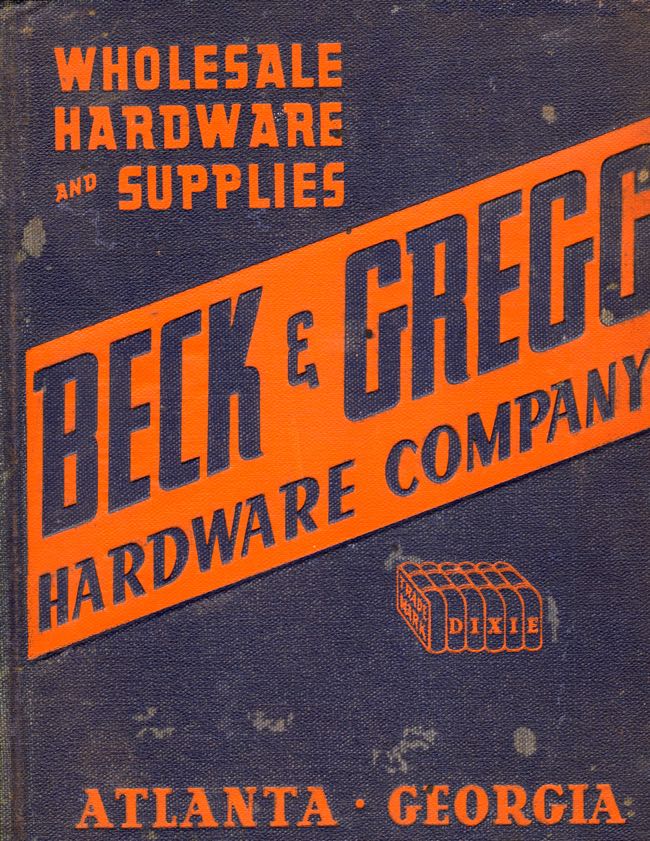
beckandgregg
The Beck and Gregg catalog, 1941, priced for collectors now at $200. I like to think Weezer, a clever writer, had a hand in editing it.

You were expecting Tollhouse cookies? A slice of peach pie or at the very least, homemade fruitcake? Nope, Weezer wasn’t much of a cook. I’m not sure she even owned a mixing bowl. Born the third of four daughters in 1886 in Greensboro, Georgia, Louise Bourne Bickers was a working girl. I’m not sure how she ended up in Atlanta, but I know she and two of her three sisters did. For fifty plus years, Weezer worked downtown at the headquarters of Beck and Gregg Hardware. She was good at her job. Her obituary mentions that for a time she served as “Mr. Beck’s private secretary.” Early on, Weezer needed the money, the stability to weather the Depression with her adopted sons, but as I sift through some of the letters and memorabilia that migrated from her attic to my mother’s and on to mine, I have to wonder. Did something more keep Weez on board at Beck and Gregg? Could it be my great aunt kept taking dictation and typing up work orders even as her septuagenarian joints protested, because she, like Faulkner’s Emily, had a dangerous liaison?

fullsizerender-17
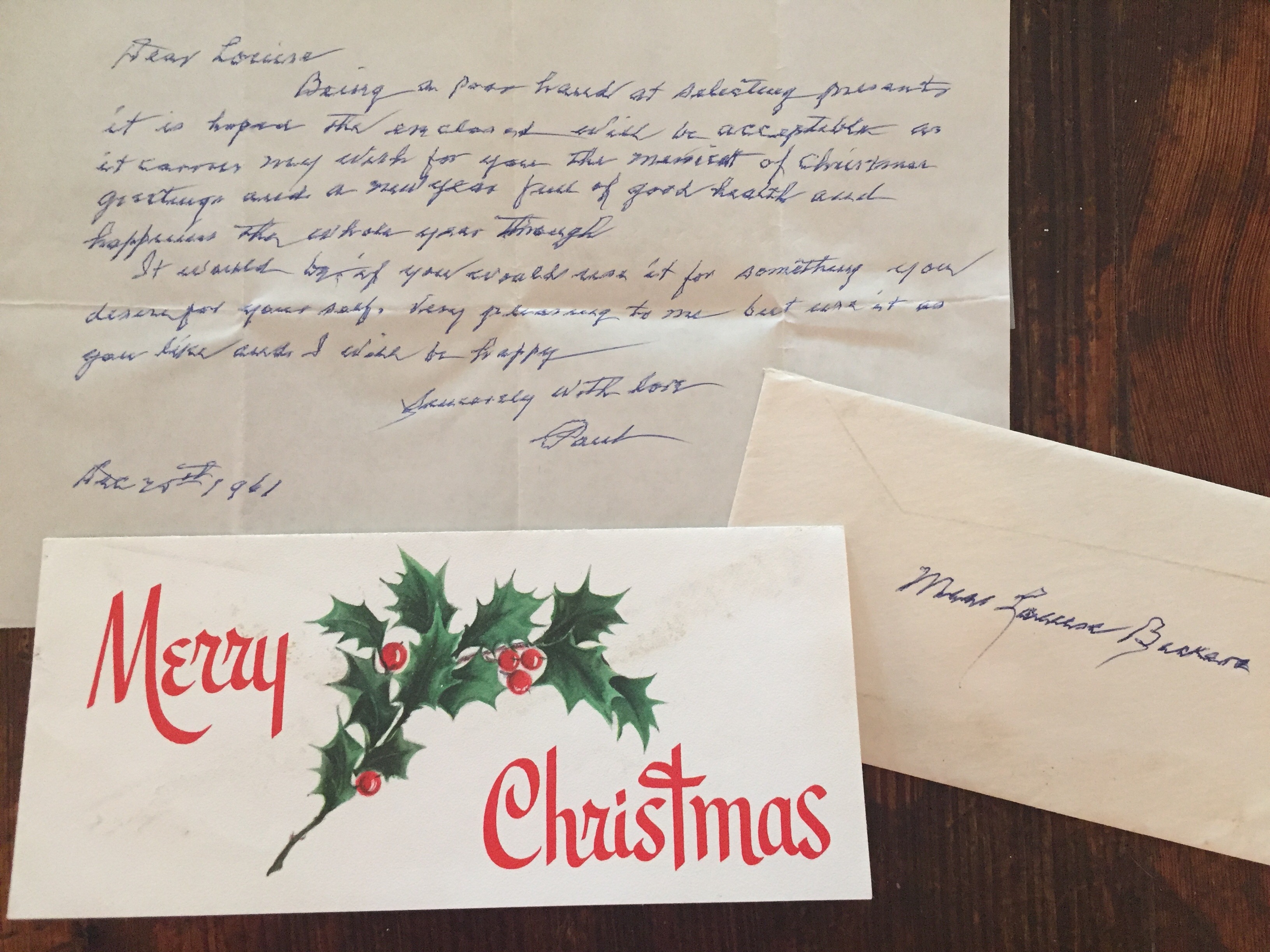
A holiday greeting from the man I knew only as “Mr. Strickland.”

“Dear Louise …” writes one Paul B. Strickland in shaky blue script. “Being a poor hand at selecting presents, it is hoped the enclosed will be acceptable as it carries my wish for you the merriest of Christmas greetings … It would be best if you would use it for something you desire for yourself. Very pleasing to me but use it as you wish and I will be happy. Sincerely, with love, Paul. December 25th, 1961.”

This is the one missive in which Paul addresses Weezer as Louise. Otherwise, it’s “Miss Bickers,” though tellingly, he signs off “Paul,” and “with love,” in each of the letters I’ve found. In 1962 he concludes “with a heart full of love to you.” Family letters as early as the 1930s mention Mr. Strickland. My uncle, planning a visit home from Ohio in September, 1953, writes: “Weez–Reckon Paul would let you off Monday afternoon?”

Paul, it seems, was the boss man. 

My father used to joke about catching Weezer and Mr. Strickland unawares when they were younger. Now and then, he came upon them sharing the living room couch. If Mr. Strickland had his arm around Weezer’s shoulders, he would do the quick head-scratch retraction, as if they were naughty teenagers. My older sister and brothers remember his Sunday visits in later years. Dressed in coat and tie, Mr. Strickland would sit and smile, always at a proper (social) distance from Weez, on a dusty glider on her front porch. But he said little. By this time, both had retired. Paul lived alone in the Georgian Terrace in midtown. Weezer had moved six miles north to her big squarish house. After seeing each other over their second cup every day for decades, they must have felt oceans apart.

Still they kept visiting, and after Weezer lost a second sister to the 1962 Air France crash at Orly, Mr. Strickland was right by her side, comforting her. Why did they never marry? Wherein lay the danger in this liaison? Was it simply against workplace etiquette? Maybe early on Weezer hesitated to inject a new father figure into what was already a dysfunctional situation for my father and uncle. Could be Mr Strickland was reticent about engaging in that dysfunction, though there’s no evidence of that. But later, ten, twenty, thirty years later? My mother’s theory, which no doubt trickled down from my father’s clan, was that Weezer was afraid of passing along the tuberculosis she contracted as a girl (germs, at it again), that even after being cured she vowed never to kiss a man. Hmm. My brother Tom posits that perhaps Mr. Strickland was, God forbid, a Protestant. Might Weezer’s fierce faith have led her to resist his advances, maybe even to lean on a certain germophobia to soften the blow while avoiding a “sinful” entanglement?

My mother’s attic, though teeming with rosaries and relics of the saints, has not provided a clear answer. Weezer was a prolific letter writer, or letter-typer, I should say. She tapped away with dry wit on Beck and Gregg letterhead, often annotating and always signing by hand. Two weeks before my parents’ 1941 wedding, she needles my father about expensive gifts and potential guests and updates him on a family controversy concerning their write-up for the paper. “When I get ready to announce my engagement …” she writes. “I’m going to write it myself, or get St. Peter to do it.” And handwritten on the reverse is this: “Will there be any question about the priest marrying you in Sara’s back yard? Better see!”

fullsizerender-14
Letter (misdated 1951 but sent in ’41) Weezer wrote to my father a few weeks before his wedding.

My mother was a Baptist. The logistics of getting them hitched by a proper priest in her small Florida town created many a sleepless night for my father’s kin. The idea of their marrying at all gave them apoplexy. In this day of destination weddings and bachelorette weekends and TV rose ceremonies, it’s easy to look back and laugh at their anxiety, but to Weezer and her family, marriage was more sacrament, less party. The traditions of the Church mattered to them. A lot.

And yet, in the end Weezer gave my parents her blessing. She bent the rules for the man she’d raised and loved like a son. Why not do as much for herself? And who even was this man my surrogate grandmother loved in secret? I ran a Google search. Nothing. On Ancestry.com I found a possible match for a Paul Strickland, born June of 1883, died August 15, 1970. Made sense. My clearest memories are of visiting “Mr. PBS” in a nursing home. Beyond that, no updates, no ancestry leaf-hints. Far from satisfied, I went to the downtown library and found (on microfiche) this Mr. Strickland’s obituary. It revealed that he’d resided in Atlanta, that seven years prior he’d retired as vice president from Beck and Gregg Hardware (bingo), and that he was survived, as Weezer would be two years later, only by nieces and nephews.

Then this: “Services for Paul B. Strickland, 87 … will be held at Concord Baptist Church at 3 pm.” Baptist. And retired at age 80–who works until 80? A man who prefers the company of a co-worker to his empty apartment.

Late in her spinsterhood, Faulkner’s Emily Grierson finds a sweetheart in Homer Barron, a Yankee foreman on a scalawag-inspired construction project. Some in town are hopeful Emily will marry at last. Others, namely her out-of-town kin, are scandalized by the idea of Emily taking up with a Yankee. Their outrage, stoked by Emily’s pride, leads to a haunting conclusion some see as a twisted sort of triumph for Emily. Faulkner later said this about his story: “I pitied [Emily], and this was my salute … to a woman you would hand a rose.”

fullsizerender-13
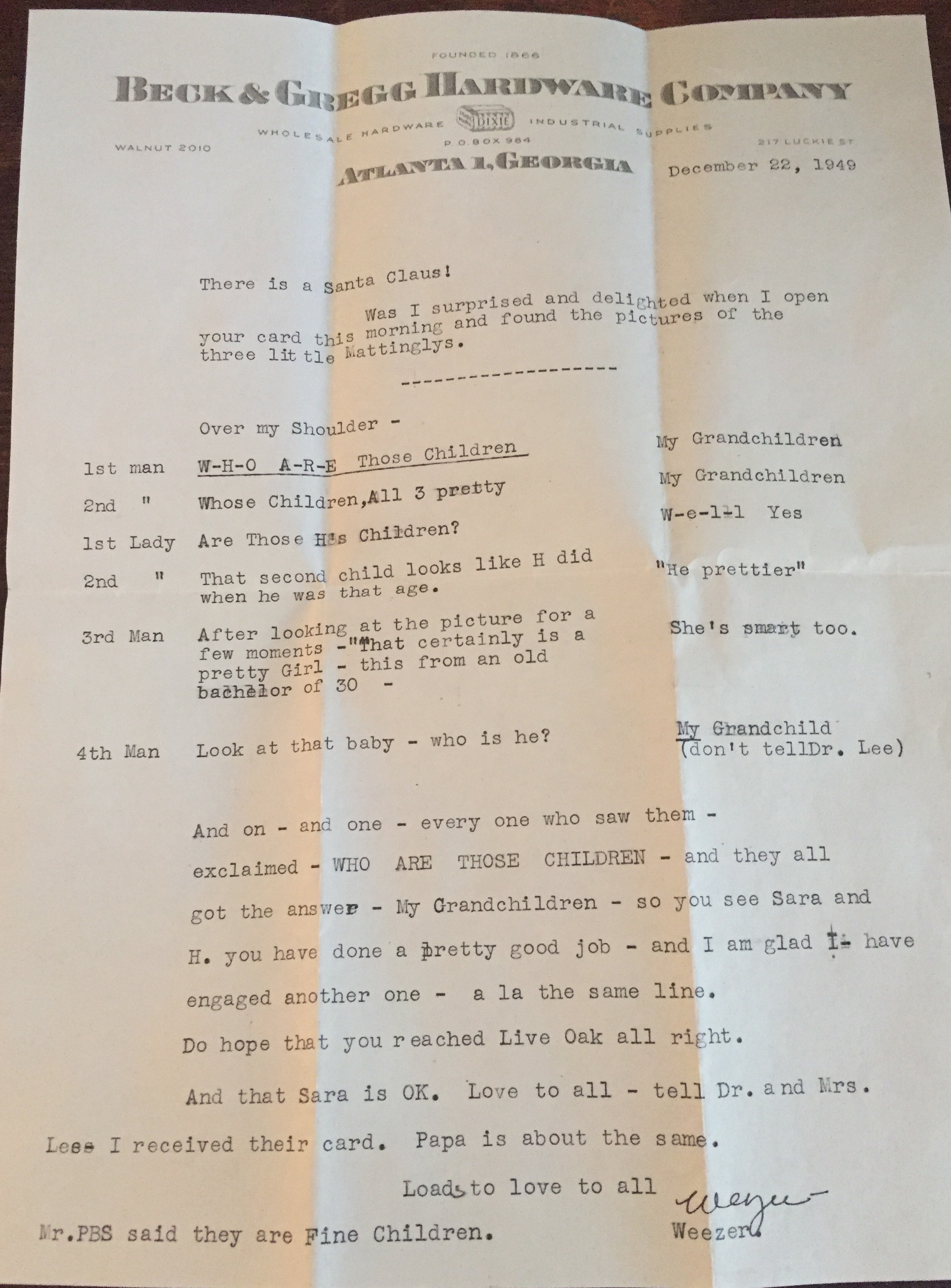
“Mr. PBS says they are Fine Children.”

I don’t pity my Aunt Louise. I admire her. She stood down a pandemic, bound together a splintered young family, supported her sisters and cared for aging parents. In a time when women didn’t much, she built a career for herself and found fulfillment in it. She lost two sisters far too young and outlived a third. And somewhere across town–who knows, maybe just where she wanted him–she had a partner through it all.

December, 1949: Weezer writes my father to thank him for sending along a Christmas card and a photo of my three oldest siblings. “There is a Santa Claus!” she begins, and goes on to describe the dialogue that transpired among her and her co-workers as she passed around the card:

“First Man: ‘Who are those children?’

Weezer: ‘My grandchildren.’

First Lady: ‘Whose children, All three so pretty?’

Weezer: ‘My grandchildren.'”

This routine continues with another “Lady” and three Men giving like responses before Weezer signs off, with love. Then, as if she just can’t hold it in, she types a P.S. for my dad: “Mr. PBS says they are Fine Children.”

I feel I know my great aunt Louise a little better now, Louise the woman, the survivor–feisty, hard-working, proud, and passionate in ways her faith and her scarred past caused her to hide.

A dozen roses to you, Weez. I bet you smoked that pipe with abandon.

Generation Sandwich

“How’s your mum?” asks the sunny checkout woman.

My heart does a loop-de-loop. Hanging in there, I almost say, a grapefruit in one hand and a pack of sponges in the other. For so long, this was my stock response to this stock question from this kind-eyed Pakistani woman with the sprawling memory. This isn’t my usual grocery. Close enough to my house, it’s closer to my mother’s, or to the house that was my mother’s, and my father’s, mine, for half a century. In the years after we took away Mom’s keys and before her get-up-and-go got-up-and-went, we did her shopping here.

“Oh, she passed away,” I manage, cheeks flushing with heat as I do a quick calculation in my head. “Um, a year—no fifteen months now.” Can she have been gone that long? And why this need to pin it down, to date her death for a stranger?

“So sweet,” the woman says, her soft features sagging. “Your mum … such a sweet lady.”

6-28-2009_015
In my mother’s sandwich days, she sometimes included my grandmother on family trips to Fernandina Beach, Florida. Here, with my sister, she glows.

With this, she gives a wan smile and we all grin and nod like eager Labradors, even my daughter. Yes, my daughter is there at the far end of the cart, home from college for the holidays. Leaning in for the dish detergent, she smiles broadly for the checkout woman then glances at me. They were close, Emma and my mother. They shared a love of fashion, things that sparkle, a petite stature. She misses her grandmother, her “Joe,” but there’s more. Already, at twenty-one, Emma’s smooth pearly skin gives off a curious vibe, a blend of sorrow and unease I’m all too familiar with. She’s as concerned about me in this awkward moment as she is mourning our shared loss.

I finger the sugar snaps in their crackly bag, straighten the box of microwave bacon on the belt because, well, who knows why. When on the spot, I am an aligner, cutlery on a spread table, the floor mat at the door, bacon on the belt.

“She shopped here?” asks the bag boy. “Your mother?”

Our rescuer! He’s young, Emma’s age, maybe younger, and a pleaser. I can see this in the easy way he puffs out my recyclable bags and hands in the heavy items first, the eggs on top, the meat in its own plastic.

“She did,” I say. “All her life! She was ninety-five …”

“Oh yes!” The checkout woman, keying in the zucchini. “She shopped here each week …”

She sweeps a hand in the direction of the produce, the condiments aisle, the canned goods. A knot has risen at the base of my neck. Enough, I think, but still I track the woman’s wave and who is that, just there? A small bent white-haired figure struggles to read the label on a jar of jam. She fumbles for her glasses, shakes her head, purses her lips. Something is not right and she reaches, a tremor in her hand, to reshelve the jar. It doesn’t fit. Where is that patch of free space she pulled it from? With a sigh, she drops it in her buggy anyway then scans the shelves again, squints at the creased scrap of a list between her gnarled fingers.

Marmalade. Maybe if I think it hard enough, she will remember … It’s the orange marmalade you want, the one with the red gingham cinched over the lid.

“Oh, how I remember her …” The checkout woman again, on a roll. “She walked like this …”

The bag boy pauses, his chin tilted up with interest, a pound of sugar balanced in one hand. We watch as the woman drops her arms to her sides and shuffles her feet—my mother’s signature walk in her last fretful years. Like a penguin, my young grandnephew once said, nailing it. The woman flicks her eyes at me and quickly away—has she gone too far? Yes, and no. Emma smiles again, not so broadly. I follow her lead. After all, how often have I mimicked the penguin walk myself, in Mom’s presence and otherwise? We only tease the ones we love …

“I used to help her outside, to wait.” The woman can’t be stopped. She meets my gaze, her eyes less kind. In her household no doubt, the elderly are revered.

“To wait for you,” she continues, gesturing again, through the plate glass window . “On the bench.”

The bag boy glances over his shoulder, past the Lotto machine and the ice cooler to the empty bench on the far side of the glass. It’s true, on very busy days I sometimes dropped Mom to do her shopping alone while I scooted off on some other errand, to pick up a child from baseball or gym practice, maybe to grab a cappuccino. There were times Mom had to wait on me. She didn’t mind, usually. In fact, she liked it! I expect I can do my own shopping … she would say with a toss of her head. She needed it, my mother, this small dose of independence.

Andshe was not ninety-five then! I want to cry it out. She was late eighties, maybe ninety-one at the most! Boy, does my head hurt.

“Ninety-five!” the bagboy exclaims. He too meets my gaze, yet with nothing but good cheer. “What a life. I’d take that any day.”

I grin fiercely, more Pit Bull now than Lab.

“Yes,” Emma says. “Ninety-five!” She settles a bag, then another, into our cart. I swipe my card, say my thank you’s, and we turn to go.

“She was nice,” Emma says on our way to the car. “That lady. She must have really liked Joe.”

“Yes, she’s worked there a long time. I used to …”

“I know, Mom. You did everything for Joe.”

She doesn’t mention the bench, or the penguin shuffle, or the fact that in those feverish wonderful days when she and her brothers lived at home and their widowed grandmother lived half a mile away, I may have let things slide a bit, that on those last visits to this grocery Joe might have been too rickety on her feet, too forgetful, to be left to her own devices. Emma doesn’t say that maybe Joe needed her daughter there to pull down the marmalade and help her out to the bench.

She doesn’t mention it, but like she says, she already knows.

IMG_0556
Our happy sandwich, May 2010.

Peace, on Earth

image
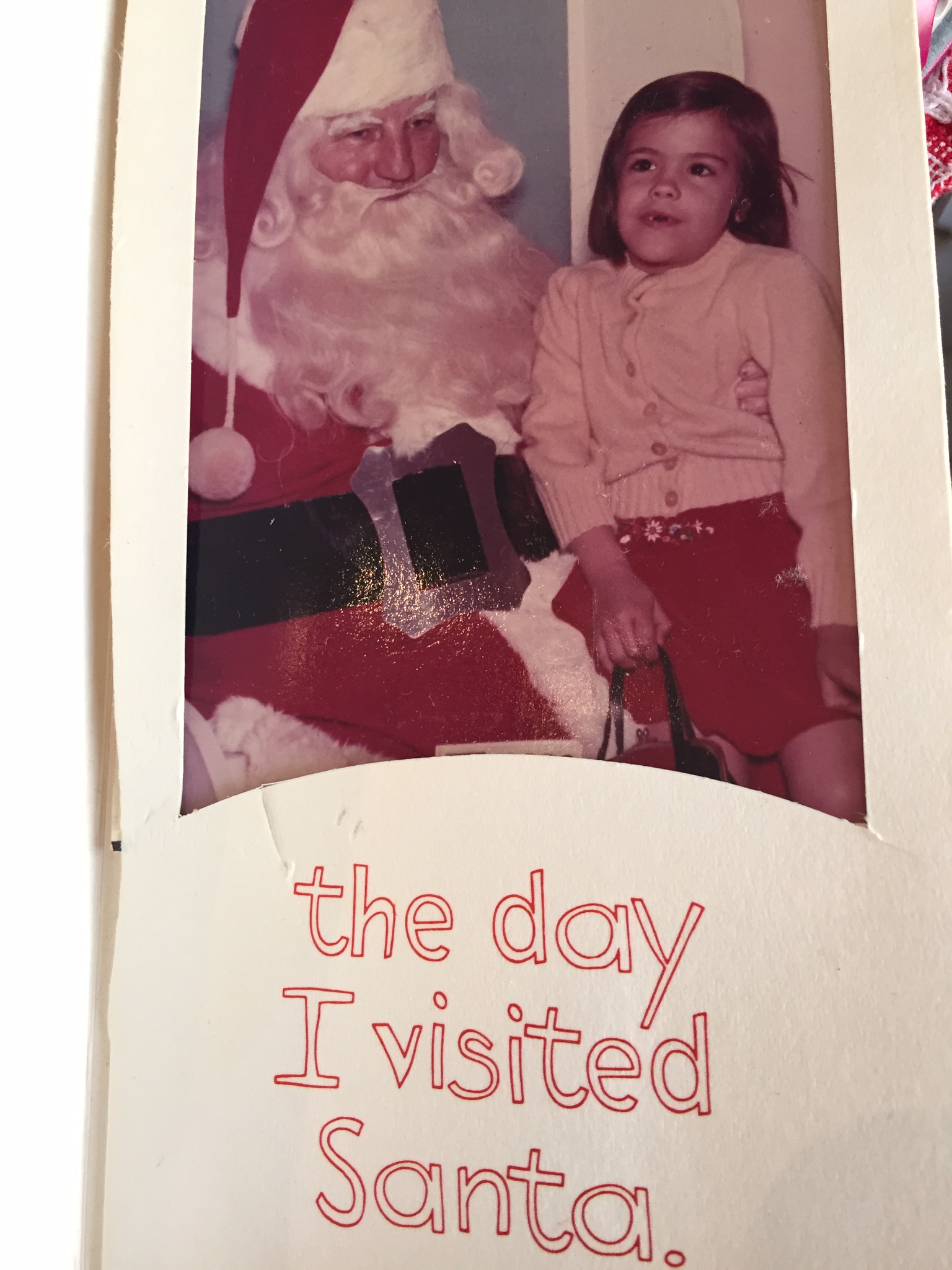
Two front teeth, please, and don’t even think about grabbing my purse. Circa 1965.

It’s happened again. Another big flashy holiday, the biggest, flashiest of all, and my pen, errrr, keyboard, fails me. What to write, how to say something fresh and worthwhile that’s not been said before? I noodled over a Thanksgiving post, The Holiday Table perhaps, and in it, creased snapshots from the Attic featuring me at ten, seventeen, thirty-two, gathered with my siblings, nieces and nephews, later my own children, around my mother’s Queen Anne dropleaf. In each photo, my father smiles, his specs aglint with the murky autumn light. In his hands, a sharpened knife, a serving fork, and before him on the linen tablecloth, a plump glistening turkey, a cornucopia of gourds or harvest fruit, an array of flatware and crystal …

Hark! Is that Norman Rockwell tap, tap, tapping at the door? Sub in a poinsettia or a bowl of holly (as my mother often did), tattered stockings by the fire, and soon we’ll have Tiny Tim hobbling in on his crutch.

So I skipped the Thanksgiving post. No matter where I went with it, cliché ensnared me like an unwieldy octopus. But in the weeks since, I keep coming back to these instant replay table pics, to those uneven smiles and sometimes weary faces. I think of the hundreds of old Christmas cards my mother saved, the bag after bag I tossed during last spring’s Attic purge, of the rescue bows and recycled paper, the rusted tree stands and broken ornaments.

image
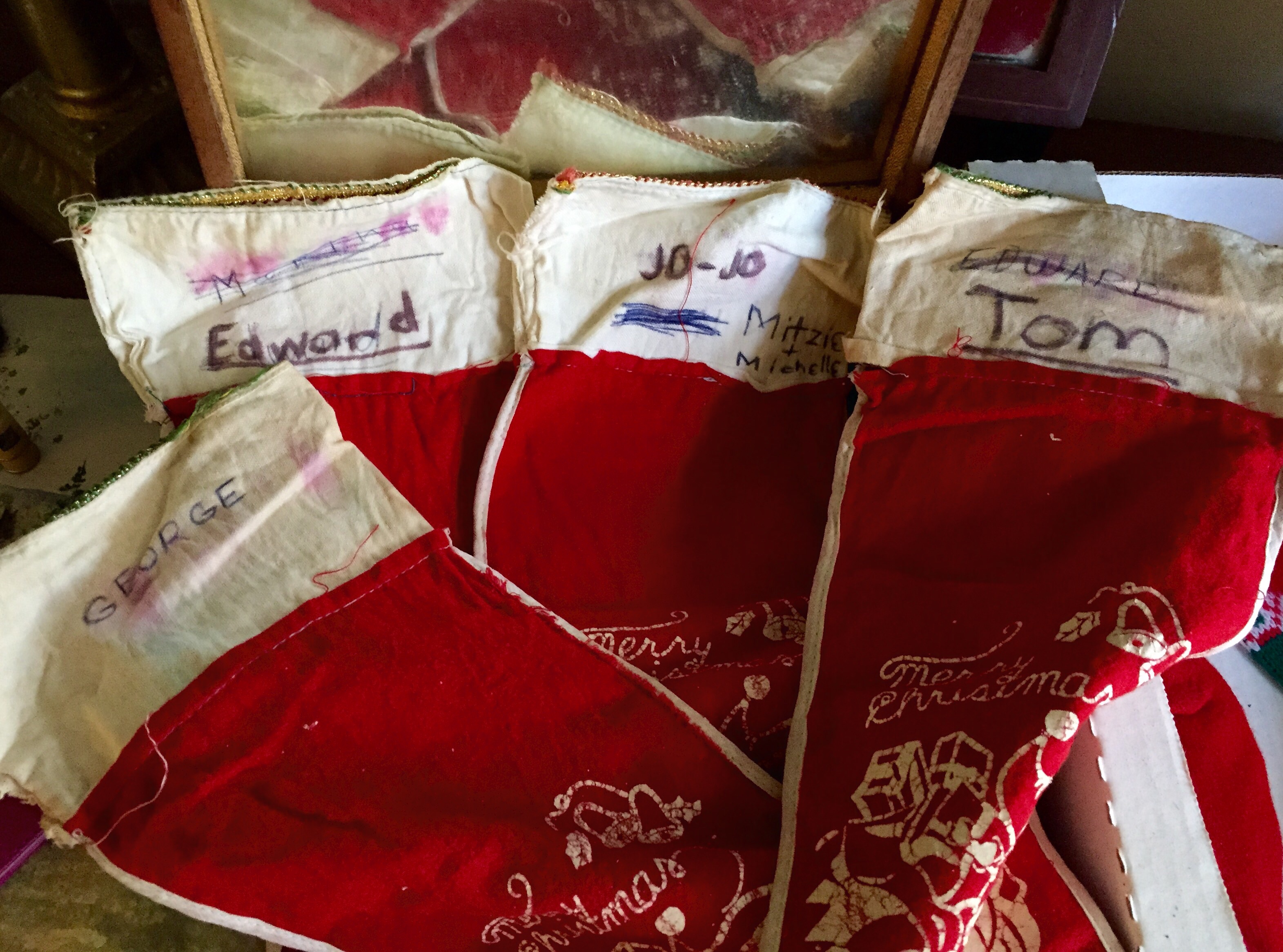
Peculiar as it now sounds, we waited ’til Christmas Eve to hang the stockings. The youngest, I was charged with fetching them from the Attic and updating the guest list, so to speak. With my handy Magic Marker I reminded Santa which of my adult siblings were currently in residence. Were we so destitute? Why not purchase fresh stockings as the family grew? It boggles the mind, yet this particular Christmas my sister-in-law had to share her loot with her daughter, Michelle, as well as with my sister.

My mother even saved used gift tags, a few of them from gifts my grandparents gave her when she was a child. These rustled up such happy thoughts. Oh how I loved to unload the box that arrived each year from our Florida grandmother. I took great care to arrange the gifts just so under the tree for my older brothers and sister to see. Who cared that Grandmom never bought us anything we wanted or needed? I looked forward to the yearly cotton handkerchief from my grandfather, always embroidered at the corner with something magical, a fairy tale cottage, a bouquet of flowers, a single daisy. I used to marvel, too, at my grandmother’s knack for wrapping gifts without using a single snip of scotch tape. Just paper and ribbon. I still don’t know how she did it.


What’s that? It wasn’t about the gift, you say, not the present but the presence, the tradition? Bingo! The clichéd tentacle squeezes … Yet, how can I deny it? Christmas was big at our house, a day my father adored. He and my mother left us a wealth of moments to remember. Like all memories, some bring us joy now, some leave us sad. They’re stubborn little buggers, too, setting up shop in our hearts, our minds, our psyches if not our souls. So we laugh, we cry, we treasure, we curse, but by golly, as we gear up to take another spin ’round this beautiful scarred old planet, these moments will have their say.

Yesterday, I spent an afternoon in the woods, at a spot my Mattingly family grew to love during the last years of my parents’ lives. Each Labor Day for fourteen years, as many of the four generations strong of us as were able would fly in or motor up to spend the weekend together. We hiked, golfed, ate, drank, laughed, rocked, ate, drank and laughed some more. This past September, the first since my mother’s death, we weren’t able to pull the trip off. This cooked up a nice cocktail of conflicting emotion for my siblings and me. The torch had been passed and already, we were failing to carry on a cherished, if expensive, family tradition. No surprise then, that when out of the blue my husband planned a quick getaway to one of the cabins where on those Labor Days of old cousins and nieces and nephews slept and played, I was a smidge hesitant. Their fly fishing gear happily stowed in the trunk, husband and older sons drove up at dawn and I followed later, with a sizable lump in my throat. Still, it was a lovely balmy December day and minutes after I pulled in, I set off to hike to Duke’s Creek Falls. I’d hiked there dozens of times before with the family group, the wise and slow of foot and the young and energetic alike. The woods were silent by comparison, my journey wistful but sort of okay. Alone, I could hear the scamper of small creatures through fallen leaves, bare branches clicking in the light breeze, Duke’s Creek gurgling along.

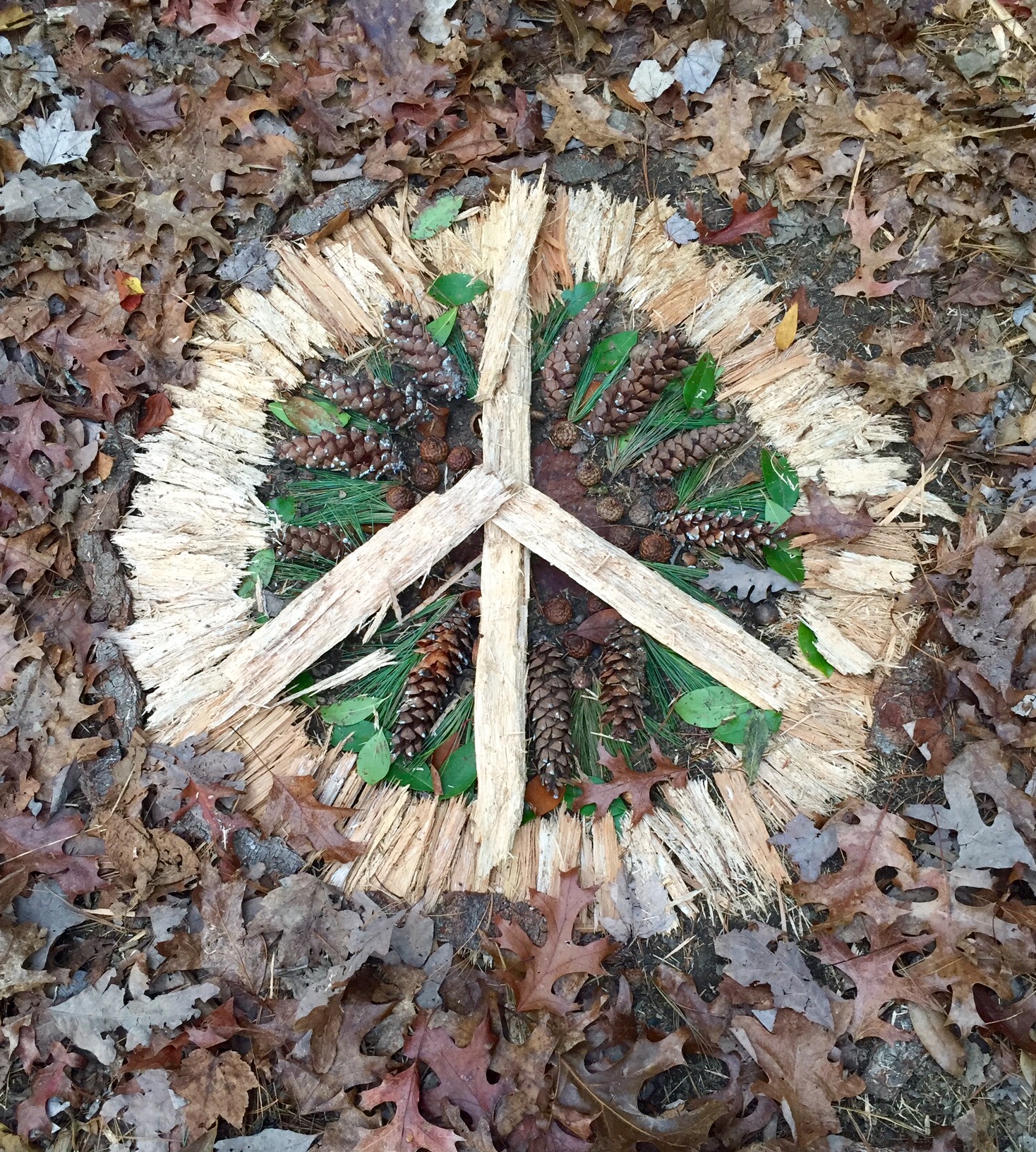
Then, I rounded a corner and there in the middle of the path was this–

image
Peace, on Earth. Literally.

Ah! Two feet in diameter, a tired symbol made new, a circle, a wreath! And one fashioned by hand (using the same holiday greenery I paid way too much for last week at Pike’s Nursery). What a generous soul, to pause and leave me, others, this, a moment to remember. I snapped a photo with my Iphone and hiked on. By the time I got back to our cabin, this post had nearly written itself in my mind. A good gift, and many thanks to my fellow hiker, wherever you are.

Peace, everybody, really. And good will. Hope your holidays are full of them.