The Places We Become

Tuesday, January 28th, 2025, would have been my brother John’s 75th birthday. I woke thinking, Oh, I need to call John today. How strange, how wrong, it felt not to have one of our cross-country chats. Like me, John was born and raised in Atlanta. When he was around thirty and I was twenty-ish, he moved to San Francisco. There, he became a clever, in-demand, pen-wielding ad man, later a creative director who befriended the celebrities he hired for shoots or met in Marin County on his children’s ball fields and school auditoriums, celebs like Steven Spielberg and Téa Leoni. Over the years, those of us living our quieter lives back east kept hoping something would draw John home to stay. We missed our smart gentle brother, but California had lassoed his heart for good. Our southern charm and Georgia sunshine were no match for the fog rolling in off the mighty Pacific, the hills rising impossibly beneath the wheels of the cable cars, the giant conifers piercing the skies, the 49ers, and the quirky beach towns where John summered with his family.

John and me, with our mother, in the early years of his California life.

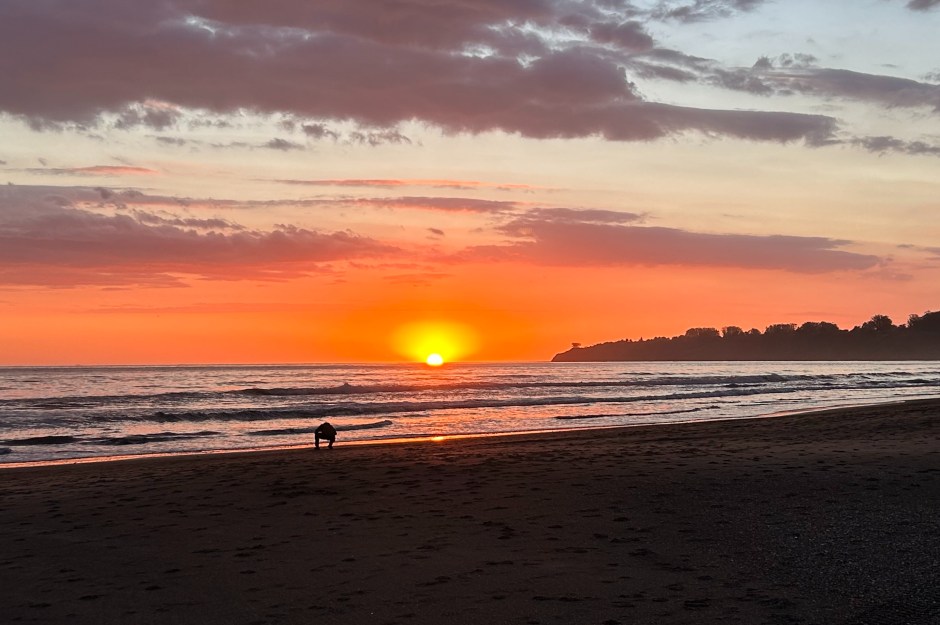
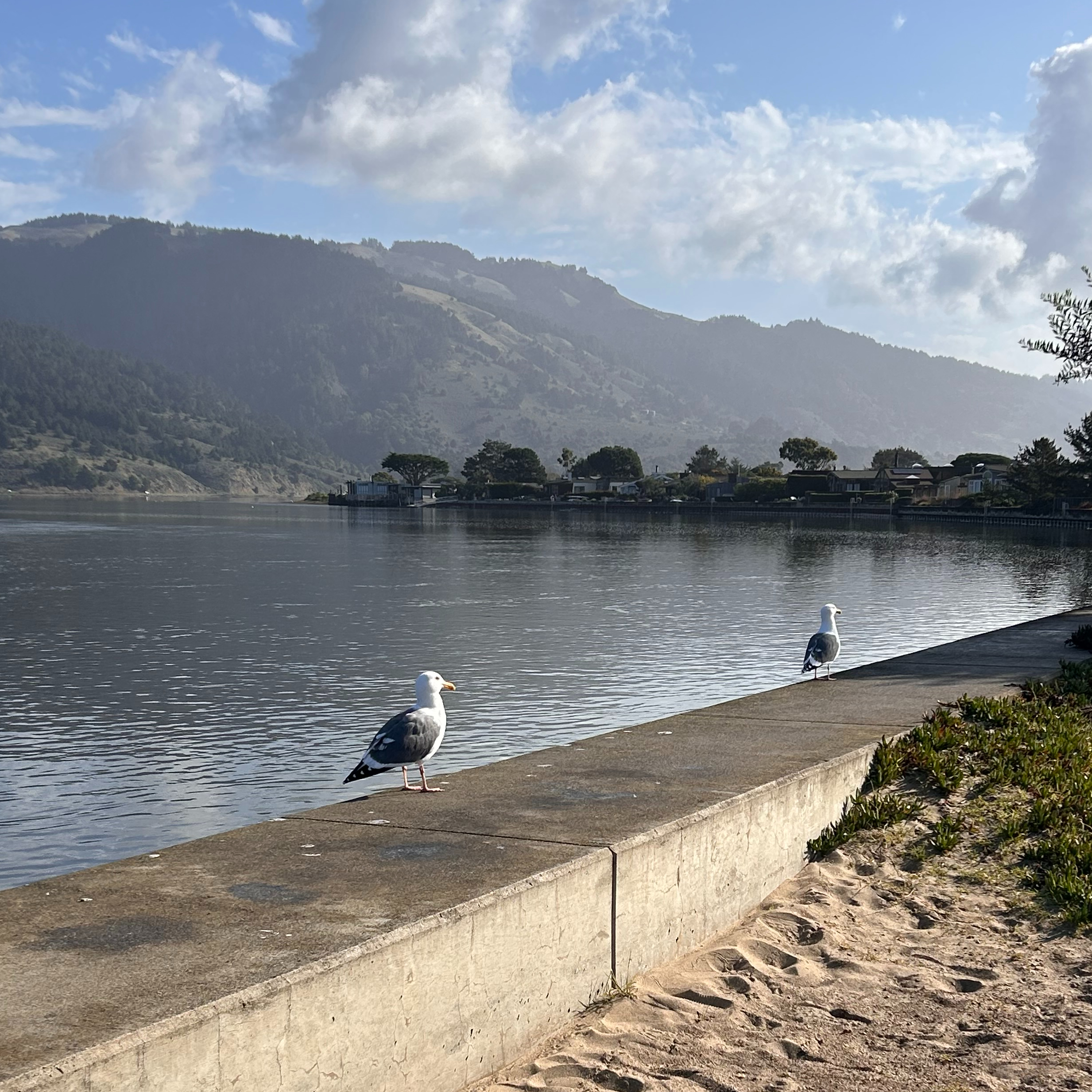
John’s son and daughter grew to love San Francisco and Marin County with a passion to rival his. On Saturday, the first anniversary of his passing, Ben and Laura Lee held a memorial service in Stinson Beach, the quirky beach town John loved best. Tucked below Mount Tamalpais in West Marin, Stinson curves along a peninsula east of Bolinas. Seals swim and dive for their dinners in the lagoon on the peninsula’s north side. Egrets and herons glide over the sea and roost in the trees.
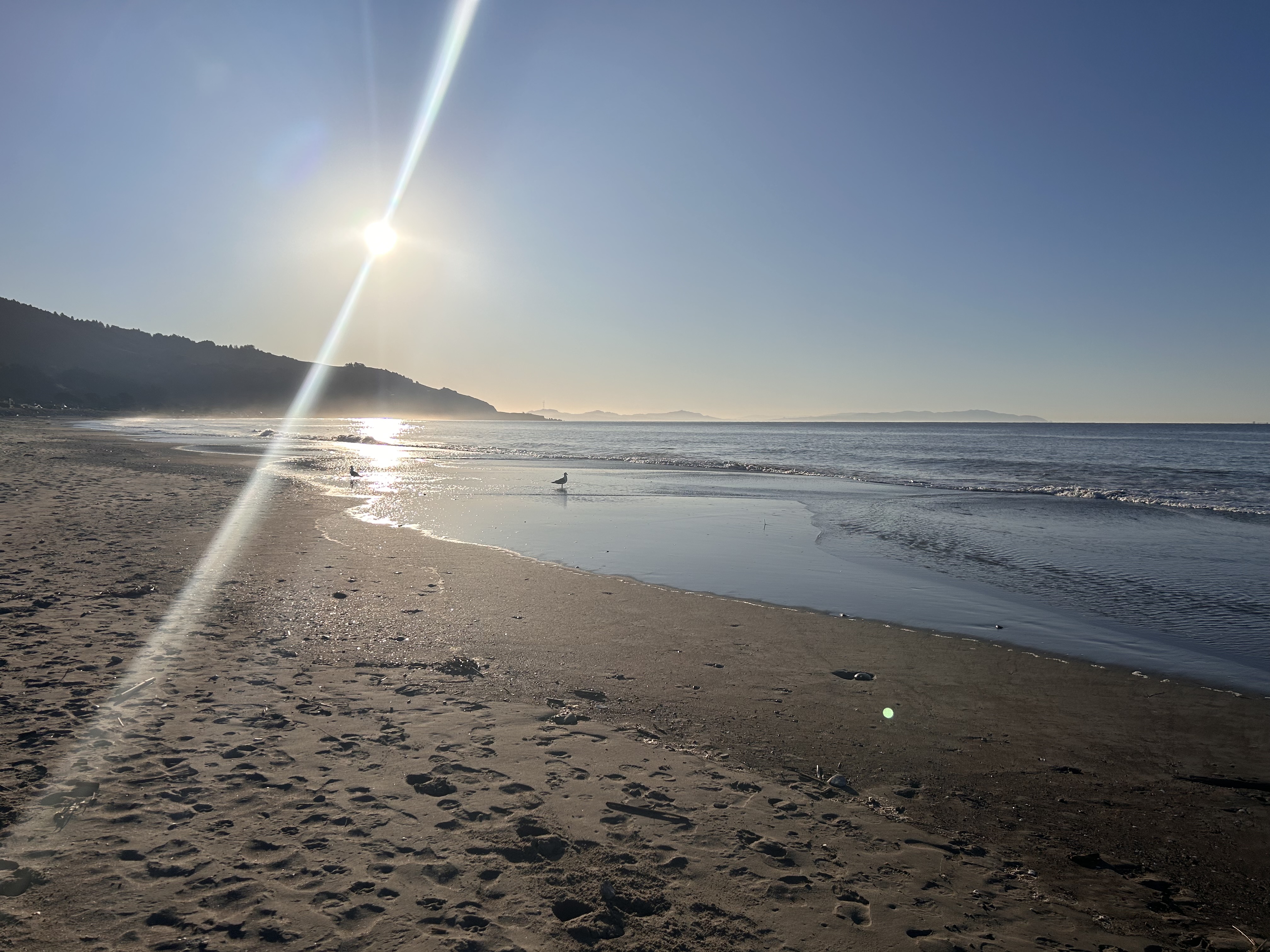
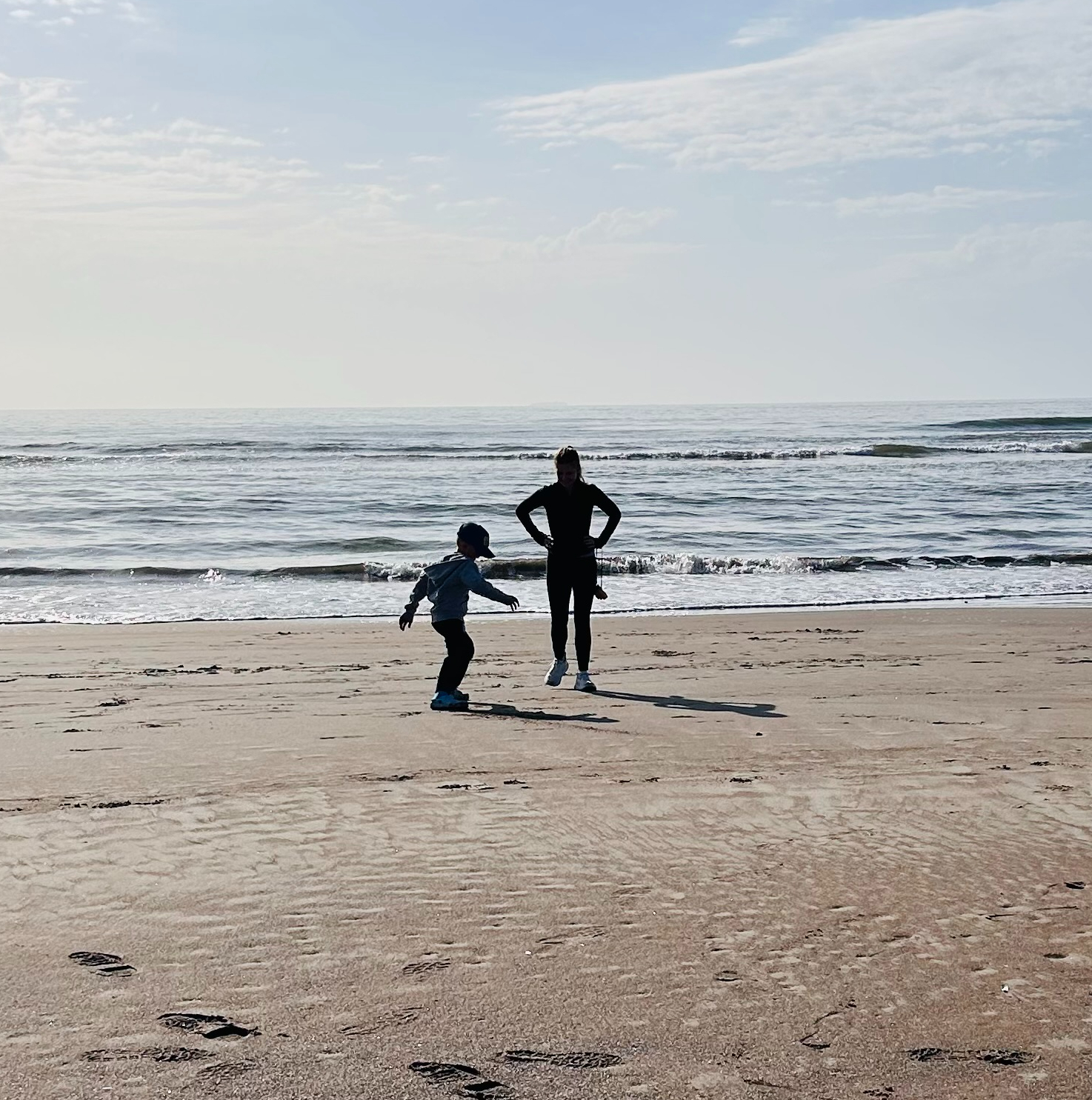
Our family had visited John often in recent decades, and these wonders of Stinson, the memorial itself, brought him back to life in bittersweet ways I hadn’t expected. Ben and Laura Lee set up a display that featured laminated copies of the print ads John created. His original portfolio briefcases spilled their treasures: John’s brainstorming notes, folders holding rough drafts, more ads, including one for a brewery that features John himself striking a gangster-like pose. A longtime colleague told tales of John’s ad days and reminded us he earned a professional nickname–Mad Dog Mattingly–when he once shed his Southern gentleman skin to stand down a difficult and demanding director. John’s children shared stories about John as a California Dad–the hours he spent shoveling snow at their cabin in Lake Tahoe to create luge-worthy troughs for their sleds, the steak dinners and fish fries he prepped, his habit of pulling over at every turnout during countryside drives–“Take it in, kids” his favorite refrain as they gazed together at the sea, the mountains, the dramatic cityscape of San Francisco. As her comments drew to a close, Laura Lee spoke of John’s close relationship with his grandson, her five-year-old son Ollie, who called him Poppy. With that, Ollie rose from his seat and lifted a basket from a table near the front. “California poppies,” Laura Lee said as Ollie handed out small bags of seeds for those in attendance to plant. Later, she, Ben, and Ollie spread John’s ashes beneath a Blue Oak tree that rises leafy green atop a slope of Mt. Tam, where in better days John loved to hike and think and admire the view.

One of John’s portfolios

The next day, as we walked Stinson’s main drag, we paused in front of the tiny Stinson bookstore that sits across from a bar and grill called the Sand Dollar, a bookstore we learned John dreamed of owning. Sell books by day and live in the apartment above by night. Somehow I never knew, but that’s how John hoped to spend his golden years. I’d wager he read nearly every book in that store, but life got in the way. In his early fifties, John developed a bad back, had a couple of failed surgeries, and spent the next twenty years struggling to adjust to the often debilitating pain that resulted. His dream was deferred, as so many are. Though this makes my heart ache, I’m glad to know of it. It helps me better understand the brother I loved.

Home now, I can hardly wait for my poppies’ spring bloom. And I’m grateful for the new memories of John I’ve gathered, new images of him as a California man. Among these, I’ll cling to two in particular, one grounded in reality and the other a bit of a fantasy: John resting for eternity in the shade of his Blue Oak, a chilly breeze rustling and the mighty Pacific spread before him, and John very much alive, shelving books in his tiny store, his glasses on his nose and his mustache twitching as he chats and smiles and rings up customers. As dusk falls, he turns out the lights, scales the stairs without pain, and enjoys a steak and a glass of wine, the rumble of the surf in the distance and the summer bustle of his adopted town below his window.

John’s Blue Oak. Swinging beneath, his daughter; gazing out to sea, his son; playing, his grandson.

To Know A Mother

img_0552
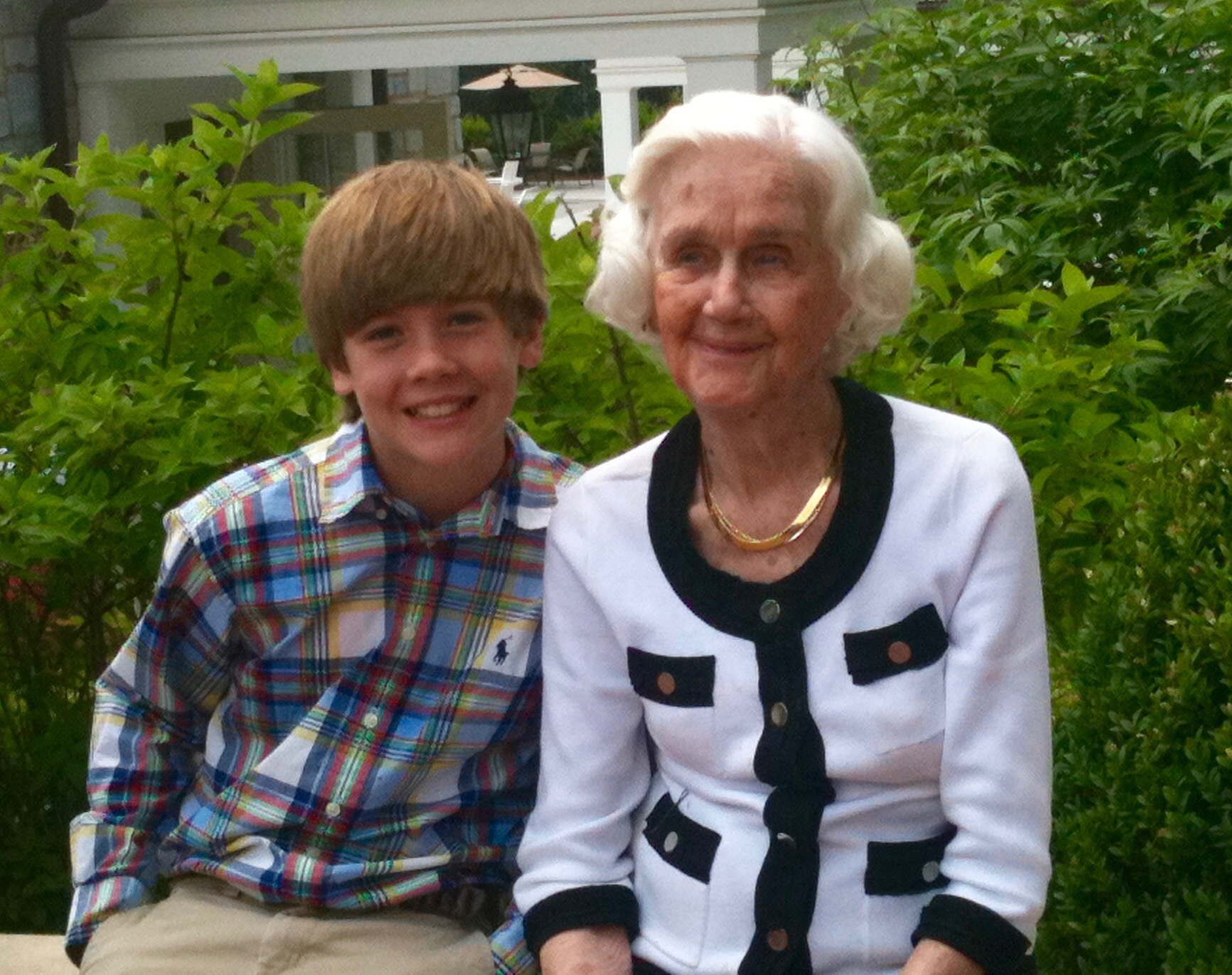
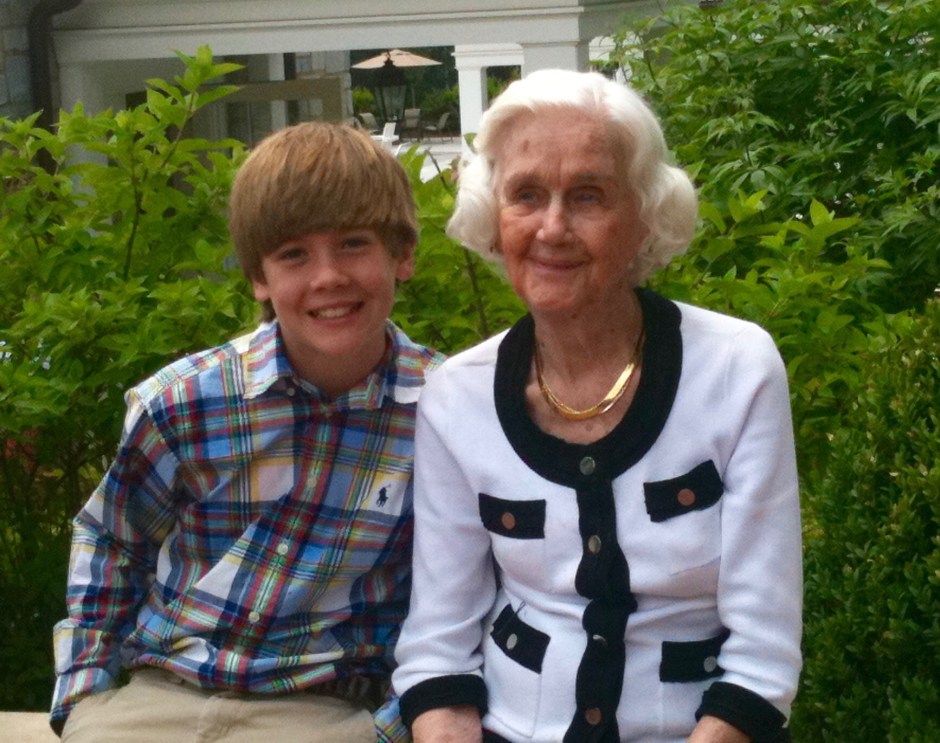
My mother with her youngest grandchild, who happens to be my youngest son, in 2010.

Now that our nest has emptied, I have more time to think, especially during the unfamiliar quiet of morning. Gone are the frantic searches for blazers and ties on dress-up days, gone the burned toaster waffles and spilt milk, gone the forgotten permission slips. So I sit with my coffee and watch the sky brighten outside the window. I check the weather in all the places where my scattered children live. I read the news (too much news, and immediately regret it). I scan social media, pour another cup, play a few words on WWF, maybe do the Times Mini Crossword. I mean to write more, every day (you’ve got all this time now, finish that damn novel!), but thus far, the muse remains fickle and slow.

Today I woke determined. My nerves sparking with caffeine, I trained my index finger over to the Poetry app I installed, oh three years ago, thinking to read a poem a day for inspiration. (Total number read to date = five) Clinging to the idea that it’s never too late, I chose a theme, “Passion and Nature,” and waited to see what the Poetry algorithm would find. Never mind that by “passion” I meant fevered devotion to a craft, the app figured romance (…er eroticism). Still, a piece called “The Garden by Moonlight” caught my eye. Ignoring the sexual undertones, I lapped up Amy Lowell’s lyric imagery and the cadence of her simple sentences: A black cat among roses … Phlox, lilac-misted under a first-quarter moon … The sweet smells of heliotrope and night-scented stock … Moon-spikes shafting through the snow ball bush …

I thought of my mother, and the cut flower bouquets she had such a knack for, the postcards she used to send from gardens around the world, the places she took me as a child: Kew, the conservatory at Golden Gate Park, Monet’s gardens at Giverny (I know, lucky me). I read on to Lowell’s final quatrain in which–what a wonder!–the narrator speaks of her own mother: Ah, Beloved, do you see those orange lilies?/They knew my mother/But who belonging to me will they know/When I am gone?

img_4927
My father and I, circa 1976, somewhere in a British garden.

A ping and there’s an email from my sister, reaching out to my brothers and me on the anniversary of Mom’s death. Yep, it’s October 19. My mother has been gone three years exactly. Next Wednesday marks the day my father, whose birthday we remembered October 9th, died fourteen years ago. As I’ve written here before, October has become a month of emotional contradiction for our family, and 2017 has not disappointed. While I was dashing between a big birthday bash for a dear friend and my niece’s wedding in Philadelphia (which morphed happily into something of a family reunion), our second son’s longtime girlfriend, a young woman our family cherishes as one of our own, lost her mother. She was hardly into her fifties, as brave in standing up to the terminal brain cancer she lived with for eight years as she was determined to be present for her children as long as she could.

So mother-loss has been on my mind for lots of reasons. Of course, losing a mother at fifty-four as I did hardly seems worth mentioning compared with losing a mother at twenty-five. And yet what the heart registers, what we share no matter when such a loss comes, is a sort of sorrowful disorientation. How do we step forward without the person who so often, for better or worse, has blazed the path we follow?

The thing is, the beating hearts our mothers gave us are built for more than sorrow. Much more. Along with conflicting feelings, they hoard images, words, memory after memory of the people who move in and out of our lives. Maybe what the poet Lowell implies with her black cat and her moonlit poppies then is something simple, something I know but have to keep re-learning: As long as we take time to share these heart-borne images and memories, to repeat them and pass them along, whether through the written word or music or painting or just plain storytelling over a good meal, we give new life to those we’ve lost.

A few years ago, my daughter and I visited Giverny together. Not unlike Lowell’s lilies, the cascading wisteria, the rows and rows of forsythia and zinnias bursting gold and red against the Monet-blue sky, they knew my mother, who made sure they know me. And now, they know my daughter, too.


Have Faith, Will Travel

image
Who knows when you might need a good piece of hotel stationery? My mother’s collection dated to the seventies.
My mother spent her twenties and thirties (and thanks to me, her forties) changing diapers by day and going to PTA meetings by night. While my father went from WWII vet to laundromat owner and on to the life insurance business, she prettied up basement apartments and matchbox houses ’til they felt like home. But Dad thrived at Guardian Life, and by the time I reached double digits, Mom figured it was her turn, time to shake out her wings and fly, literally. Travel became her passion. I don’t mean quick jaunts to the Georgia coast or the Smoky Mountains, places my father, known to gaze upon a crashing waterfall for hours, loved. My mother didn’t mind an ocean breeze or the smell of woodsmoke now and then, but the older she got, the more she craved something a little higher brow–the French Quarter, Williamsburg, Gothic Cathedrals and castles on the Rhine, the Tuileries, and of course, Harrod’s and Le Bon Marché.


This slideshow requires JavaScript.

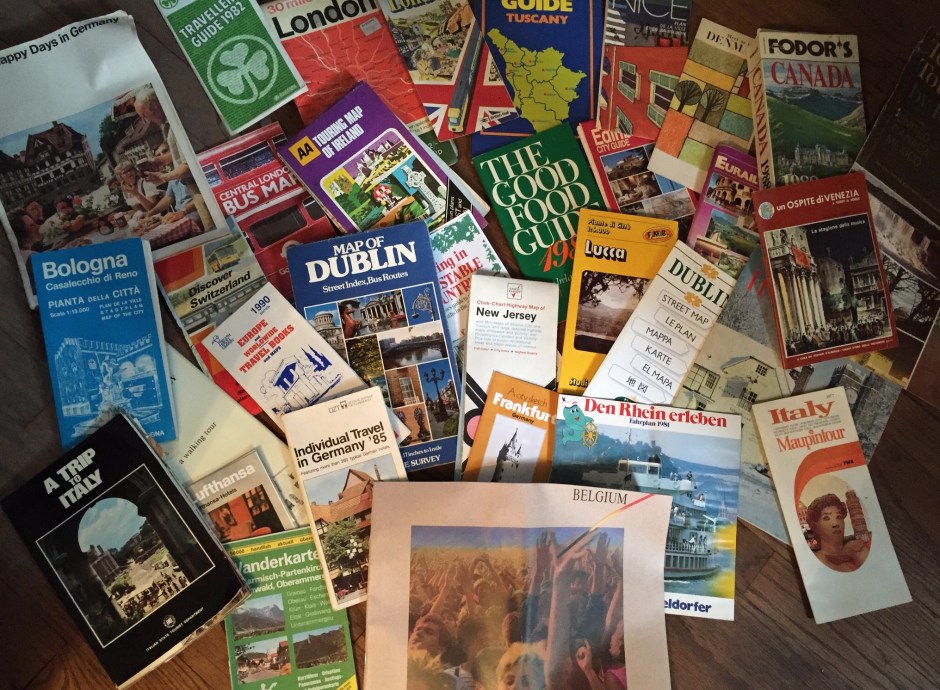
Who knew? The small town Florida girl, the markedly fertile eldest daughter of a Baptist dentist and his civic-minded wife (neither of whom ventured beyond the rolling hills of Virginia) pined for the Old World. In her fifties, my mother joined study groups led by Atlanta professors of history and literature and philosophy. She bought oversized maps and guidebooks (saved in the Attic, by the boxful). She thumbed through classics like A Moveable Feast and Dubliners at the public library. She concocted elaborate itineraries that she oft edited and revised, adding notes in red about what neighborhoods were frequented by which authors and which shoes to wear with what skirt to which restaurant. My father, hesitant but game, found the local Delta office and gathered birth certificates and with Passports and Travelers Checks in hand, my parents were off.

img_1907
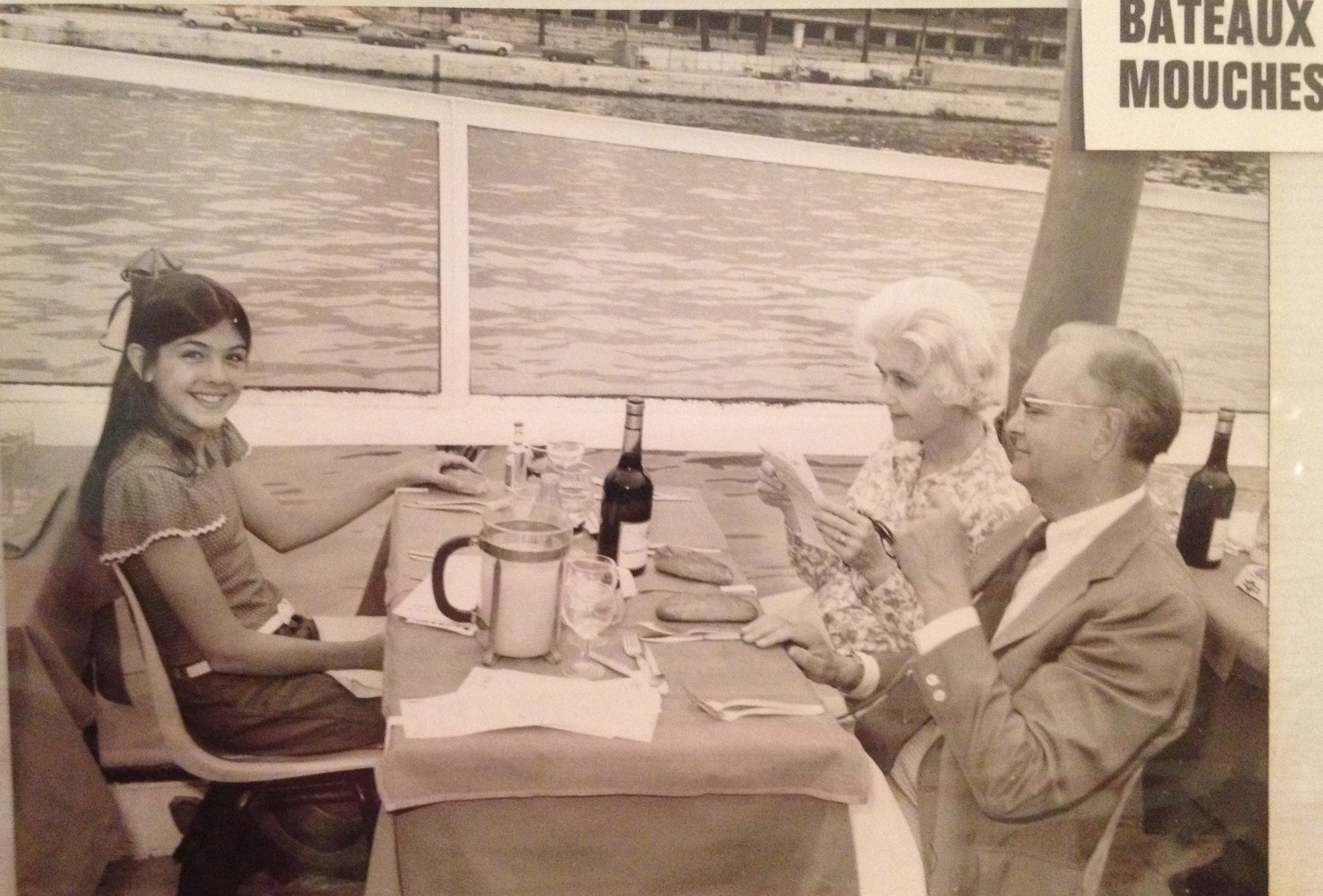
My first trip to Paris, summer 1972. Since, I return often to find the little piece of my heart I left behind.
The only child still at home, I was invited along on some of these Grand Tours. Above, c’est moi at twelve, enjoying a baguette while cruising the Seine. It didn’t occur to me to be bored by the idea of spending a few weeks tagging along with my older parents. Well, not until I hit fifteen. My young heart swelled at the sight of Westminster Abbey and the Houses of Parliament shining in a chilly London fog, or the endless sumptuous rooms of Versailles rising above checkerboard gardens. My spine tingled to see the bones of the saints lying in dank crypts and the passion of Christ splashed out in the bright incongruous colors of stained glass and Italian triptychs. Believe me, I saw no shortage of stained glass and triptychs, also piétas and Virgins with Child and saintly frescoes on stone church walls. My parents, devout Roman Catholics, were a little biased toward the house of worship. We visited Romanesque and Byzantine and Renaissance, everything from the most ornate nave to the simplest country chapel. In fact, the first thing we did after unpacking our bags was to locate the nearest Catholic church, check the times for Sunday Mass, and plan the rest of our activities around them.

image
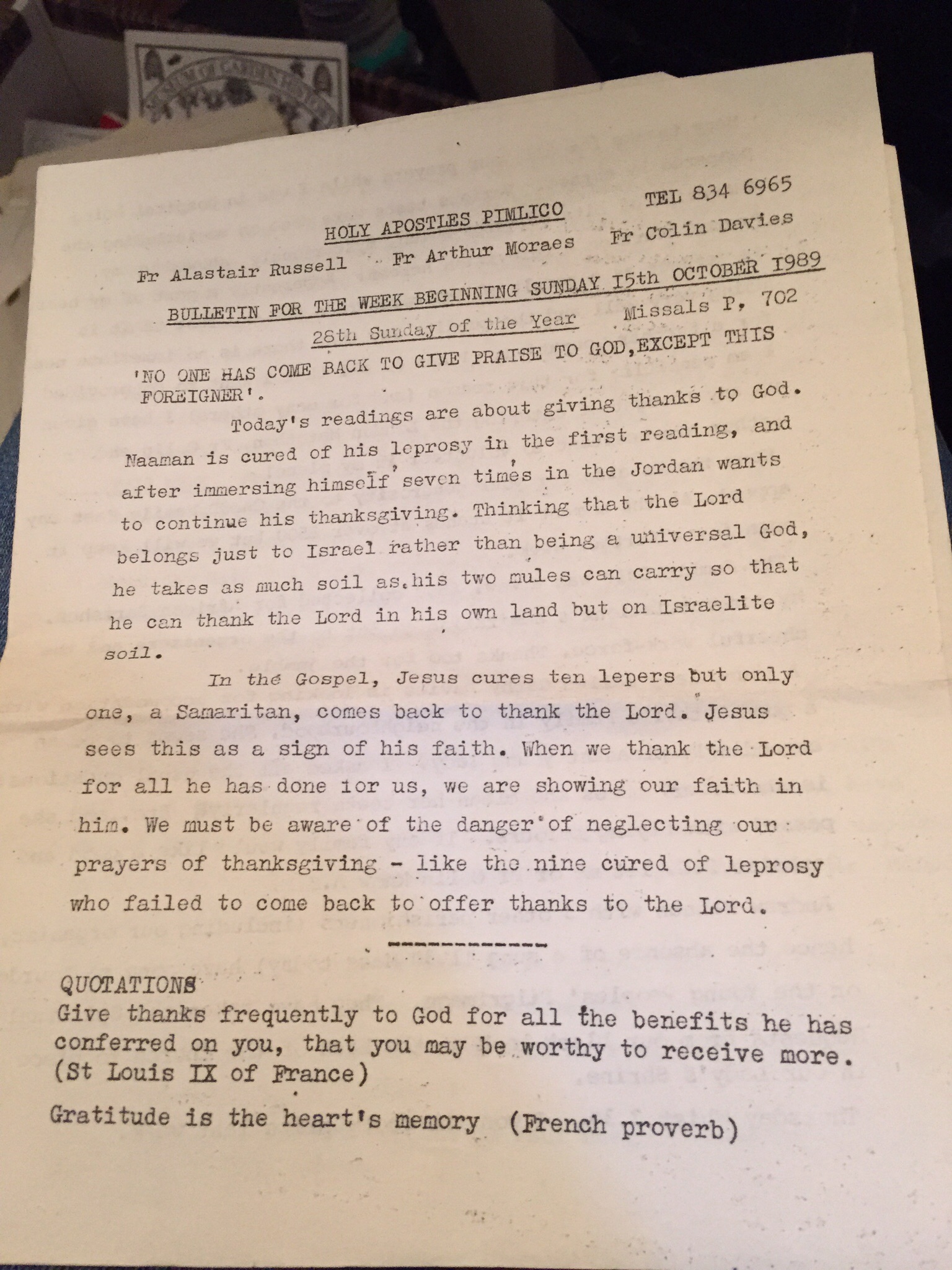
Sunday Bulletin from Holy Apostles Church in the Pimlico neighborhood of London, where my parents attended Mass in October of 1989
This went for domestic travel, too. Mom saved hundreds of dusty church bulletins from their Sunday visits over the years. I admit this was my least favorite part of our journeys. Attending Mass weekly (and forget not holy days!) at home was trying enough. None of my friends (Protestant, most of them) had to go to church on vacation, especially if it meant sitting on a wooden pew sans cushion while a priest wafted myrrh and offered the Communion Prayer in German, or French, or God forbid, Latin. Honestly, what’s a vacation if not a means of escape from life’s ordinary duties? But go along I did and here’s the thing. It hath marked me. All these years later and fallen away Catholic that I am, I can’t resist a good musky cathedral when I see one.

In a few weeks, I have reason to drive from Seattle to Atlanta. It’s a trip I both dread and look forward to. Forty-something hours in the car across country I’ve only heard tell of–Idaho, Utah, Arizona, New Mexico, and Texas. My daughter will join me a couple days in and we’ve decided to take the southern route. Emma is good with a camera and I’d like to try my hand at travel writing so we plan to document our journey, here, in My Mother’s Attic. My father loved the sort of dramatic scenery we’ll encounter, canyons and long vistas and rushing waters. My mother? Less so. Long drives and roadside motels weren’t exactly her thing. Since these are her pages, I keep thinking we need a theme for our trip, something to make our journey Attic-worthy, some pursuit that would have made Mom sit up and say, “Sure, strap me in and hit the gas!”

IMG_2627
A box of treasures from my father’s dresser drawer. Closest to his heart? His alma mater, Georgia Tech, Father Time, and of course, The Church.
Churches! We’ll pass through areas settled by Spanish missionaries, si? So between stops at river gorges and ghost towns and desert oases, Emma and I will keep an eye out for them, for churches and temples historic and plain, maybe a few that are a little strange. And when we find one, we’ll share it in this blog. When you think about it, writing is akin to hanging on to letters and photographs, boarding passes and admission tickets and pamphlets. Maybe Mom’s instincts were okay (is admirable a stretch?) Hoarding helped her to hold close, later to share, the joy she felt in real time as she sat on that plane to Munich, or strolled through the Louvre, or attended Mass at St. Mark’s in Venice. She and my father had landed themselves in places exotic and holy, places she’d only dreamed of during those long lean years of child rearing. Who could blame her for making each moment a keepsake?

If any of you reading today hail from the American West, shout out your favorite tourist attraction, especially if there’s a house of worship in the vicinity. And see ya in a couple of weeks, from parts unknown!