
TRIGGER ALERT: This piece includes descriptions of racial violence that took place in the early 20th century.
I love Atlanta, my home city. I love her bustle, her thick canopy of green, her long blossoming springs, her baseball team. She’s the beating heart of the Deep South, the region’s transportation and arts hub, a place noteworthy for her diversity and progressive ways. But Atlanta is still the South. I love this perhaps most of all. Our citizens tend to smile at strangers and speak to neighbors. They bring cakes and casseroles to the grieving and host Sip and See’s for newborns and brides-to-be. Even most of our unhoused citizens will ask God to bless you as you pass, whether or not you’ve sported them a dollar. And though the metro area is famously congested at six million strong, drive less than an hour outside the city limits and you’ll find yourself surrounded by wide open spaces—dry flatlands that were once cotton country to the south and east, and to the north and west, the rolling green foothills of lower Appalachia, where lake-fed breezes offer cool relief from summer heat and hand-painted signs advertise peaches and boiled peanuts even as others warn that the gates of hell gape wide for all who fail to repent.
Atlanta, like the greater South, is a place of contradictions. This, too, I love.
What don’t I love? Feeling hoodwinked.
A decade or so ago, I began researching a historical novel set primarily in Atlanta during the late 19th and early 20th centuries. As expected, one acclaimed article and text after another lamented the devastation the city suffered during the Civil War and the struggles she experienced throughout the Reconstruction era. Most boasted of Atlanta’s unlikely triumph, of her determination to brush away the ashes of defeat and rise again, Phoenix-like, on the wings of her zest for commerce. In March of 1874, Henry Grady, editor of The Atlanta Constitution, famously dubbed Atlanta the fulcrum of a “New South,” a region of opportunity whose citizens, chastened by war, were ready to move past notions of secession and set aside their prejudices so they might work with Northern business leaders and industrialists. The economy was diversifying. Atlanta’s leaders were eager to draw outside investors by promoting her as a center of trade and commerce open to one and all and free of old divisive antebellum ways.
Pretense perhaps, yet during the last third of the 19th century, many bought it. The city’s diverse population quadrupled as the down-and-out swept in from rural areas throughout the South. Swanky hotels like the Kimball House and the Majestic lured visitors downtown. A streetcar system connected new neighborhoods to the city center. Institutions of higher learning sprouted up, among them Georgia Tech, Oglethorpe, and HBCU’s like Morehouse and Spelman. In response, white laborers and farmers and rural Black sons and daughters of the formerly enslaved alike—all weary of trying to milk land exhausted by a century of cotton farming—streamed into town alongside eager immigrants from Ireland, eastern Europe, you name it. Atlanta became a sanctuary, a place down-on-their-luck families might thrive.
Little of this was news to me, nothing I hadn’t learned from oral family history or grade school social studies classes. When I found a couple sources that mentioned a “race riot” in the year 1906, I was surprised, but reports were so cursory I figured this must have been a skirmish, a minor uprising that fizzled out without long-term effect. As a fifth-generation Georgian, third-generation Atlantan born in 1960, I felt sure that had this riot been an event of major significance, I would have heard about it.
Still, it nagged at me. My novel’s cast of characters is diverse and I wanted—needed—to be true to them as well as historically accurate. I kept digging, and in time I discovered several texts, all of them written after 1995, that gave a different, more Dickensian version of early 20th century Atlanta. Yes, she was a place of progress and opportunity, but her rapid growth came at a price. The city couldn’t house much less offer employment to all of the thousands of desperate people, white and otherwise, who came knocking at her door. As a result, many of the new arrivals remained unemployed, or worse. They’d abandoned their land and their previous lives and now had nothing, nowhere to live, no way to feed themselves or their children in a city plagued by sanitation issues and overcrowding.
As for the so-called riot that city leaders and historians had glossed over for nearly a century? Turns out it raged on for four stifling September days, four days of violence, bloodshed and death that changed my city forever.
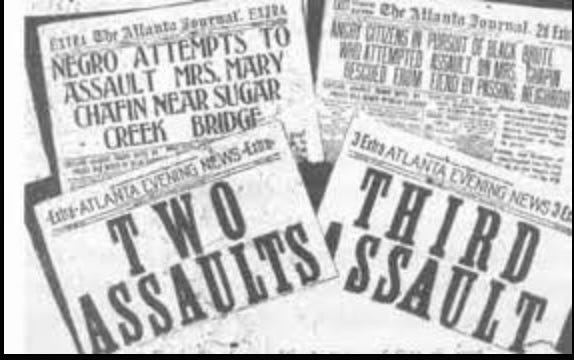
September 22nd, 1906, summer’s swansong, but downtown boiled like it was July. Merchants and streetcar drivers, blacksmiths and bellboys worked on. Along Decatur Street in south downtown, crowded dance halls and saloons flung their doors open wide in hopes of catching currents of cooler air. By late afternoon, as the bricks of Peachtree Street baked in the sun, a mob of white men and boys gathered near Five Points, the heart of the city’s business district. Around them, newsboys hawked “special edition” papers bearing sordid headlines based on false accusations of assault and rape against Black men. A gubernatorial election was on the horizon. Both candidates had used yellow journalism to stoke resentment and anger among white males toward Atlanta’s Black community, especially Black men who had found some economic success, sometimes more success than their white counterparts.
Around sundown, its numbers having risen into the high thousands, the mob thundered through the streets wielding clubs and iron pipes, knives and axes and pistols. They derailed streetcars, smashed storefront windows, ransacked homes. While law enforcement stood idly by, they yanked Black men through the doors of the emporiums and hotels and barber shops that employed them, wrenched men, women and children off of streetcars to beat, stab, and shoot them. They kept their victims’ hats and caps, severed the fingers and toes of others, and hung these so-called souvenirs from telegraph poles on iron hooks. They tossed lifeless bodies out of hotel windows, dragged others to Henry Grady’s statue at the corner of Forsyth and Marietta Streets, where in a show of disdain for his New South ideas, they dropped them at his stony feet.
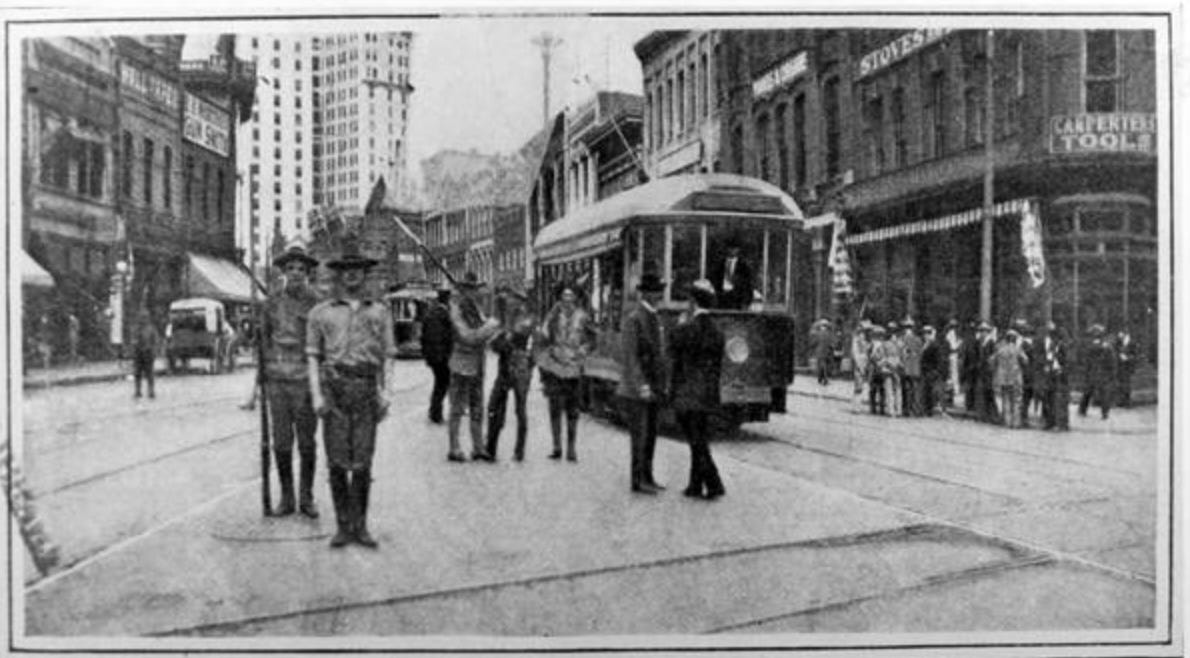
At midnight, the governor called in the state militia, but only a driving two a.m. thunderstorm was up to the task of clearing the streets. After a few hours rest, the mob simply divided to conquer and set out again. With law enforcement still largely ignoring their actions, they moved beyond downtown to wreak havoc in and out of primarily Black neighborhoods, ebbing and flowing for two more nights and three days. Many residents of these neighborhoods armed themselves in self-defense. The violence continued. Skirmishes ensued. This mob attacked small business owners, laundresses, bootblacks, teenagers. Most of their victims had never been accused of a crime, never set foot in the seedy Decatur Street establishments that city leaders would later blame for instigating the riot.
By nightfall, September 25th, scores of Black homes had been burned to ash. One white man and over two dozen (the official number) Black citizens lay dead. It’s believed many more lost Black lives went unreported. Hundreds lay injured in their homes or in Grady hospital’s segregated wing, and thousands of Black families, working class and well-to-do alike, fled the city, many bearing along their injured or dead, never to return.
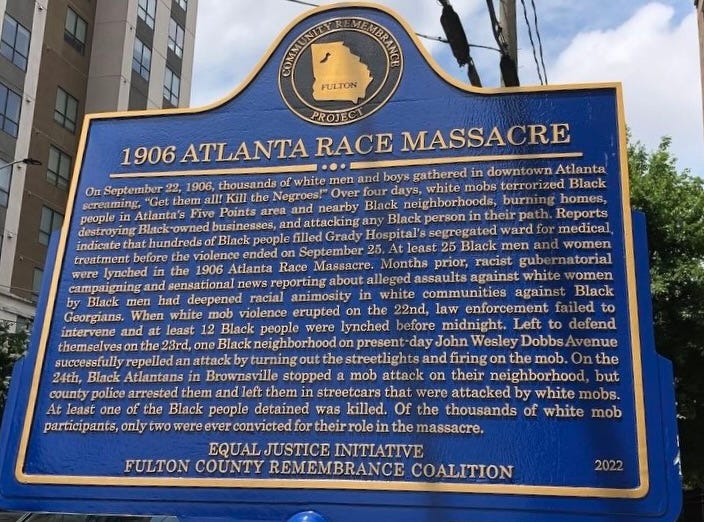
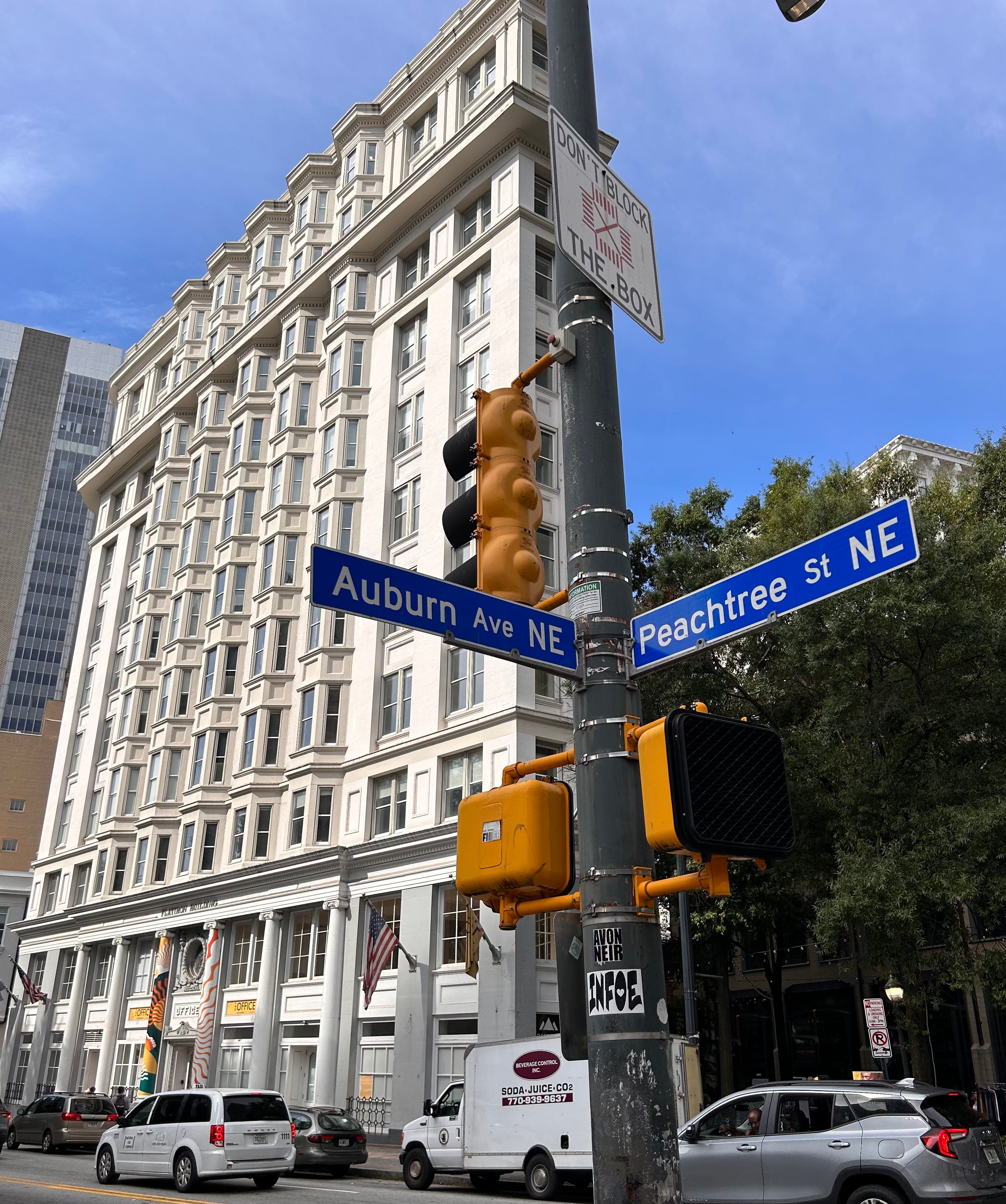
This was not a riot. It was a massacre, one so brutal it caught the attention of journals across the country and as far afield as Paris. Yet locally, city leadership moved rapidly to quash reports of the mayhem and bloodshed. Best not to harp on such a thing, they suggested, one that would harm the city’s progressive image and stunt the growth and opportunity that benefitted everyone, regardless of race or creed. The mayor brought in members of the new Black elite, mostly clergy and successful businessmen, to persuade them to go along with efforts to scrub the city’s consciousness of what had passed. In exchange, Black leaders asked for protection by local law enforcement should mobs form again. City leaders agreed, as long as certain conditions were met: Black-owned saloons and dance halls would be shut down. Black businesses that had before thrived alongside white ones in Atlanta’s Five Points area would relocate to Auburn Avenue, already becoming known as a Black business mecca. Perhaps most significantly, Atlanta’s Black citizenry would agree to obey stricter segregation laws than before—separate restrooms and seating on public transportation and in movie theaters, segregated schools, hotels, hospitals and restaurants, and restrictions on where Black families could build homes and settle. Within months, Georgia’s new governor, Hoke Smith, drove through poll taxes and literacy laws that disenfranchised all but the tiniest slice of the state’s Black population while grandfathering in illiterate whites. Atlanta, a mingled melting pot in the years after the Civil War, was now fully segregated. Jim Crow’s icy grip had tightened. It would not begin to thaw for nearly sixty years. Though the city today boasts a healthy Black middle and upper class population, most neighborhoods have been painfully slow to integrate since.
I recently discovered that in 1904, the man who would become my paternal grandfather left his father’s tobacco farm in Lebanon, Kentucky, to work in a cousin’s Atlanta shoe business. He was nineteen. A year later, his future sister-in-law, my great aunt Louise, came to the city from Greensboro, Georgia, to attend stenography school. My research has shown that they were both in Atlanta on that September weekend of 1906. Might my grandfather have been part of the mob? I shudder to think of it. His apartment was over a mile north of downtown, but it’s possible. We’ll never know. Great Aunt Louise lived in a boarding house four blocks southwest of Five Points. If she didn’t witness the carnage and chaos, she would certainly have heard it. She too was nineteen years old—an age of possibility and promise, an age often remembered with a clarity hard to summon for other, less shimmery junctures of life. Though it was nothing compared to what the massacre’s victims experienced, the trauma of that week for her must have been immense. Aunt Louise was an independent thinker, rational and tolerant, and yet like my grandfather, she locked her massacre memories deep in her heart. She never spoke of that horrific week in September, not to me nor any of my relatives. City leadership’s ploy had worked, and all too well.
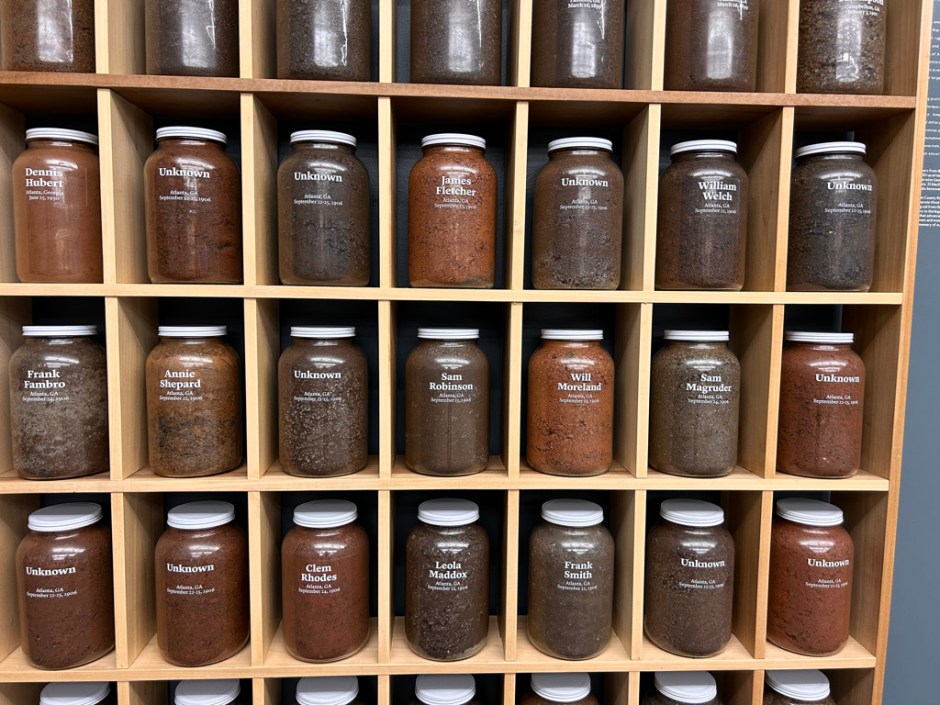
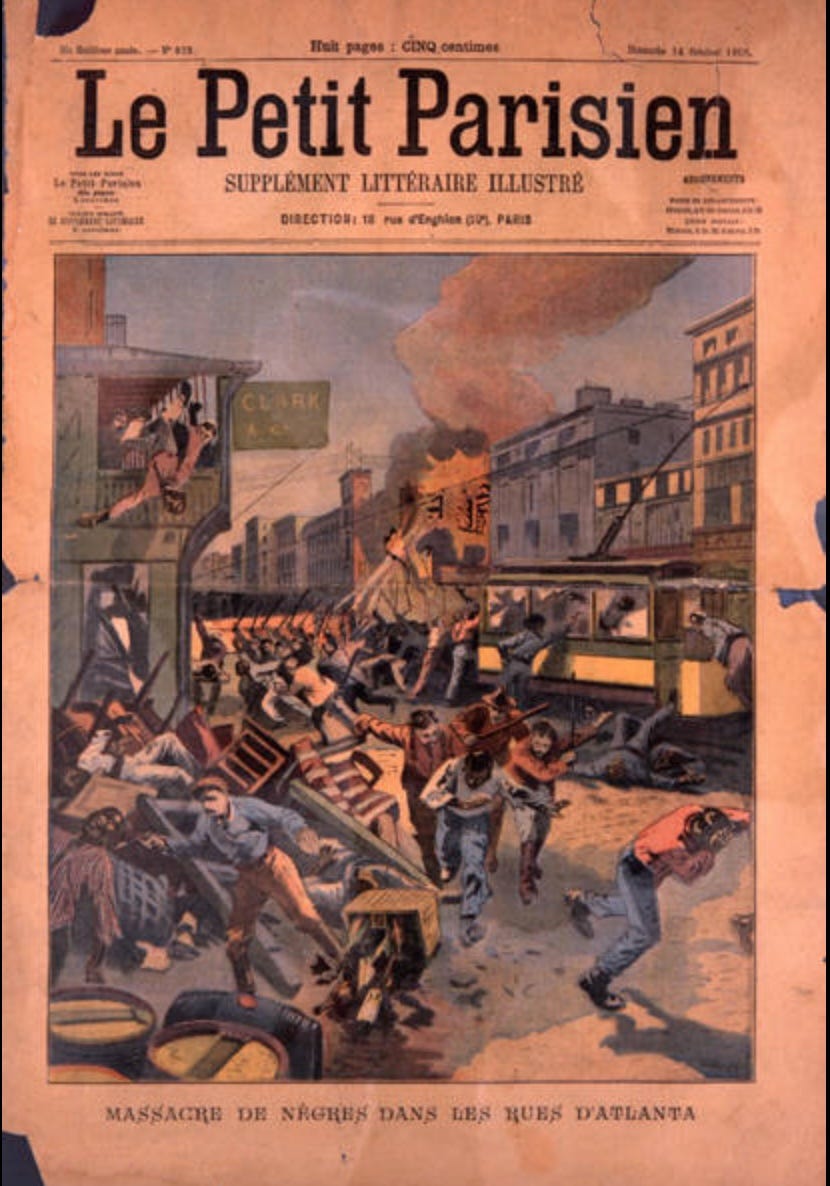
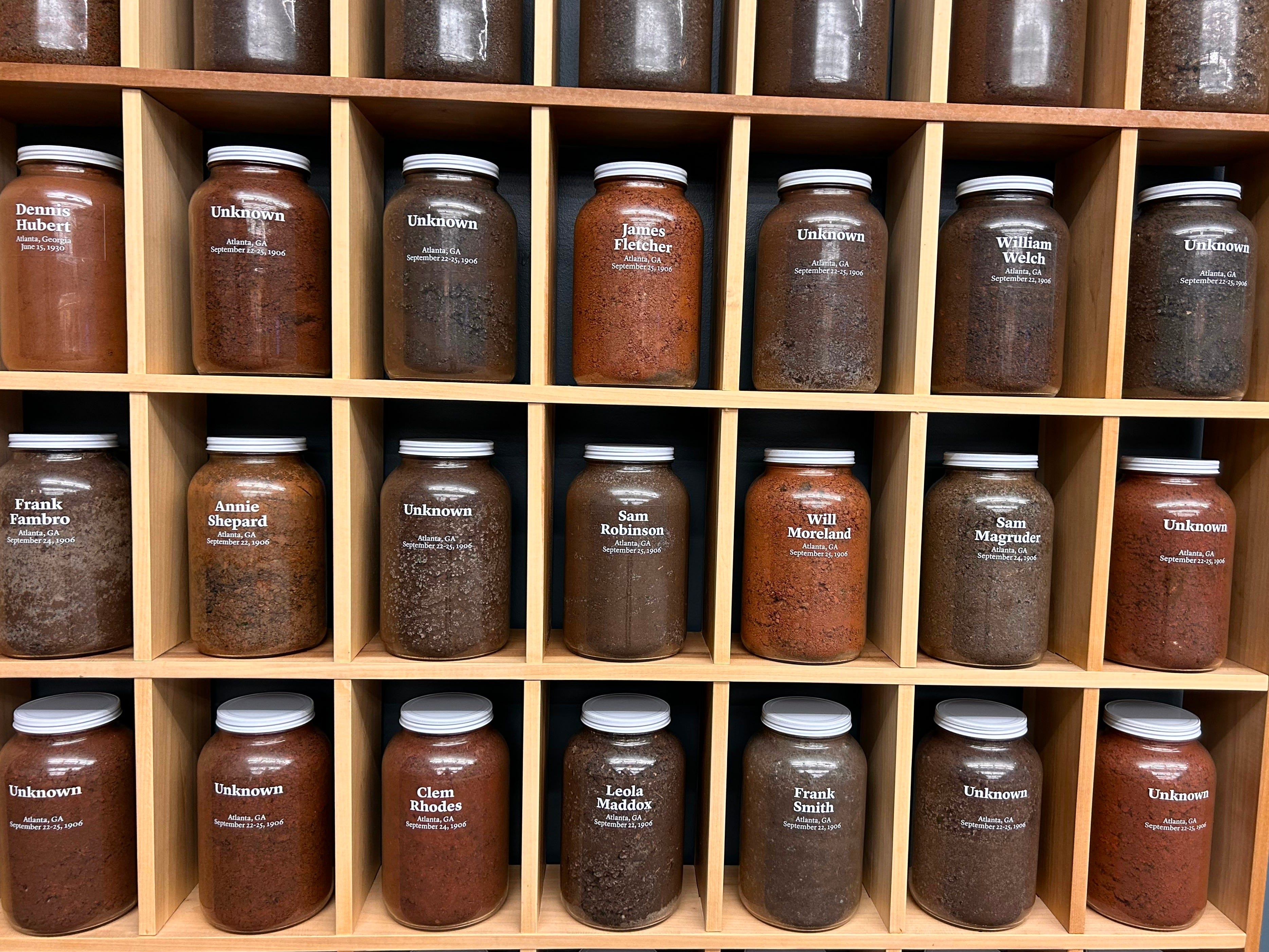
Over the past twenty years, or one hundred plus years after the fact, word has at last begun to spread about the Massacre and its repercussions. Organizations like the Equal Justice Initiative and the Fulton County Remembrance Coalition hold symposiums each year. They’ve produced films and succeeded in having historical markers erected. The Atlanta History Center includes a section on the Massacre as part of its “Gatheround. Stories of Atlanta” exhibit, and the Auburn Avenue Research Library hosts a permanent exhibit on its first floor called “Stories From the Soil.” Haunting in its simplicity, this exhibit features jars of soil collected from the sites of thirty-six lynchings that occurred in Fulton County between 1889 and 1936. Twenty-five of these took place during the Atlanta Massacre of 1906.
Every September, I read over the names of those lost during the Massacre. I share them here as a way of honoring them, and remembering. May we always remember.
Milton Brown Frank Fambro James Fletcher Zeb Long Leola Maddox Sam Magruder Will Marion Will Moreland Clem Rhodes Sam Robinson Annie Shepherd Frank Smith William Henry Welch George Wilder Marshall Carter Stinson Ferguson
Nine (plus) Unknown Victims
James Heard, a white Atlanta police officer
Thank you for reading. If you’d like to learn more about this historic event, the sources below offer a good start. This year’s special events devoted to remembrance of the event are included in the first link. (My apologies that some of these opportunities have passed. I attended the Southview Cemetery Tour and Remembrance last year, well-done and very moving.)
(re)Defining History: Uncovering the 1906 Atlanta Race Massacre
Bauerlein, Mark, Negrophobia: A Race Riot in Atlanta, 1906 (San Francisco, CA: Encounter Books, 2001).
Burns, Rebecca, Rage in the Gate City: The Story of the 1906 Atlanta Race Riot (Athens, Georgia: University of Georgia Press, 2009).
Du Bois, W. E. B., “A Litany of Atlanta.” Johnson, James Weldon, ed., The Book of American Negro Poetry (New York, New York: Harcourt, Brace and Company, 1922).
Godshalk, David Fort, Veiled Visions: The 1906 Atlanta Race Riot and the Reshaping of American Race Relations (Chapel Hill, North Carolina: The University of North Carolina Press, 2005).
Kuhn, Clifford M., Joye, Harlon E, and West, E. Bernard, Living Atlanta: An Oral History of the City, 1914-1948 (Athens, Georgia: University of Georgia Press, 1990).
Pomeranz, Gary, Where Peachtree Meets Sweet Auburn: A Saga of Race and Family (New York, New York: Penguin Books, 1997).
Discover more from My Mother's Attic
Subscribe to get the latest posts sent to your email.
