Afternoons with Mary: Sharecropper’s Daughter

Life on the farm in Depression-era Alabama

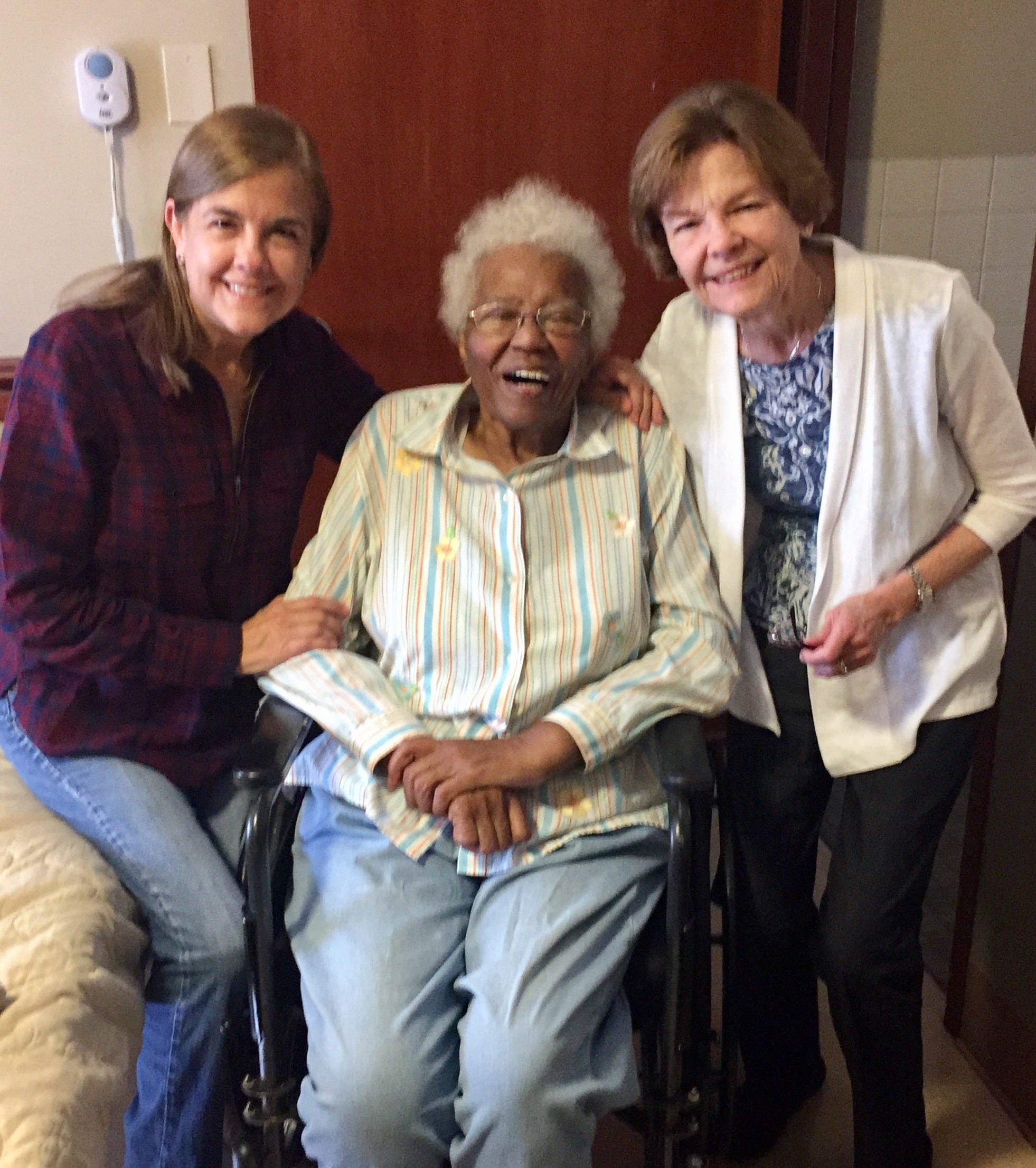
In memory, my first few visits with Mary Darian are fresh and bathed in light. It was spring, 2017. From where we gathered in her daughter’s living room, we could see Lou’s back yard, the lawn greening and her plantings touched with early spring color. Yes, Mary was still grieving the loss of her oldest son and recovering from a fall. Her speech was sometimes halting, especially when she grew tired, in the wake of her last stroke, but for the most part, she was upbeat, both determined to do her therapy exercises to regain her strength and eager to share the story of her childhood. Her Alabama family was cash-poor when she was growing up—she made no bones about that—but when she described her young parents and her grandmother and great-grandmother, her expression warmed. Sometimes, her voice was tinged with longing, a longing for the simple life her family built out of next to nothing.

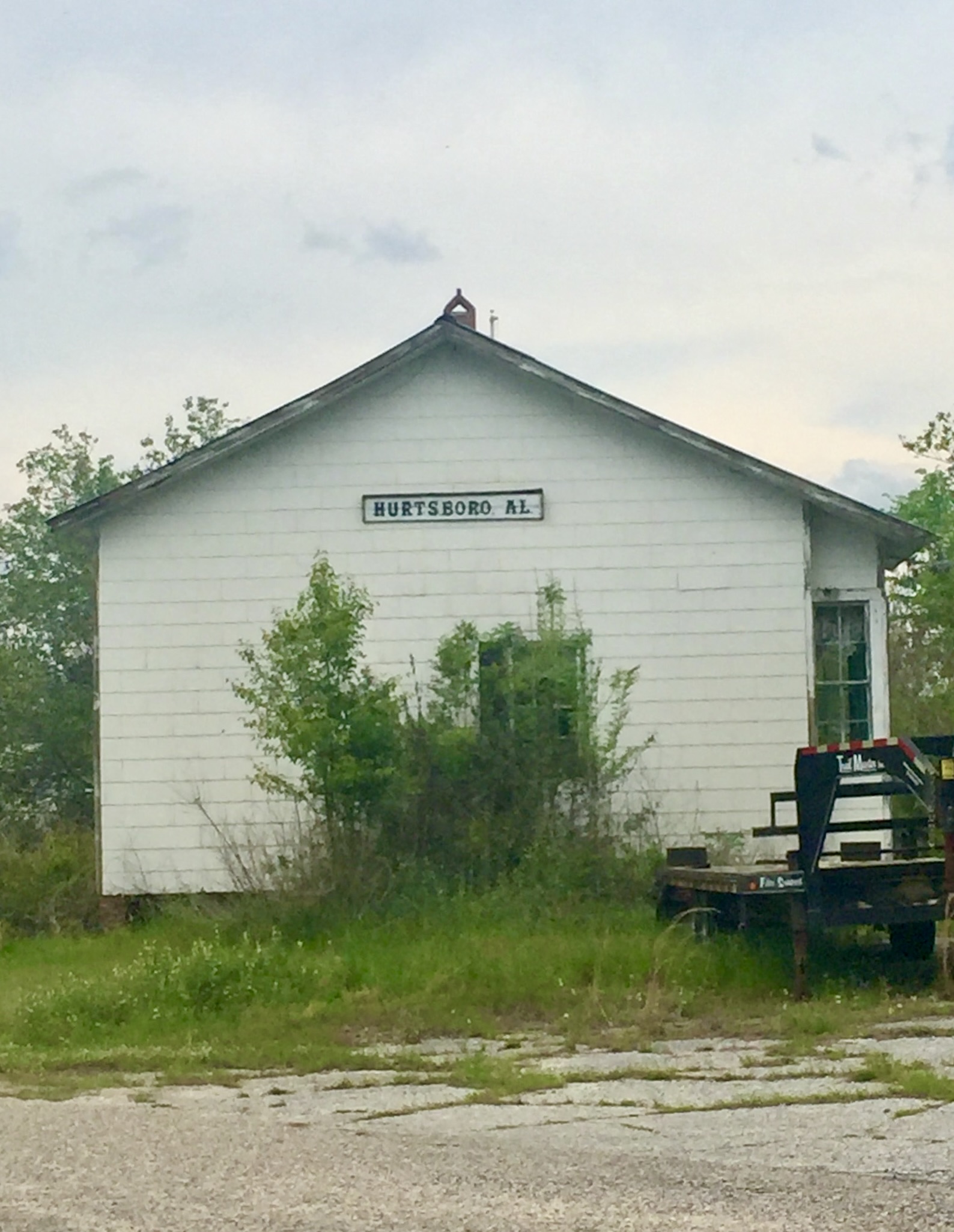
Which is not to say Mary romanticized that rural mid-20th century life. She’d lived in Atlanta since she was fourteen. She’d experienced unrest, boycotts, and violence just to earn for herself and her loved ones basic rights she lacked as a child—the right to sit where she pleased in a theatre, to use a public restroom, to vote. Like other Black tenant farming families in the Deep South, during her childhood the Walkers and Cochrans were trapped in a dead-end economic system. The threats and humiliations of Jim Crow hung over them like a shroud. “You couldn’t make a living in Hurtsboro,” she liked to say. “Hurts to stay there and hurts to leave.”

But Mary was the walking example of the old adage that the key to happiness is to want what you have, not in the sense of surrender but in making the best of what’s given you in any particular momentI’ve been pretty bad at this most of my life, always striving for something or other just out of reach. Maybe that’s why being with Mary in Lou’s sunny home, just being with her and listening to her stories, no matter how surprising some of them were, was such a comfort.

When Mary Lue Cochran was born on November 11, 1935, her father, Jimmie Lee, was twenty. Her mother, Lue Milla James Cochran, was seventeen. Mary’s brother Leroy came along a year later. I asked Mary one afternoon whether her mother had to join her father in the cotton fields to meet the quota that paid their rent.

“My daddy …” she said, shaking her head. “Also worked at the Perlmans’ store. That extra money he made kept my mama out of the fields after I was born. She stayed in the house working and taking care of Leroy and me.”
The Perlmans, an immigrant Jewish family, owned a dry goods store in Hurtsboro. Strange. I knew that as Atlanta’s population boomed in the late 1800s, the city began to attract immigrants from all over Europe, but Hurtsboro? A town that grew up around a sawmill in the 1850s situated in remote eastern Alabama, in 1900 it had just over 400 residents, most of them farm laborers or mill workers. I decided to do a little research. Turns out that of the influx of Jewish immigrants fleeing the pogroms and economic hardship of Eastern Europe around the turn of the 20th century, many wound up in small Southern towns working as merchants or peddlers. So the Perlmans’ store wasn’t strange at all. I checked out the store owner Sol Perlman on Ancestry.com and managed to locate his son. Sam Perlman, who spoke affectionately of growing up in Hurtsboro, shared that his grandfather Henry had immigrated to Montgomery from Lithuania in 1891. A few years later he took out a loan to open a store sixty miles southeast in—you got it—Hurtsboro. Henry Perlman was a smart cookie. Two railways served by a shared depot had just been extended through the middle of town, and though one Ben Goldstein, originally of Poland, already ran a general store there, they both wagered there’d be business enough for another. They were right. A golden age followed. By 1914, a year before Mary’s father was born, the sawmill town boasted an inn, a cafe, those two general stores and a couple of banks. By the time Mary was born, the population had more than doubled and two hardware stores, a library and a movie theatre had sprouted up. Henry Perlman, and later his son Sol, much like Ben Goldstein and his son Abe, did good business, not only with rail passengers passing through but with tenant farmers, providing them with fuel, feed, kitchen staples and other goods. Southern landowners generally preferred it this way. By sending their tenants into town for supplies, they could leave unpleasant matters such as late payments or poor credit to the shopkeepers.

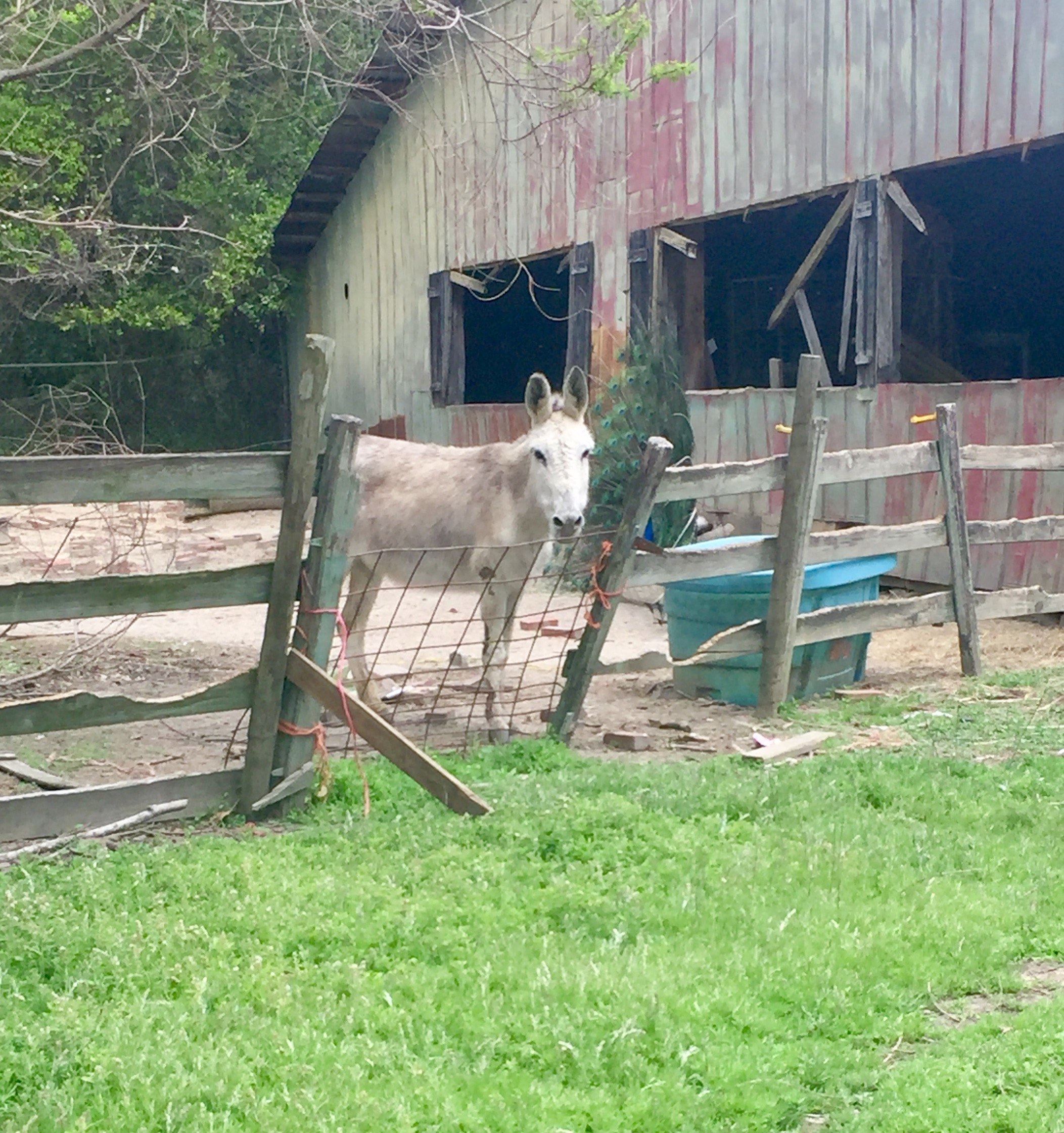
Another smart cookie, Jimmie Lee Cochran was also a hard worker. Not only did he do maintenance work for Sol Perlman, he became a chauffeur for both Sol and Abe Goldstein, whose store was a short walk up Main Street. When his work was done in town, Mary’s father walked back to his family’s rental property a few miles outside of town, a two-room clapboard house with straw mattresses, “a big fireplace for heat,” windows that had shutters “you could close at night or when it rained,” but no glass panes. And an outhouse out back.

“We had a well for water,” Mary said. “That was the best water, just as cool as it could be. And Grandma Ca-line had a little garden of her own …” she added, full of pride. “She grew lettuce, carrots, corn, cucumbers, plums … Mm—mmm.” She smiled and smacked her lips. “Ma Sweet had a little store by the side of the house and folks would come by and pay her a little to go pick whatever was in season straight from the garden. They knew it was fresh that way. Ca-line raised chickens, too, and sold eggs. That’s how we had income.”

“Ma Sweet” was Mary’s father’s mother, the younger Ellen in Mary’s family tree who had attended a few years of school and was the entrepreneur of the household. She earned her nickname not only by baking sugary concoctions like tea cakes for the white family she worked for but also stocking in her store penny candy, RC cola and Nehi (“from the icebox”), goodies she bought from a traveling peddler.
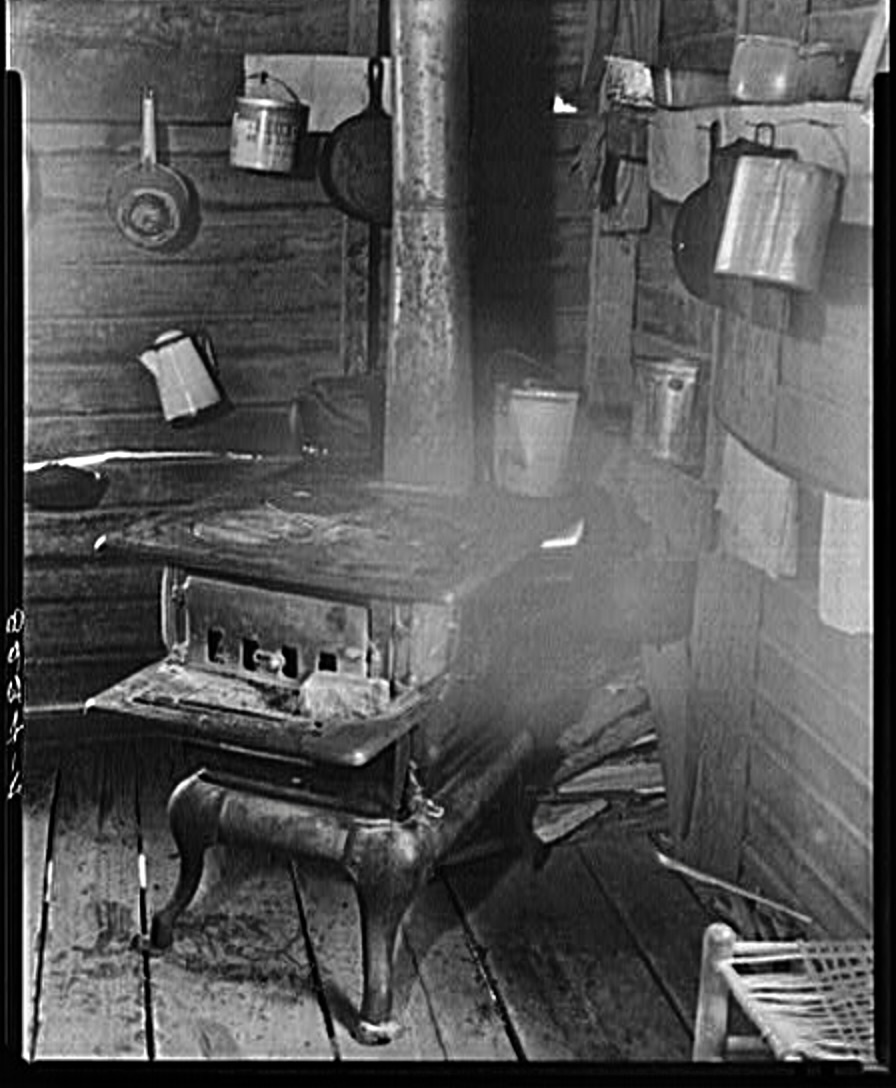
A kitchen corner, with woodstove, in an Alabama tenant farmer’s home. Photo by Walker Evans, 1936

“Ma Sweet and Ca-line used lard. Everything tastes better with lard,” Mary laughed. “Ooooh, those biscuits! I get hungry just thinking about them. And you know, all we had was a pot-bellied woodstove with two eyes—how’d they cook all that and make our meals, too? And honey, Ma Sweet bought lemons from that peddler. She had us roll and roll them until they got soft. Then we’d squeeze out the juice and she’d sweeten it up with sugar or honey—I never knew which I liked best. She sold that lemonade and mint tea in Mason jars.” Mary paused, her gaze turning inward as she drifted back in time. “Mint tea was a good thing.”

“Oh! And blackberries!” She snapped back to attention, her soft brown eyes bright. “I almost forgot about blackberries. We picked them to eat and Ma Sweet sold them. That’s the other sticky thing I didn’t like.”

The other sticky thing … And the first? Maybe I was naive, but that first sticky thing had surprised me.

You picked cotton?” I’d asked, struggling to mask the shock in my voice. The Mary I’d known was a spunky young city woman, clever and streetwise with a sophisticated wit. A city girl myself, I’d never known anyone who worked a farm—well, that’s not altogether true. A cousin of mine owns a ranch in Colorado, but managing horses and livestock, brutal as I’m sure it can be, seems different from manually tending a crop. When I pictured the child Mary bent over a row of cotton beneath the punishing summer sun, I could conjure only something distant and unreal, a downtrodden character in a movie or novel. But Mary’s experience was as real as it gets.

“Yes, I picked cotton as soon as I was able. We kids started, oh I guess we were seven or eight years old. It was the dog days, all summer right up through Labor Day. The boys had to pick after school, but we girls didn’t.”

I was rapt.

“We had a sack we carried over our shoulder,” she went on. “You picked off the hard brown bolls, they were like a little hard flower with a thick husk and the end of it was sharp and sticky. You had to take off the boll and pull out the little seeds before you dropped the cotton in your sack. Once your sack was full, you brought it so they could weigh and bale it up.”

How much cotton was expected from each of these second and third graders?

“The owner of our patch liked us to pick a hundred pounds a day.”

Quite the taskmaster, King Cotton.


Mary’s story will continue next time in “Sharecropper’s Daughter, Part II.” Until then, I’d love to hear your thoughts in the comment box below, and thanks always for reading “Afternoons with Mary.”

Afternoons with Mary: Strong Roots and Brittle Branches

In which I explore my beloved friend’s family tree and confirm a painful truth

Mary Darian’s great-grandparents, Georgia and Thomas Cochran, circa 1890

“When my mamma and daddy started their family,” Mary began. “They didn’t have anything, so they had to work the farm.”

Mary, my childhood caregiver, and I were sitting together in her daughter’s home just south of Atlanta studying the notes Mary had spent days preparing. By “the farm” she meant a cotton farm owned by a white family who by the time Mary’s parents married employed her paternal grandmother as a laundress and her great-grandmother as a cook.

“Were they sharecroppers?” I asked. I was presuming, I suppose, but with good reason. It was 1935. Mary’s parents lived in Hurtsboro, a tiny town in a county pushed up against the Georgia border in Alabama’s “Black Belt,” so named for both its rich soil and its historic dependence on the labor of African Americans, originally as enslaved workers and later, as tenant farmers. These tenants, who during the Great Depression accounted for well over half of all farmers in Alabama, “shared” profits earned from the cotton and other crops they harvested for the farm’s owner.

Or that was the theory.

“Humph …” Mary said with a smirk. “Sharecropper? I don’t know about that. They didn’t share nothing.”

With this she let go a sharp laugh. I smiled, marveling at her sassy wit and how it had survived the yearsShe was spot on, too. The bits landowners shared were most often so meager that tenant farmers struggled to break even after each year’s harvest. Sharecroppers who tried to save enough to move on to some other life would labor years, decades even, before they felt secure enough to leave. Even then they rarely had the means to purchase land of their own.

“My grandmother Ellen Walker had married a Cochran,” Mary went on. “But it didn’t work out, so my daddy was the man of the house. He had to work in the fields even when he was just a boy, to help support the women.”

Mary’s women, strong women who would end up raising her, were her grandmother Ellen, Ellen’s mother Caroline—“but everybody called her Ca-line,” Mary added with a broad smile—and Caroline’s mother, also named Ellen Walker. I asked, but Mary wasn’t sure exactly where or when the first Ellen or Caroline were born. Hmmm. Perking up, I slid to the literal edge of the couch we shared. I tinker a bit with genealogy (ok, it’s my favorite rabbit hole), and with tingling fingers I asked Mary’s permission to do a little research into the Walkers.

“Why sure,” she said after a pause. There was a touch of something in her soft features, unease, maybe even worry, but I brushed it off.

Parsing out birth places and hidden relationships and surprising connections is a lot like solving a puzzle. Though following a hunch through the generations can take weeks, I love the warm and fuzzy feeling that a successful search brings. I fired up my Ancestry account later that day, and dug in. The 1930 census suggested that the older Ellen Walker, Mary’s great-great-grandmother, was 106 years old that year. 106!!! Alas, this detail is likely exaggerated … Ellen was alive when Mary was a young child in the late 1930s. Her actual birth year is reported in a different census as 1840, in another as 1835, and on and on. But no doubt, Ellen Walker the elder was at least in her nineties in 1930 and was born, in rural Alabama, decades before the Emancipation Proclamation. Ellen first shows up in public records, along with three daughters and a son, in the Census of 1880 as a farm laborer in a community called Glennville. A ghost town now, Glennville sat about twenty miles south of Hurtsboro at the northern tip of what was then Alabama’s most prosperous cotton producing region.

In spite of Ellen Walker the elder having been born in 1840 or before, she is not listed in the censuses of 1840, 1850, or 1860. Although free people of color are listed in these censuses, enslaved men and women show up as anonymous tick marks in separate “slave censuses” reported by landowners and identified only by race, age and gender. Odds are high, then, that in the antebellum years, Ellen’s existence was noted by one of these tick marks and that she worked as an enslaved laborer in the cotton fields of a Glenville plantation. At the end of the Civil War, she likely stuck around Glenville, as many of the formerly enslaved did, to work the same or another farm nearby with her young family, which included her second child, Mary’s Ca-line, listed in that 1880 Census as ten years old.

I kept burrowing, hoping to find a reference to the elder Ellen’s husband, or her parents or siblings, but came up empty. No census listings, no birth or death certificates, no marriage license. Feeling anything but warm and fuzzy, I paused my search. A deep loneliness filled me to think of Mary’s second great-grandmother, a woman who lived such a long, brave, rich life, perched alone atop the Walker branch of Mary’s family tree as if she’d self-birthed when in reality she had ancestors dating back hundreds of years, ancestors who had survived the cruelties of slavery, the unfamiliar environment and diseases of a new world, the brutality of the Middle Passage, but died unnamed and unheralded.

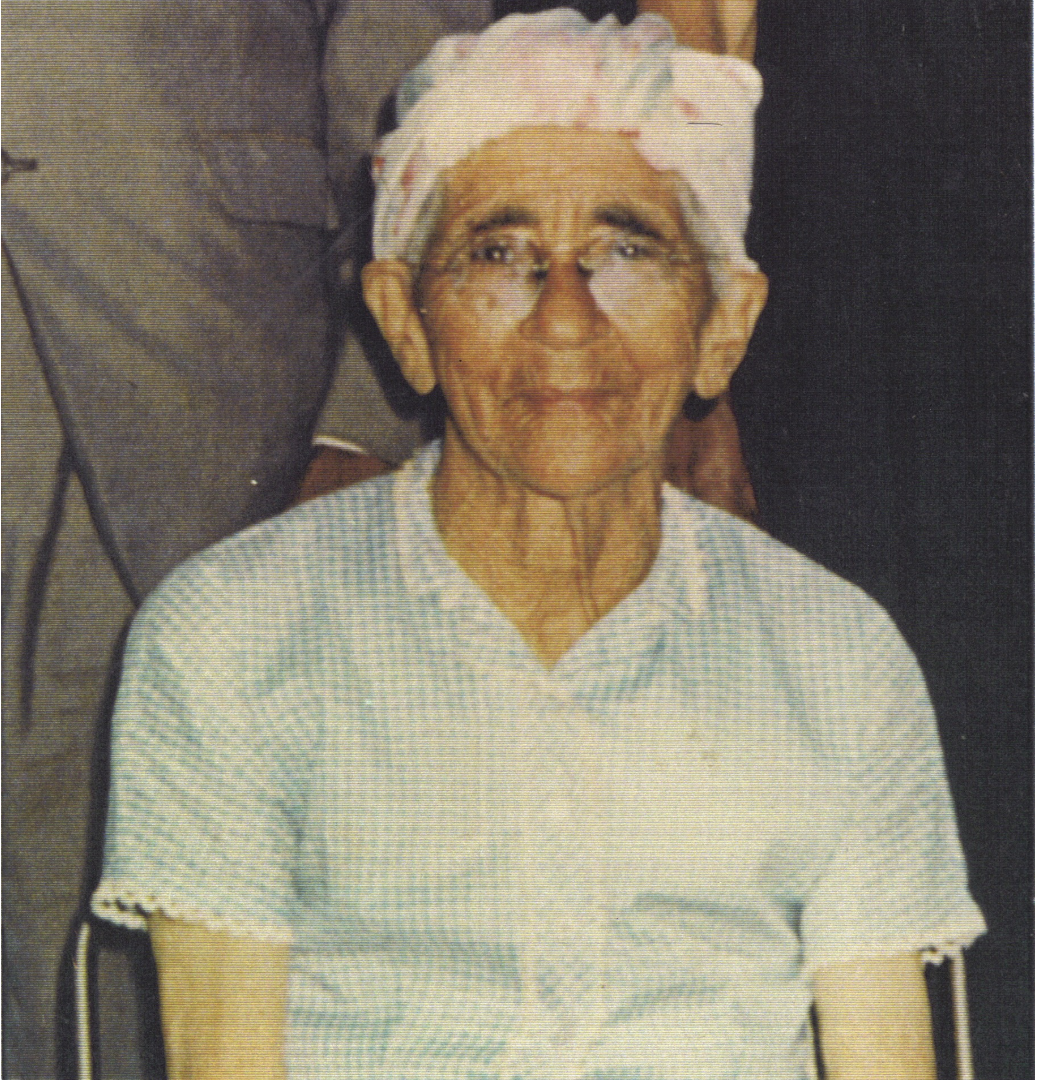
I thought of Mary’s hesitance about my search and sensed she wouldn’t be surprised to hear that members of her family were brought to this country against their will, forced into backbreaking labor, among other things, and treated as less than human. When we next met, we chatted a little about her great-great-grandmother. She confirmed the names of Ellen’s other children that show up in that 1880 Census. I probed her a bit to see if she might remember any other Walker ancestors. She didn’t and I left it at that. She knew where Ellen’s branch led and to dwell on it could only bring pain. A little at loose ends, I opened my phone and zoomed in on a few other things my search had turned up—a photo of her mother’s mother, Bettie Lou Tyner James. Born in 1879, she lived to 91. ”Why that’s Ma Bettie!” Mary exclaimed. Then a pic of her Cochran great-grandparents, Elias and Georgia, on their wedding day, and copies of several marriage certificates, her parents’ and grandparents’ and even one for Elias and Georgia, married in September of 1890.

Bettie Lou Tyner James, Mary’s maternal grandmother

Holding the phone close to her face, Mary thanked me, her voice filled anew with her characteristic joy. I told her it was nothing. I liked genealogy and hoped to discover more. We both felt better for having looked over these images together, a little less lonely to think of Ellen Walker and her lost parents and grandparents, and of Mary’s many other unnamed ancestors, those whose blood she shared and whose strength and courage live on in her children and grandchildren.

Afternoons with Mary: “On my Mind and In My Spirit”

After nine long years of procrastination and skittishness, I’ve worked up the gumption to share the story of my rekindled relationship with the beloved caregiver of my youth. The story will unfold in several chapters. If you’d like to read the origins of this journey, just click here: I Am Mae Mobley


On a steamy afternoon during the troubled summer of 2016, I finally worked up the courage to call Mary Darian, the intrepid woman who half-raised me. Though I loved Mary dearly, I’d failed as an adult to stay in close touch. As each ringy-dingy sounded, I worried, whispering my introductory lines again and again. A waste of energy this. Mary knew my voice immediately—“Angel Face, is that you?” I pictured the tall, confident young woman who used to drive me to McDonald’s for a Big Mac after middle school, and let go a grateful sigh. I was no longer a school girl, of course, and Mary had long moved on from being our family’s housekeeper, but her voice still brimmed with warmth and affection.

I caught her up on family this and thats. We exchanged stories about my mother—“Now she was a real lady … ” Mary gave a chuckle. “And what a seamstress!” She’d long admired my mother’s knack with a needle, and one of her lively descriptions came to mind: Your mother made a white jacket for her new formal gown with shells around the midriff … she once penned to me at summer camp. Wow! When the lady moves, she gets momentum and never stops … I think she’s going to wear it with her sexy red sandals!

Though Mary had never much liked talking about herself, she finally told me she’d recently had a fall. “But Lou took such good care of me I’m already back on my feet!” Lou is Mary’s daughter, as loyal and kind as they come, and I noted as much. Hesitant again in light of this news (was this the time to worm my way into Mary’s life?), I took a deep breath and asked if I might drop by for a visit. “Why sure, anytime!” she said. Then a pause. “Well, anytime other than Wednesdays … I still get out for my Bible study on Wednesdays.” Smiling, I suggested the following Thursday and our plans were set.

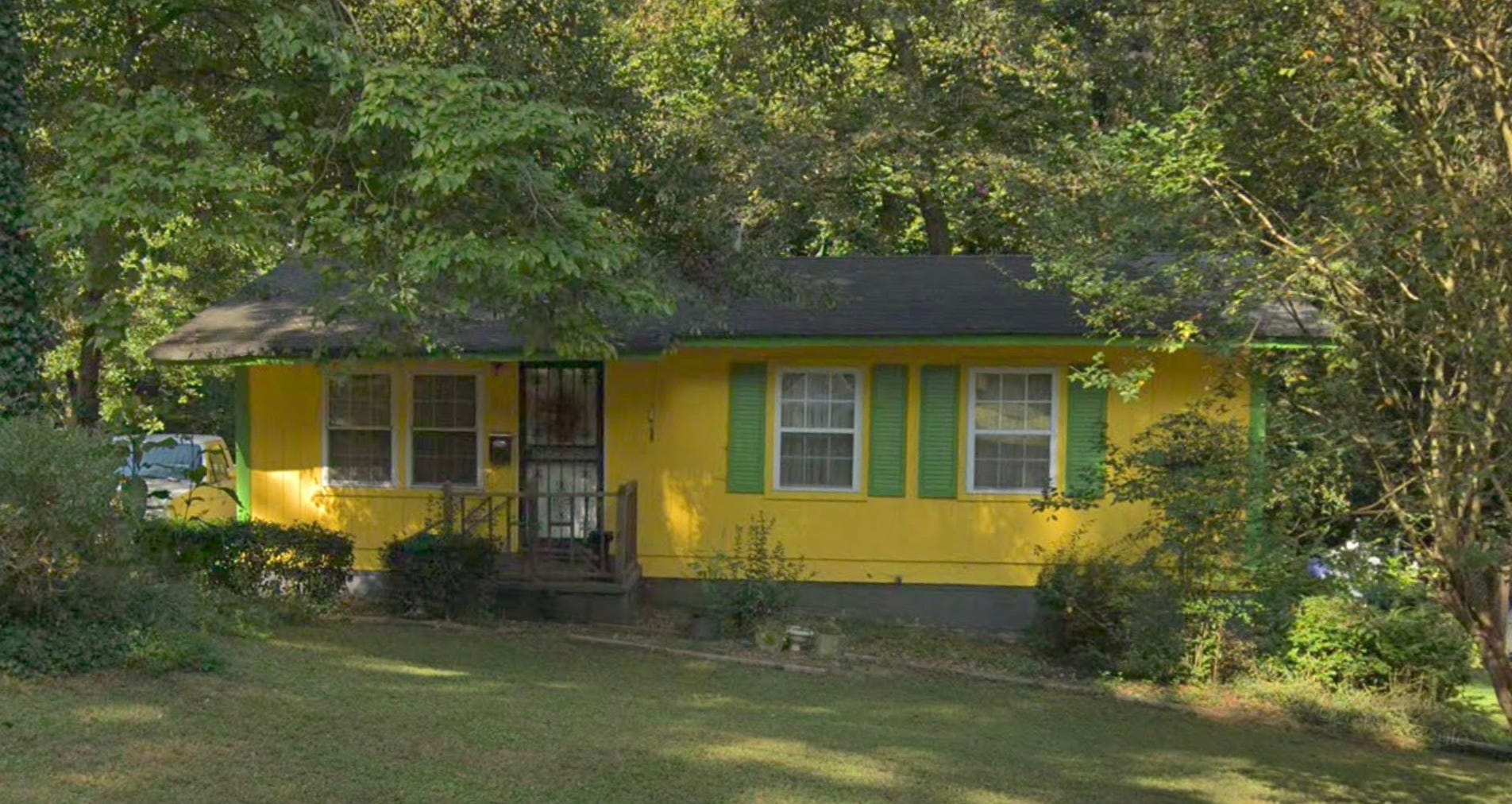
Eighty then, Mary lived alone in the home in west Atlanta that she and her husband had moved into in the late sixties. A one-story with wood siding and four inviting windows across the front, I’d been there as a child. As I drove between sprawling azaleas lining the driveway and parked beneath the shade of a generous hardwood, I found it as cozy and comfortable as it was back then, only better. Previously a neutral cream, it had been painted a bright banana yellow. The shutters and trim, dark navy before, had gone lime green. The effect was bold and welcoming, as if the house itself wore a wry grin for neighbors and strangers alike. Perfect, I thought. Mary through and through.

Mary’s home for over fifty years

“Come on in!” Mary said with a yelp of pleasure, and squeezed me tight. As we walked inside, she limped a little and gripped the back of a chair. I winced, reached to help, but she brushed it off. We sat side-by-side on her couch and studied the faces, many of them Mary-like, smiling out from the abundance of photos in her living room. One by one, she proudly identified family—the three sons I’d once known now become men, the late husband I never met, the many beloved grandchildren and great-grandchildren and of course, Lou, who showed up toward the end of our visit, sacks of groceries spilling from her arms as she corralled her little granddaughter through the door.

Mary had visitors most every day, family and more. She bragged on her neighbors and beaming, described the teenaged boy from her church who dropped in often to check on her. We reminisced about my parents. She asked about my children and my writing and just like that, the gap of years since we’d spent time together fell away. We joked about my older brothers’ teenaged exploits of long ago, and she said how sorry she was about the oldest, Ed, who’d been gone nine years.

“Your mama called me,” she said, her eyes damp. “More than once after he passed. Just to talk. A mother shouldn’t have to lose her child.”

“No, she shouldn’t,” I agreed, my voice wobbly. Mary took my hand and I mentioned that I’d been thinking about her a lot recently … “Especially since I rewatched The Help. Have you seen that movie?”

“Sure have,” Mary said, her tone wary.

“You know, it has its faults but it made me realize I never took the time to really get to know you … ” I began to sweat. “I guess what I’m trying to say is I’d like to learn your story, Mary. It’s something I should have done a long time ago. I’d like to know about you and your past, the way you’ve always known about me and mine.”

Her soft gaze clouded in bemusement, maybe disbelief. It wasn’t like Mary to be at a loss for words, and I looked away. Maybe I was being pushy. Maybe I should have kept my mouth good and shut.

“Well, honey,” she said finally, grinning. “It’s not all that interesting of a story, but I can probably come up with a thing or two.”

I laughed in relief, and we agreed I should return in two weeks armed with pen and paper and I-phone microphone. I wasn’t sure exactly what I would do with what she chose to share—blog? book? keep in my heart?—but I left excited about what lay ahead and hurried home to call my sister in Pennsylvania. Ten when our parents hired Mary at eighteen, JoJo loved Mary too, if in a different, maybe even deeper, way.

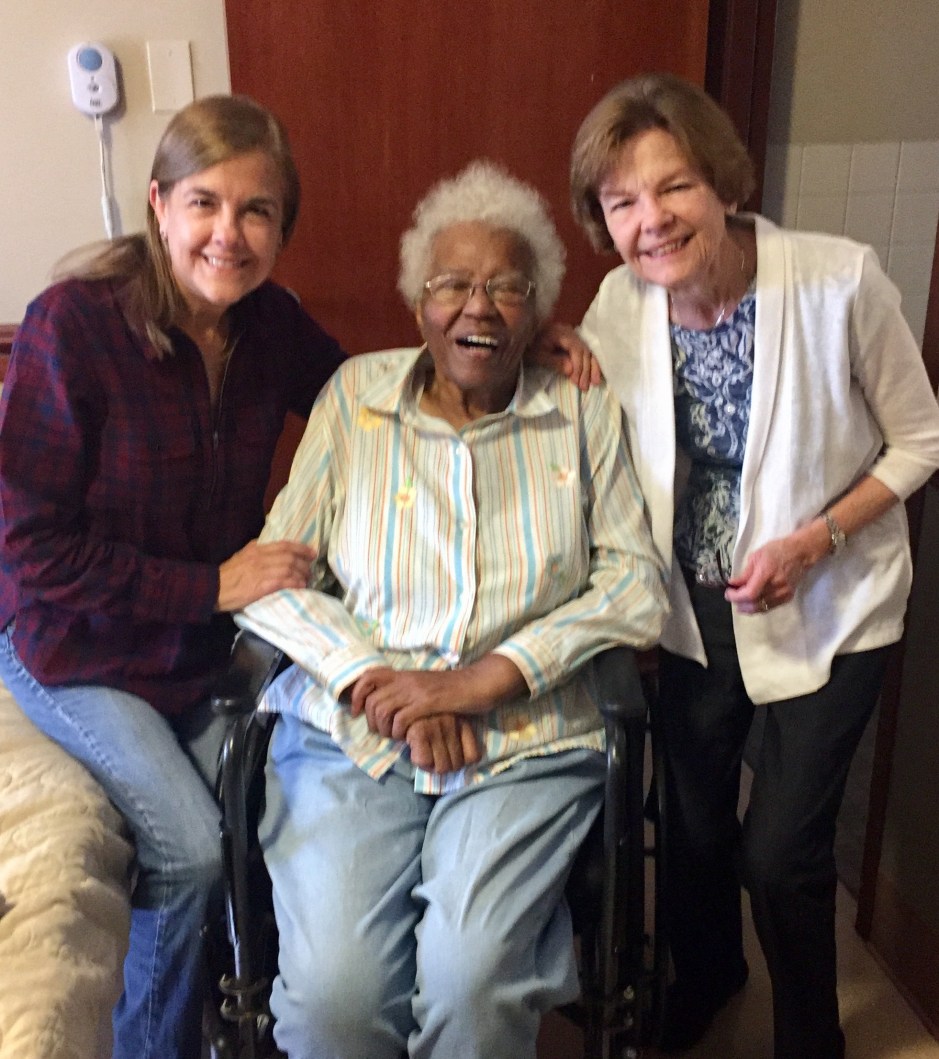
My sister and I visit Mary on her 81st birthday, November 11, 2016

A week later, Mary called, her voice subdued and full of pain, to cancel our get-together. Her oldest son, Lewis, Jr, had suddenly passed away of a heart attack, at fifty-seven. It was almost eerie, given what we’d recently said about mothers losing sons—such a cruel twist of time—and my heart ached for her. The fact that she’d lost her husband decades before in the same way and at roughly the same age only deepened her sorrow. My brother George and I attended Lewis’s funeral, a service filled with music and laughter and tears. During one of the soulful hymns, Mary, seated in a wheelchair in the front row, reached her hand toward Lewis’s casket and swayed in easy rhythm with the music. She was a woman of strong faith, among the strongest I’ve known, and I remember feeling that the air in the church seemed to shift, as if Lewis’s spirit had joined Mary’s own, and settled in to stay.

Not long after Lewis’s death, Mary had another stroke. I visited a couple of times at her rehab facility, once on her birthday when JoJo was in town, but we agreed to hold off with the note-taking and the rest until she grew stronger. The stroke had slowed Mary’s speech and in truth, I wondered if it might be best to leave well enough alone. We were back in touch, friends again, and Mary should save her energy to heal and live her best life. In the span of a few weeks, she’d given me a glimpse into her family life—who could ask for more? Tough as ever, Mary had something else up her sleeve. The next March, she reported she was much improved and ready to start getting together, only I would have to come to Lou’s house while she recuperated, which was peachy with me.

And so it began. Lou welcomed me to her home on our appointed day, and Mary, the walker she was learning to use close at hand, gestured me to join her on the couch.

“Angel Face,” she said, her trademark smile tinged with emotion. “His story has been on my mind and in my spirit.”

His story?” I asked.

“My daddy’s,” she said, touching the tight white curls around her still- smooth face. “I want to tell you my daddy’s story.”

She held up two pages of blue cursive notes written in the hand I knew from her letters, if a little uneven. I longed to hear about Mary’s life, and felt a touch disappointed.

“I’ve been trying to get it all down,” she said. “But I’m such a slow writer these days!”

“It’s hard for her …” Lou chimed in from the kitchen. “She spent days on it!”

Awed, I scanned Mary’s pages and it hit me: by sharing her father’s journey, she would be sharing her own in a manner she was comfortable with. Besides, do any of our lives make sense without the larger story of our parents and grandparents and on back?

“He was born in Hurtsboro, Alabama,” Mary began.

Hurtsboro—then a town of less than 900 residents wedged into a far southeastern lip of the state, deep in the Cotton Belt. Hurts to stay but it hurts to leave, Mary once quipped. The 1910s and 20s. The legacy of legalized slavery still shrouded the South, and Jim Crow was flexing his muscles. Mary’s father, Jimmie Lee Cochran, lived with his sister and their mother and grandmother on a white man’s farm. As early as the third or fourth grade, Mary explained, her father, “the man of the house,” often had to leave school early to go home and work the fields. Children being children, his classmates took note, in heartbreaking fashion, but a certain little girl understood Jimmie Lee’s predicament, and that would make all the difference.

Mary tells this best, so I’ll sign off for now with the brief clip above (apologies for the poor editing and annoying oohs and aaahs) in which she describes the moment her mother-to-be, Lue Milla James, first felt a pang of love for the boy who would become Mary’s father.