Afternoons with Mary: Strong Roots and Brittle Branches

In which I explore my beloved friend’s family tree and confirm a painful truth

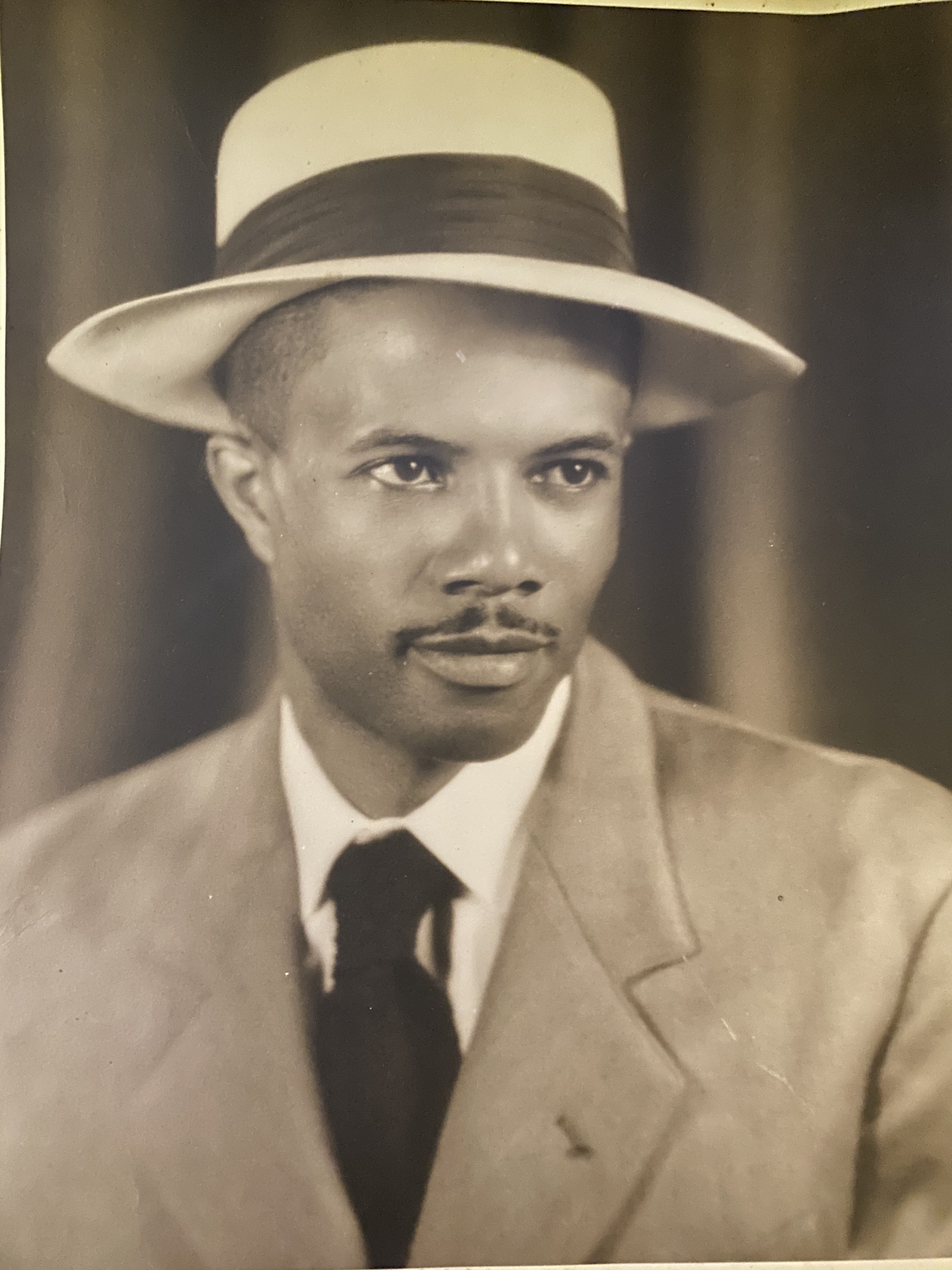
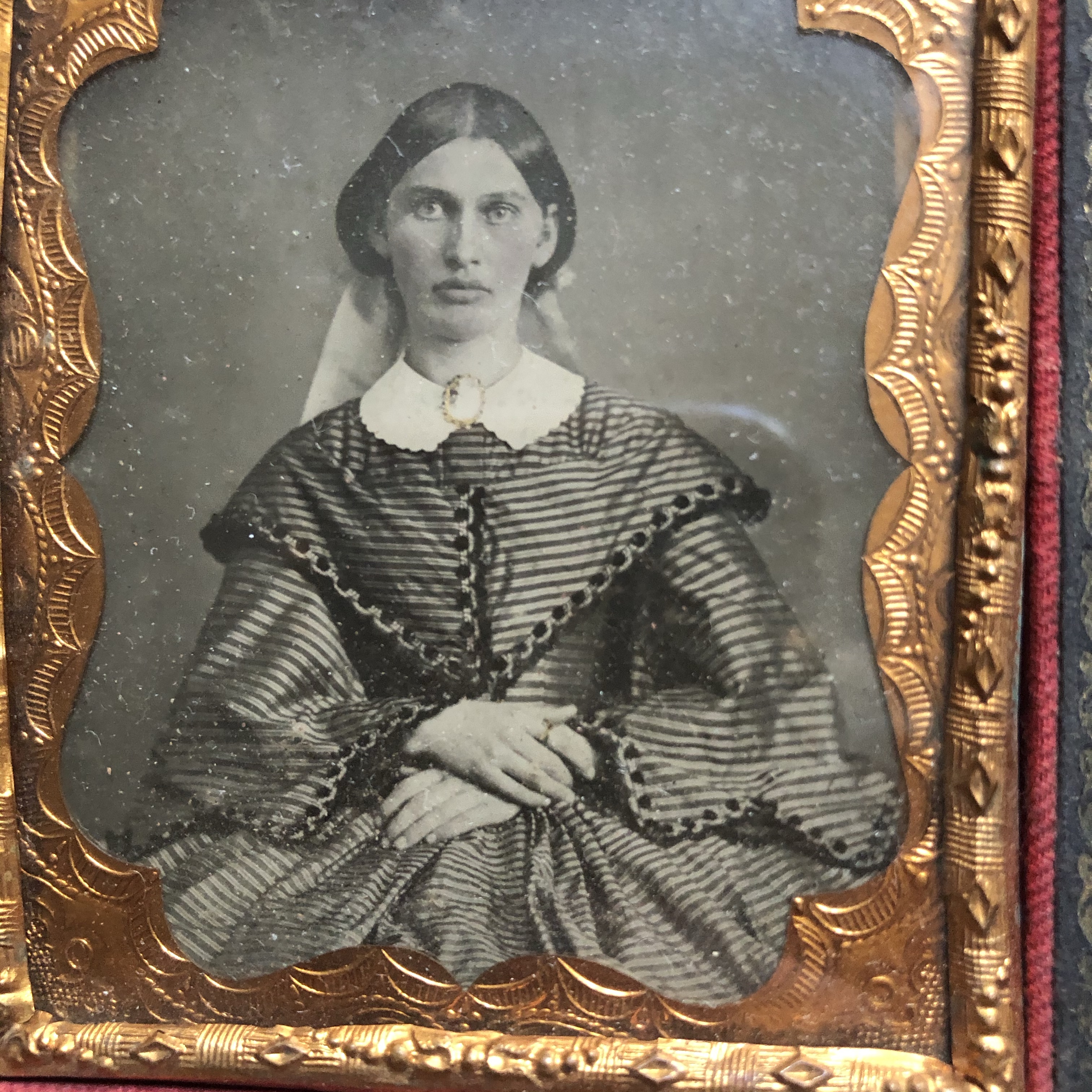
Mary Darian’s great-grandparents, Georgia and Thomas Cochran, circa 1890

“When my mamma and daddy started their family,” Mary began. “They didn’t have anything, so they had to work the farm.”

Mary, my childhood caregiver, and I were sitting together in her daughter’s home just south of Atlanta studying the notes Mary had spent days preparing. By “the farm” she meant a cotton farm owned by a white family who by the time Mary’s parents married employed her paternal grandmother as a laundress and her great-grandmother as a cook.

“Were they sharecroppers?” I asked. I was presuming, I suppose, but with good reason. It was 1935. Mary’s parents lived in Hurtsboro, a tiny town in a county pushed up against the Georgia border in Alabama’s “Black Belt,” so named for both its rich soil and its historic dependence on the labor of African Americans, originally as enslaved workers and later, as tenant farmers. These tenants, who during the Great Depression accounted for well over half of all farmers in Alabama, “shared” profits earned from the cotton and other crops they harvested for the farm’s owner.

Or that was the theory.

“Humph …” Mary said with a smirk. “Sharecropper? I don’t know about that. They didn’t share nothing.”

With this she let go a sharp laugh. I smiled, marveling at her sassy wit and how it had survived the yearsShe was spot on, too. The bits landowners shared were most often so meager that tenant farmers struggled to break even after each year’s harvest. Sharecroppers who tried to save enough to move on to some other life would labor years, decades even, before they felt secure enough to leave. Even then they rarely had the means to purchase land of their own.

“My grandmother Ellen Walker had married a Cochran,” Mary went on. “But it didn’t work out, so my daddy was the man of the house. He had to work in the fields even when he was just a boy, to help support the women.”

Mary’s women, strong women who would end up raising her, were her grandmother Ellen, Ellen’s mother Caroline—“but everybody called her Ca-line,” Mary added with a broad smile—and Caroline’s mother, also named Ellen Walker. I asked, but Mary wasn’t sure exactly where or when the first Ellen or Caroline were born. Hmmm. Perking up, I slid to the literal edge of the couch we shared. I tinker a bit with genealogy (ok, it’s my favorite rabbit hole), and with tingling fingers I asked Mary’s permission to do a little research into the Walkers.

“Why sure,” she said after a pause. There was a touch of something in her soft features, unease, maybe even worry, but I brushed it off.

Parsing out birth places and hidden relationships and surprising connections is a lot like solving a puzzle. Though following a hunch through the generations can take weeks, I love the warm and fuzzy feeling that a successful search brings. I fired up my Ancestry account later that day, and dug in. The 1930 census suggested that the older Ellen Walker, Mary’s great-great-grandmother, was 106 years old that year. 106!!! Alas, this detail is likely exaggerated … Ellen was alive when Mary was a young child in the late 1930s. Her actual birth year is reported in a different census as 1840, in another as 1835, and on and on. But no doubt, Ellen Walker the elder was at least in her nineties in 1930 and was born, in rural Alabama, decades before the Emancipation Proclamation. Ellen first shows up in public records, along with three daughters and a son, in the Census of 1880 as a farm laborer in a community called Glennville. A ghost town now, Glennville sat about twenty miles south of Hurtsboro at the northern tip of what was then Alabama’s most prosperous cotton producing region.

In spite of Ellen Walker the elder having been born in 1840 or before, she is not listed in the censuses of 1840, 1850, or 1860. Although free people of color are listed in these censuses, enslaved men and women show up as anonymous tick marks in separate “slave censuses” reported by landowners and identified only by race, age and gender. Odds are high, then, that in the antebellum years, Ellen’s existence was noted by one of these tick marks and that she worked as an enslaved laborer in the cotton fields of a Glenville plantation. At the end of the Civil War, she likely stuck around Glenville, as many of the formerly enslaved did, to work the same or another farm nearby with her young family, which included her second child, Mary’s Ca-line, listed in that 1880 Census as ten years old.

I kept burrowing, hoping to find a reference to the elder Ellen’s husband, or her parents or siblings, but came up empty. No census listings, no birth or death certificates, no marriage license. Feeling anything but warm and fuzzy, I paused my search. A deep loneliness filled me to think of Mary’s second great-grandmother, a woman who lived such a long, brave, rich life, perched alone atop the Walker branch of Mary’s family tree as if she’d self-birthed when in reality she had ancestors dating back hundreds of years, ancestors who had survived the cruelties of slavery, the unfamiliar environment and diseases of a new world, the brutality of the Middle Passage, but died unnamed and unheralded.

I thought of Mary’s hesitance about my search and sensed she wouldn’t be surprised to hear that members of her family were brought to this country against their will, forced into backbreaking labor, among other things, and treated as less than human. When we next met, we chatted a little about her great-great-grandmother. She confirmed the names of Ellen’s other children that show up in that 1880 Census. I probed her a bit to see if she might remember any other Walker ancestors. She didn’t and I left it at that. She knew where Ellen’s branch led and to dwell on it could only bring pain. A little at loose ends, I opened my phone and zoomed in on a few other things my search had turned up—a photo of her mother’s mother, Bettie Lou Tyner James. Born in 1879, she lived to 91. ”Why that’s Ma Bettie!” Mary exclaimed. Then a pic of her Cochran great-grandparents, Elias and Georgia, on their wedding day, and copies of several marriage certificates, her parents’ and grandparents’ and even one for Elias and Georgia, married in September of 1890.
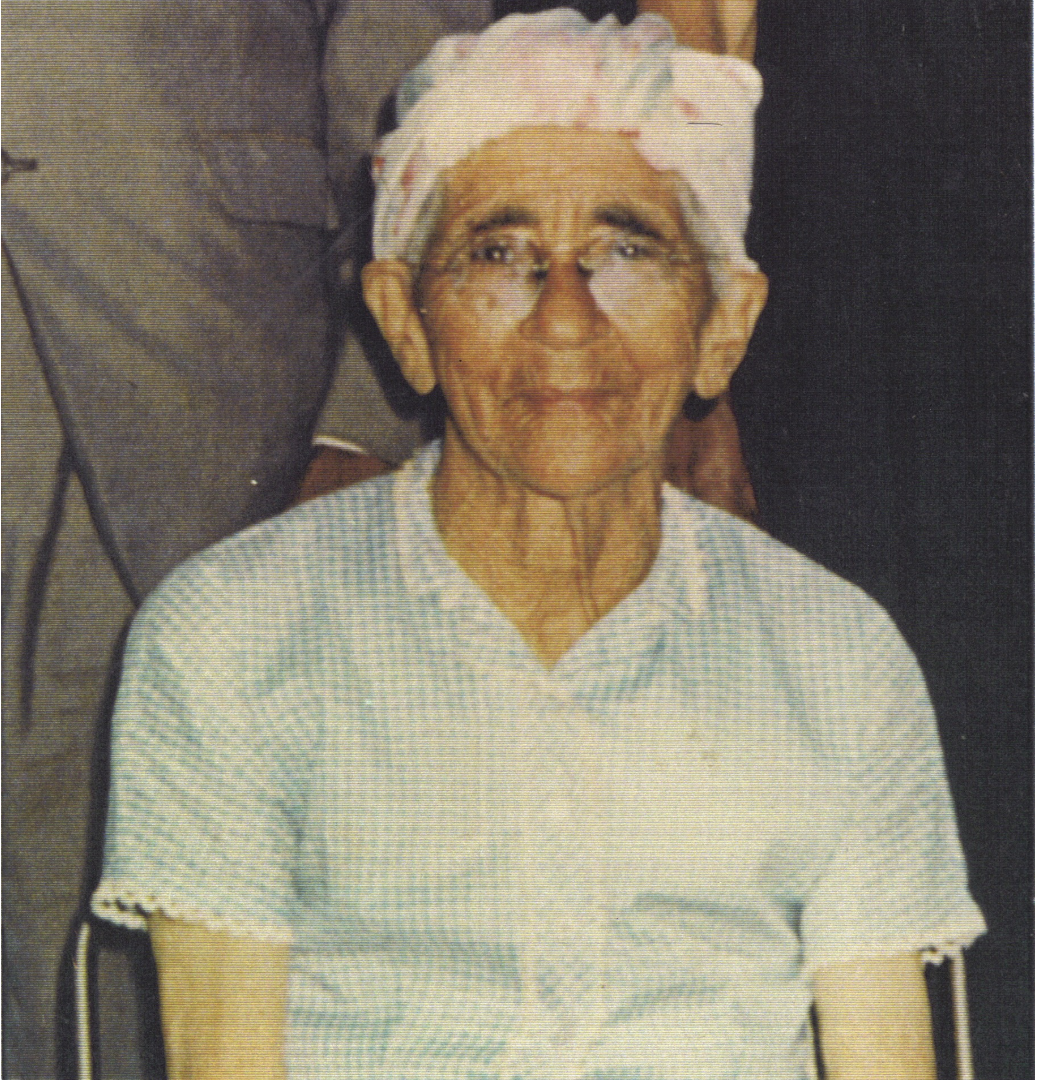
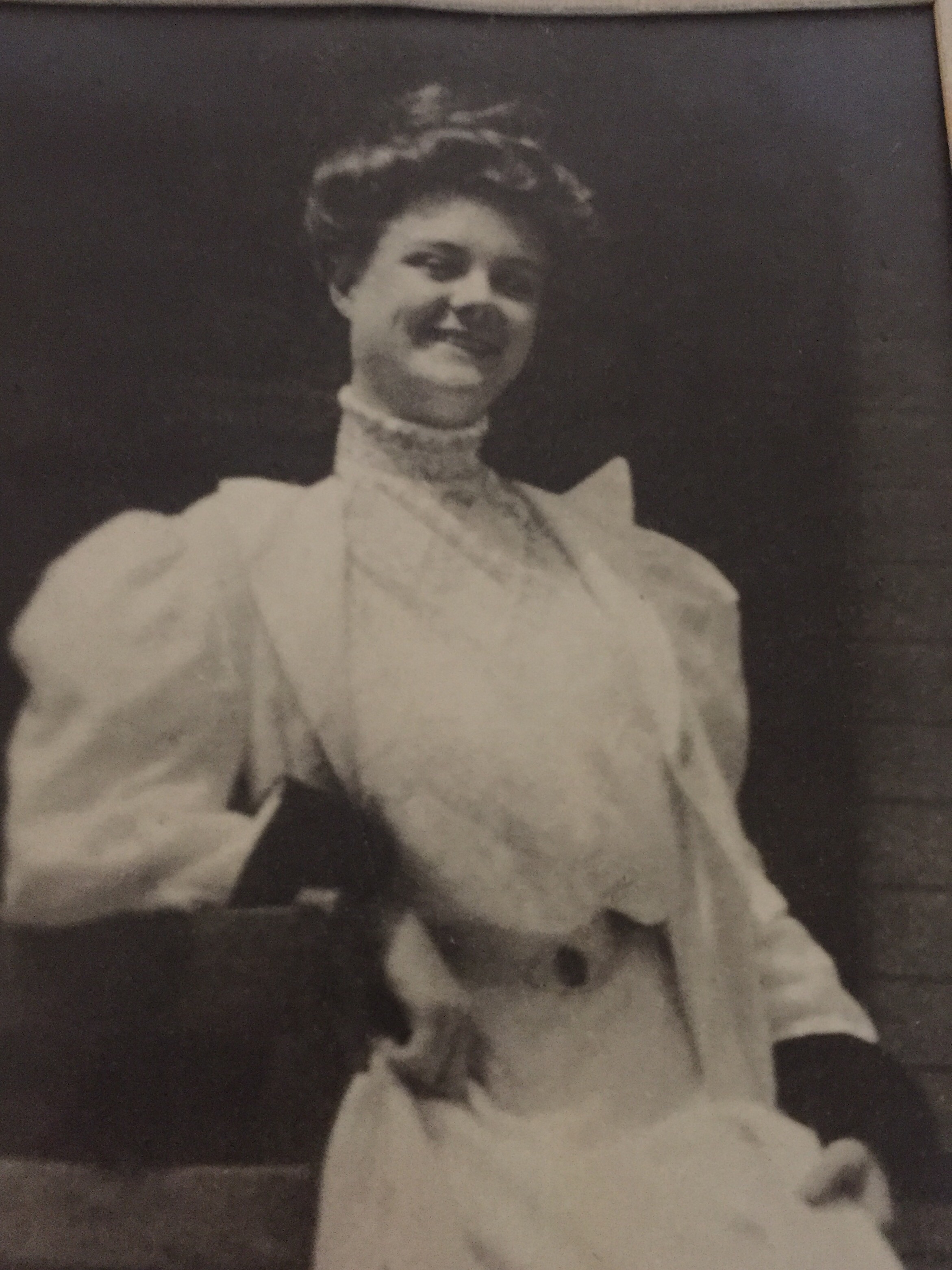
Bettie Lou Tyner James, Mary’s maternal grandmother

Holding the phone close to her face, Mary thanked me, her voice filled anew with her characteristic joy. I told her it was nothing. I liked genealogy and hoped to discover more. We both felt better for having looked over these images together, a little less lonely to think of Ellen Walker and her lost parents and grandparents, and of Mary’s many other unnamed ancestors, those whose blood she shared and whose strength and courage live on in her children and grandchildren.

Afternoons with Mary: “On my Mind and In My Spirit”

After nine long years of procrastination and skittishness, I’ve worked up the gumption to share the story of my rekindled relationship with the beloved caregiver of my youth. The story will unfold in several chapters. If you’d like to read the origins of this journey, just click here: I Am Mae Mobley


On a steamy afternoon during the troubled summer of 2016, I finally worked up the courage to call Mary Darian, the intrepid woman who half-raised me. Though I loved Mary dearly, I’d failed as an adult to stay in close touch. As each ringy-dingy sounded, I worried, whispering my introductory lines again and again. A waste of energy this. Mary knew my voice immediately—“Angel Face, is that you?” I pictured the tall, confident young woman who used to drive me to McDonald’s for a Big Mac after middle school, and let go a grateful sigh. I was no longer a school girl, of course, and Mary had long moved on from being our family’s housekeeper, but her voice still brimmed with warmth and affection.

I caught her up on family this and thats. We exchanged stories about my mother—“Now she was a real lady … ” Mary gave a chuckle. “And what a seamstress!” She’d long admired my mother’s knack with a needle, and one of her lively descriptions came to mind: Your mother made a white jacket for her new formal gown with shells around the midriff … she once penned to me at summer camp. Wow! When the lady moves, she gets momentum and never stops … I think she’s going to wear it with her sexy red sandals!

Though Mary had never much liked talking about herself, she finally told me she’d recently had a fall. “But Lou took such good care of me I’m already back on my feet!” Lou is Mary’s daughter, as loyal and kind as they come, and I noted as much. Hesitant again in light of this news (was this the time to worm my way into Mary’s life?), I took a deep breath and asked if I might drop by for a visit. “Why sure, anytime!” she said. Then a pause. “Well, anytime other than Wednesdays … I still get out for my Bible study on Wednesdays.” Smiling, I suggested the following Thursday and our plans were set.

Eighty then, Mary lived alone in the home in west Atlanta that she and her husband had moved into in the late sixties. A one-story with wood siding and four inviting windows across the front, I’d been there as a child. As I drove between sprawling azaleas lining the driveway and parked beneath the shade of a generous hardwood, I found it as cozy and comfortable as it was back then, only better. Previously a neutral cream, it had been painted a bright banana yellow. The shutters and trim, dark navy before, had gone lime green. The effect was bold and welcoming, as if the house itself wore a wry grin for neighbors and strangers alike. Perfect, I thought. Mary through and through.

Mary’s home for over fifty years

“Come on in!” Mary said with a yelp of pleasure, and squeezed me tight. As we walked inside, she limped a little and gripped the back of a chair. I winced, reached to help, but she brushed it off. We sat side-by-side on her couch and studied the faces, many of them Mary-like, smiling out from the abundance of photos in her living room. One by one, she proudly identified family—the three sons I’d once known now become men, the late husband I never met, the many beloved grandchildren and great-grandchildren and of course, Lou, who showed up toward the end of our visit, sacks of groceries spilling from her arms as she corralled her little granddaughter through the door.

Mary had visitors most every day, family and more. She bragged on her neighbors and beaming, described the teenaged boy from her church who dropped in often to check on her. We reminisced about my parents. She asked about my children and my writing and just like that, the gap of years since we’d spent time together fell away. We joked about my older brothers’ teenaged exploits of long ago, and she said how sorry she was about the oldest, Ed, who’d been gone nine years.

“Your mama called me,” she said, her eyes damp. “More than once after he passed. Just to talk. A mother shouldn’t have to lose her child.”

“No, she shouldn’t,” I agreed, my voice wobbly. Mary took my hand and I mentioned that I’d been thinking about her a lot recently … “Especially since I rewatched The Help. Have you seen that movie?”

“Sure have,” Mary said, her tone wary.

“You know, it has its faults but it made me realize I never took the time to really get to know you … ” I began to sweat. “I guess what I’m trying to say is I’d like to learn your story, Mary. It’s something I should have done a long time ago. I’d like to know about you and your past, the way you’ve always known about me and mine.”

Her soft gaze clouded in bemusement, maybe disbelief. It wasn’t like Mary to be at a loss for words, and I looked away. Maybe I was being pushy. Maybe I should have kept my mouth good and shut.

“Well, honey,” she said finally, grinning. “It’s not all that interesting of a story, but I can probably come up with a thing or two.”

I laughed in relief, and we agreed I should return in two weeks armed with pen and paper and I-phone microphone. I wasn’t sure exactly what I would do with what she chose to share—blog? book? keep in my heart?—but I left excited about what lay ahead and hurried home to call my sister in Pennsylvania. Ten when our parents hired Mary at eighteen, JoJo loved Mary too, if in a different, maybe even deeper, way.

My sister and I visit Mary on her 81st birthday, November 11, 2016

A week later, Mary called, her voice subdued and full of pain, to cancel our get-together. Her oldest son, Lewis, Jr, had suddenly passed away of a heart attack, at fifty-seven. It was almost eerie, given what we’d recently said about mothers losing sons—such a cruel twist of time—and my heart ached for her. The fact that she’d lost her husband decades before in the same way and at roughly the same age only deepened her sorrow. My brother George and I attended Lewis’s funeral, a service filled with music and laughter and tears. During one of the soulful hymns, Mary, seated in a wheelchair in the front row, reached her hand toward Lewis’s casket and swayed in easy rhythm with the music. She was a woman of strong faith, among the strongest I’ve known, and I remember feeling that the air in the church seemed to shift, as if Lewis’s spirit had joined Mary’s own, and settled in to stay.

Not long after Lewis’s death, Mary had another stroke. I visited a couple of times at her rehab facility, once on her birthday when JoJo was in town, but we agreed to hold off with the note-taking and the rest until she grew stronger. The stroke had slowed Mary’s speech and in truth, I wondered if it might be best to leave well enough alone. We were back in touch, friends again, and Mary should save her energy to heal and live her best life. In the span of a few weeks, she’d given me a glimpse into her family life—who could ask for more? Tough as ever, Mary had something else up her sleeve. The next March, she reported she was much improved and ready to start getting together, only I would have to come to Lou’s house while she recuperated, which was peachy with me.

And so it began. Lou welcomed me to her home on our appointed day, and Mary, the walker she was learning to use close at hand, gestured me to join her on the couch.

“Angel Face,” she said, her trademark smile tinged with emotion. “His story has been on my mind and in my spirit.”

His story?” I asked.

“My daddy’s,” she said, touching the tight white curls around her still- smooth face. “I want to tell you my daddy’s story.”

She held up two pages of blue cursive notes written in the hand I knew from her letters, if a little uneven. I longed to hear about Mary’s life, and felt a touch disappointed.

“I’ve been trying to get it all down,” she said. “But I’m such a slow writer these days!”

“It’s hard for her …” Lou chimed in from the kitchen. “She spent days on it!”

Awed, I scanned Mary’s pages and it hit me: by sharing her father’s journey, she would be sharing her own in a manner she was comfortable with. Besides, do any of our lives make sense without the larger story of our parents and grandparents and on back?

“He was born in Hurtsboro, Alabama,” Mary began.

Hurtsboro—then a town of less than 900 residents wedged into a far southeastern lip of the state, deep in the Cotton Belt. Hurts to stay but it hurts to leave, Mary once quipped. The 1910s and 20s. The legacy of legalized slavery still shrouded the South, and Jim Crow was flexing his muscles. Mary’s father, Jimmie Lee Cochran, lived with his sister and their mother and grandmother on a white man’s farm. As early as the third or fourth grade, Mary explained, her father, “the man of the house,” often had to leave school early to go home and work the fields. Children being children, his classmates took note, in heartbreaking fashion, but a certain little girl understood Jimmie Lee’s predicament, and that would make all the difference.

Mary tells this best, so I’ll sign off for now with the brief clip above (apologies for the poor editing and annoying oohs and aaahs) in which she describes the moment her mother-to-be, Lue Milla James, first felt a pang of love for the boy who would become Mary’s father.

Shaking off the Dust

When I launched this site a decade ago (!), I expected to share a few posts about the exhausting, cathartic, sometimes funny and strangely exhilarating process of cleaning out my parents’ attic. One damp box of mid-20th century toothpicks led to another, and thanks to support and input from readers like you, I learned that sharing family stories not only kept my late parents alive, it sustained me through the joys and sorrows of the years that followed.

In that spirit, and because honestly, how much more can be said about faded photographs and mildewed button boxes, I’ve decided to creak shut the attic door and launch a new site. It’s called “Why the World Wags,” and in it, I plan to wax on about well, whatever grabs me as I move along through life. Ten years on (!!!) from that first post here in “My Mothers’ Attic,” I find myself teetering at the edge of what some call the golden years. Has there ever been a more obvious euphemism? Golden in the sense of being burnished by life perhaps, but there are days when the world around me seems cast in the gray light of dusk. And yet! At other times, that world seems to sparkle in a way I rarely noticed when I was younger–when a bluebird lights on a leafy branch in our back garden, his feathers aglow with morning light, or when I’m able to revisit a place I’ve come to love, like the brilliant waters off the coast of Belize pictured above, or when my toddler granddaughter reaches for me, smiling, and calls my name (which at her bidding, seems to be “Gaga”).

Golden moments, every one.

If you’d like to join me on my continued journey, here is the first newsletter/post from the new site. I’ll be migrating some of my more popular posts from here to there, usually with some editing, but I’ll leave the Attic open a good while, too. To visit the new site itself, just click below. If you like what you read, consider subscribing (s’il vous plaît!)!

https://marthamattinglypayne.substack.com/

Thanks for reading, always, and I hope to see you in Why the World Wags!

A decade! Maybe that explains the shocking loss of melanin 🙂

The Places We Become

Tuesday, January 28th, 2025, would have been my brother John’s 75th birthday. I woke thinking, Oh, I need to call John today. How strange, how wrong, it felt not to have one of our cross-country chats. Like me, John was born and raised in Atlanta. When he was around thirty and I was twenty-ish, he moved to San Francisco. There, he became a clever, in-demand, pen-wielding ad man, later a creative director who befriended the celebrities he hired for shoots or met in Marin County on his children’s ball fields and school auditoriums, celebs like Steven Spielberg and Téa Leoni. Over the years, those of us living our quieter lives back east kept hoping something would draw John home to stay. We missed our smart gentle brother, but California had lassoed his heart for good. Our southern charm and Georgia sunshine were no match for the fog rolling in off the mighty Pacific, the hills rising impossibly beneath the wheels of the cable cars, the giant conifers piercing the skies, the 49ers, and the quirky beach towns where John summered with his family.

John and me, with our mother, in the early years of his California life.

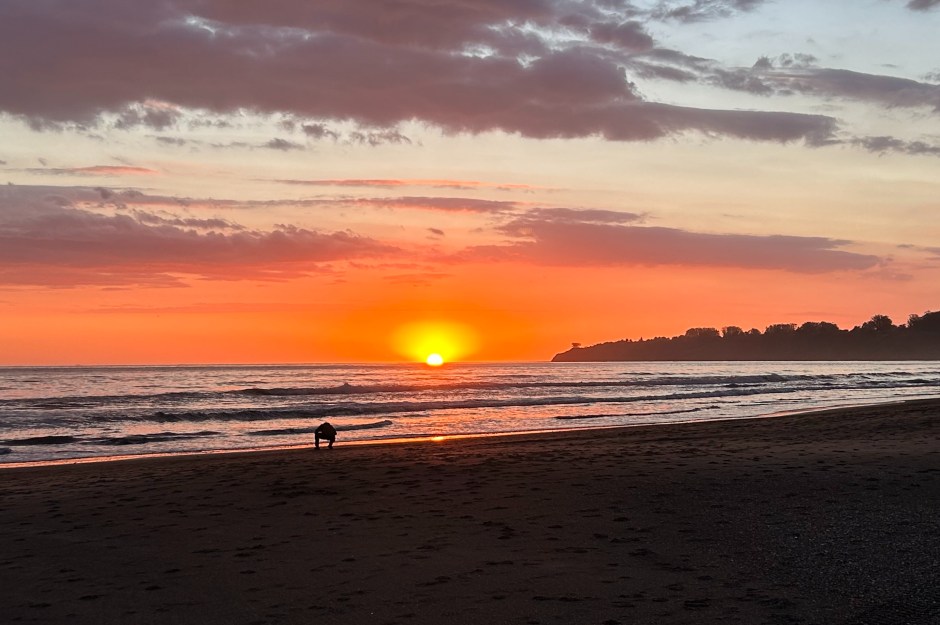
John’s son and daughter grew to love San Francisco and Marin County with a passion to rival his. On Saturday, the first anniversary of his passing, Ben and Laura Lee held a memorial service in Stinson Beach, the quirky beach town John loved best. Tucked below Mount Tamalpais in West Marin, Stinson curves along a peninsula east of Bolinas. Seals swim and dive for their dinners in the lagoon on the peninsula’s north side. Egrets and herons glide over the sea and roost in the trees.

Our family had visited John often in recent decades, and these wonders of Stinson, the memorial itself, brought him back to life in bittersweet ways I hadn’t expected. Ben and Laura Lee set up a display that featured laminated copies of the print ads John created. His original portfolio briefcases spilled their treasures: John’s brainstorming notes, folders holding rough drafts, more ads, including one for a brewery that features John himself striking a gangster-like pose. A longtime colleague told tales of John’s ad days and reminded us he earned a professional nickname–Mad Dog Mattingly–when he once shed his Southern gentleman skin to stand down a difficult and demanding director. John’s children shared stories about John as a California Dad–the hours he spent shoveling snow at their cabin in Lake Tahoe to create luge-worthy troughs for their sleds, the steak dinners and fish fries he prepped, his habit of pulling over at every turnout during countryside drives–“Take it in, kids” his favorite refrain as they gazed together at the sea, the mountains, the dramatic cityscape of San Francisco. As her comments drew to a close, Laura Lee spoke of John’s close relationship with his grandson, her five-year-old son Ollie, who called him Poppy. With that, Ollie rose from his seat and lifted a basket from a table near the front. “California poppies,” Laura Lee said as Ollie handed out small bags of seeds for those in attendance to plant. Later, she, Ben, and Ollie spread John’s ashes beneath a Blue Oak tree that rises leafy green atop a slope of Mt. Tam, where in better days John loved to hike and think and admire the view.

One of John’s portfolios

The next day, as we walked Stinson’s main drag, we paused in front of the tiny Stinson bookstore that sits across from a bar and grill called the Sand Dollar, a bookstore we learned John dreamed of owning. Sell books by day and live in the apartment above by night. Somehow I never knew, but that’s how John hoped to spend his golden years. I’d wager he read nearly every book in that store, but life got in the way. In his early fifties, John developed a bad back, had a couple of failed surgeries, and spent the next twenty years struggling to adjust to the often debilitating pain that resulted. His dream was deferred, as so many are. Though this makes my heart ache, I’m glad to know of it. It helps me better understand the brother I loved.

Home now, I can hardly wait for my poppies’ spring bloom. And I’m grateful for the new memories of John I’ve gathered, new images of him as a California man. Among these, I’ll cling to two in particular, one grounded in reality and the other a bit of a fantasy: John resting for eternity in the shade of his Blue Oak, a chilly breeze rustling and the mighty Pacific spread before him, and John very much alive, shelving books in his tiny store, his glasses on his nose and his mustache twitching as he chats and smiles and rings up customers. As dusk falls, he turns out the lights, scales the stairs without pain, and enjoys a steak and a glass of wine, the rumble of the surf in the distance and the summer bustle of his adopted town below his window.

John’s Blue Oak. Swinging beneath, his daughter; gazing out to sea, his son; playing, his grandson.

Home at Last

Like her father, once Mary earned the right to vote, she never missed the chance. Here she fills out her absentee ballot in October of 2018 for Georgia’s gubernatorial election.

Some of you met Mary Darian in “I Am Mae Mobley,” one of my early posts here in My Mother’s Attic. In part an outcry against an upsurge in race-related killings during the summer of 2016, that piece is at heart a tribute to Mary–the woman who helped my mother rise to the Herculean task of raising six children. Since I launched this blog, Mae Mobley continues to garner far more views than any other Attic post–testimony to Mary’s captivating character. In that earlier piece, I lamented that during the two decades Mary worked for our family, I failed to learn much about her life. I vowed then to make amends for this, to reach out to Mary, though I was more than a little nervous about cold-calling after so many years of silence. I might have known that was a waste of emotional energy. In the years that followed, in spite of facing one personal challenge after another, Mary shared detail after detail about her story, and more broadly, her family’s story, which to her were one and the same.

One morning not too long before the pandemic hit, I went to see Mary at the nursing home where she’d recently moved. Her room was small but comfortable–a sink and closet against one wall, a twin bed at the center, a broad window at the far side, the ledge below crowded with photos of her grand- and great-grandchildren. Mary’s devoted daughter, Lou, had a bird-feeder installed just outside the window so Mary could enjoy sparrows and robins and fiery red cardinals as they flitted about. By this point in her life, Mary was confined to a wheel chair, though I was soon to learn that in her case, confined did not apply.

I breezed through the door a little earlier than usual to find no Mary in sight. I heard a scuffle on the far side of the room and stepped closer. She had wheeled herself into the narrow space between bed and radiator and crouched low over her knees, her head nearly hidden between the bed and bedside table.

“Mary?” I asked, trying to control the worry in my voice. “Can I help?”

“Oh!” she said, her voice bright with enthusiasm as she looked up. “Angel Face!” (the pet name she coined for me as a baby). “Come on over here!”

I did just that. Mary craned about and reached her long arms around my neck. That’s when something shiny flashed in her lap–a long, thin metallic tool.

Celebrating Easter. April 2022

“Just give me a minute …” she said, ducking head under table again. “While I find my Puh …”

“Here, can I get it for you?” I asked, though I wasn’t sure what I was looking for. Her paper? Her pillow? I tried to maneuver between wheelchair and radiator but the space was tight, the bedside table happily cluttered–a card illustrated in blue crayon, a tub of Vaseline, a small glass vase filled with Alstroemeria, a stack of word puzzle books and a red leather Bible, its pages well-thumbed.

“What is it you need, Mary?”

No answer, just more poking at that shelf.

“Ah, here it is!” she cried at last. Turning, she sat up straight, her expression devilish and triumphant. “My Ponds!”

She held out the stick, which I then could see had a grip handle at one end and a sort of claw at the other, not unlike the mechanism in that arcade game in Toy Story (The claw is our master … ). Caught firmly in Mary’s claw was a jar of Ponds cold cream, same pale green cap and tulip logo as the ones my mother used to keep on her vanity table.

With easy dexterity, Mary twisted open the jar, scooped out a finger full, and chatting all the while, began massaging the silky cream into her still-smooth complexion. Her task complete, I offered to return the jar to its shelf. She laughed, waved me away, and did it herself, metal claw re-extended. Then she nabbed her hairbrush from the drawer, dropped it in her lap, and wheeled over to the sink. One of her feet–slightly swollen–nearly collided with the corner of the bed frame as she went.

“Mary, your leg–is it ok?”

“Oh that …” she mumbled as she set the hairbrush at the edge of the sink. “Some kind of blood clot in that old leg.” Then she plucked a cloth from a towel rod, wet it generously, and ran it across her short thick curls before brushing them out.

“Ok, now …” she went on, patting her head and smiling at my reflection in the mirror. “That’s better. I never know what it’ll look like in the mornings.” Then guttural laughter as she spun her chair around to face me. “Now tell me … What have you been up to?”

I gathered my thoughts, but before I got a word out, her eyes flew open wide and she cried, “Wait a minute! … I forgot my teeth!”

With that, and without a wrinkle of embarrassment, Mary spun back around, tugged a set of dentures out of a cup and slathered them with toothpaste. While she gave them a sturdy brushing under the faucet, I marveled at the independence, the lack of self-consciousness, and the serene acceptance of the time-consuming rituals of growing old that she possessed.

“Your mama liked Ponds, too,” she mused. “You know …” She paused and turned to me, that devilish smile restored. “She may have been the one who got me started with it!”

Whether this was true or its inverse–that Mary actually introduced my mother to Ponds–didn’t matter. This was a habit they shared, one I hadn’t known about, and something soft padded into my heart. Not a visit passed between us that Mary didn’t turn our conversations back to my parents, or one of my siblings–to those days she was part of the everyday workings of our busy household. She loved especially to wax on about my mother’s expertise as a seamstress, but then she’d been doing this since my summer camp days. Your mother made a white jacket for her new formal gown with shells around the midriff … she penned in a letter she sent off to Camp Merrie-Woode. Wow! When the lady moves, she gets momentum and never stops … Then, one of her witty after thoughts–I think she’s going to wear her sexy red sandals.

Back then, ten years old and homesick, I likely cried to read this, but it was a good cry. Mary was enfolding me from a distance into the home life I loved. I understand now that during our recent visits, she was doing much the same. Her smiles, her laughter, her stories, were keeping my mother, my father, in short, my childhood alive. She did me as much good–no, probably more–than I did her.

Mary’s father, Jimmie Lee Cochran, as a young man.

Though she lost her mother very young, Mary was eager to share her father’s story, too. In the 1920s, when he was hardly more than a child, Jimmie Lee Cochran worked the cotton fields of Hurtsboro, Alabama, where he lived on a farm with his mother and grandmother. In 1939, when Mary was four, Jimmie Lee came within an inch of being lynched. After a narrow escape, he managed to slip away to Atlanta, where he built a long career with Southern Railway. More importantly, a decade later Mary’s father brought her and her younger siblings to the home he’d built–literally built with his own hands–for his family. The twists and turns of Jimmie Lee Cochran’s story, and Mary’s alongside, paint a shimmering picture of courage, devotion to family, and perseverance. It’s a story that could fill a book. Maybe someday it will.

Born in 1935 in Hurtsboro, Mary Cochran Darian moved on from this world on April 18th, 2023. She worked those Alabama cotton fields herself before graduating from Atlanta’s Booker T. Washington High. She married her sweetheart, Lewis Darian, and after twenty years with our family moved on to an administrative career at Crawford Long Hospital. Through it all, Mary took care of people–her four children, her physically disabled brother, her neighbors and grandchildren, her church family (to them she was “Mother Darian”) and me and … well, the list goes on. Her family held a “Homegoing Celebration” last week at her beloved church. The service left room for sorrow but had joyful music aplenty and tributes full of love and hope meant to speed Mary along on her journey to the place she firmly believed was her true home. I think everyone who spoke of Mary mentioned that infectious smile that so warmed me during our visits in her last years. I’ve mentioned the knack Mary had for helping me laugh away my little girl challenges and preteen angst. Her ability to smile and laugh herself through the many trials of aging was to me more remarkable. My mother had her strengths, but facing old age with grace was not one of them. She raged against the dying of the light, and though there’s something to be said for that, the way Mary kept her spirits high in spite of the slings and arrows fortune tossed her way not only eased her days, it lightened the hearts of those who cared for her.

The pastor who gave Mary’s eulogy asserted that her smile set an important example. If you love God, he suggested, the least you can do is smile for the world to see. Mary’s resting face was a smile, a natural one, broad and vibrant in a way that said, Watch out because here comes a laugh, a big one straight from the belly! The photo below offers proof. I can hear my brothers and my father laughing with Mary even now.

Mary returns for a much-anticipated visit with my family, sometime in the 1980s.

The cover of Mary’s Homegoing tribute booklet features a couple of her favorite phrases. “I expect a miracle every day,” reads one of them. For those who consider miracles to be only raising the dead or turning water into wine, this may sound like hyperbole. Like the wisest among us, Mary knew that the simplest things could be miracles: The touch of her first great-great grandchild settling into her lap; the familiar taste of the meals Lou prepared at home and brought to her room; the right to vote safely and the freedom to shop where she pleased and sit at the front of the bus (freedoms she had to wait until age thirty to enjoy); the weekly Bingo games (she won a lot) with other residents in the nursing home common room; a skittish bluebird in the morning sun, darting close for a nibble from her feeder before the pushier birds moved in.

Miracles every one, just as Mary was to all who knew her. She is home now, flights of angels singing her to her rest.

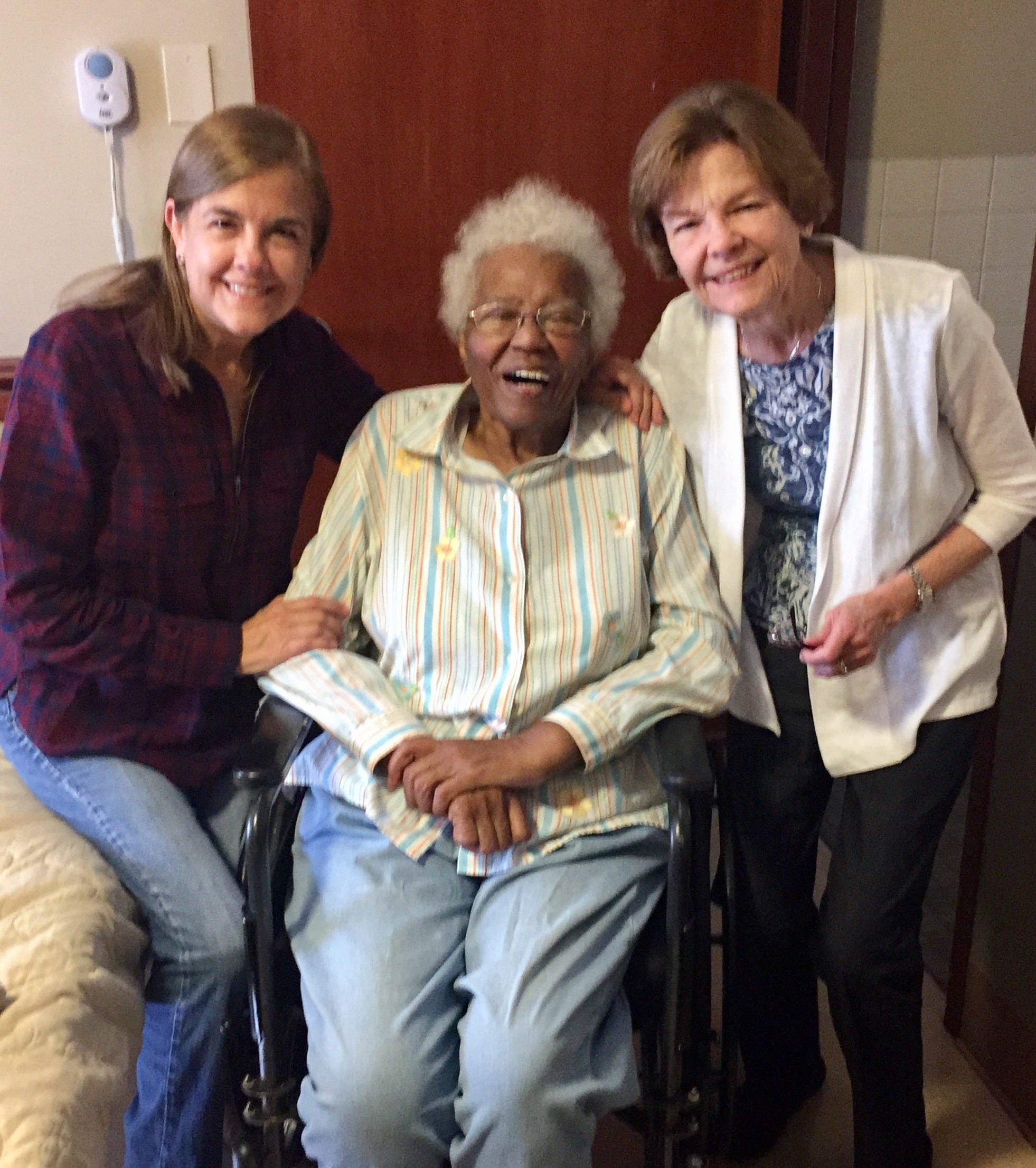
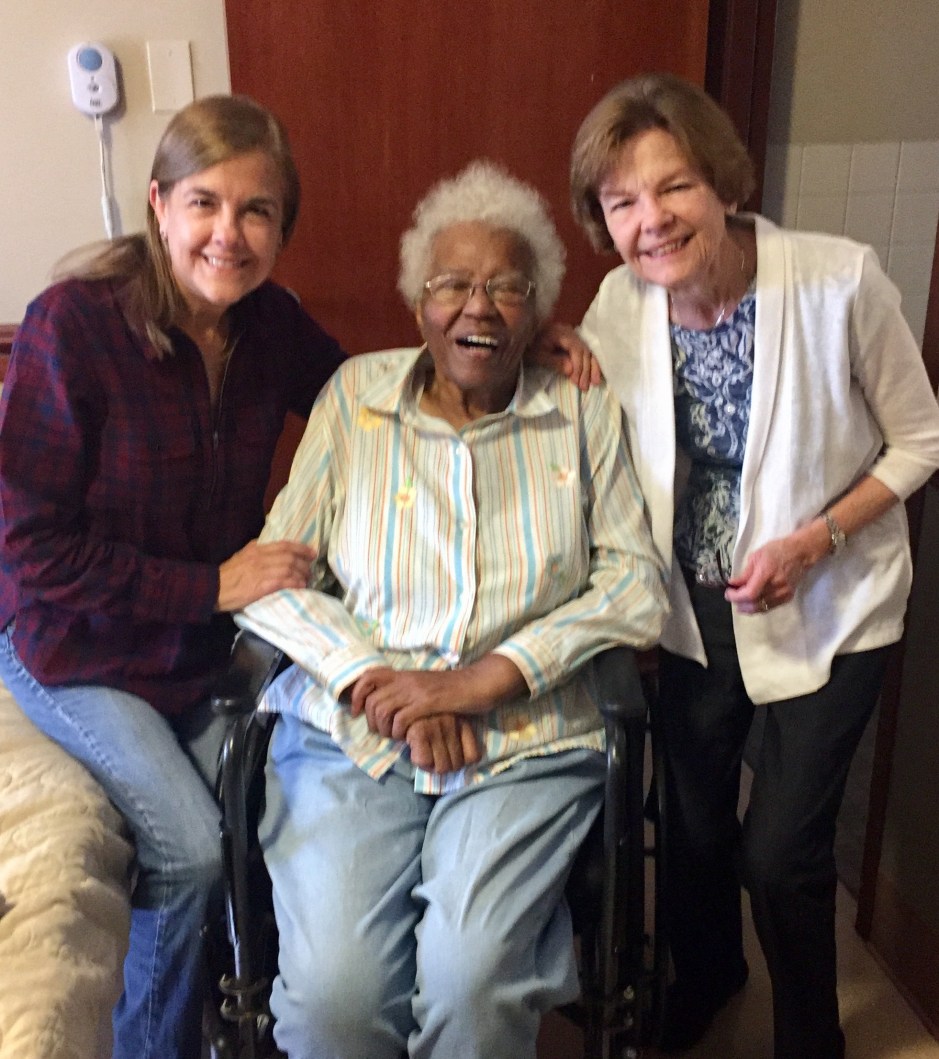
Mary with her daughter, Lou Darian Qualls, on Mother’s Day, 2022

A Tale of Two Cousins

During a late sweep through the dark corners of my mother’s attic, I stumbled upon a moldering shrine to one of my paternal great-aunts. Louise Bickers, a.k.a “Weezer,” was a feisty single woman whom I loved like a grandmother. With affectionate if drowsy interest, I dragged over a rickety wooden stool and dusted off her leftovers—stacks of limp letters, photos with curled edges, family trees scribbled on yellowed paper, and a decomposing shoebox of daguerreotypes.

Stumped? So was I. An early form of photograph produced by “fuming” mercury vapor onto silver-plated copper, the daguerreotype was introduced in 1839 and became obsolete by the 1860s. The 1860s! And there I sat, a hundred and fifty-plus years later, with several in passable shape. I ran my finger along the hammered tin frames, eyed the elaborate clothing, the formal, sometimes severe gazes. Where did these people—certainly family—live? What did they do? My curiosity piqued, I tucked the least fusty samples into a fresh plastic bin beside far too many of Weezer’s letters and photos and family trees, and moved on.

During the pandemic’s endless, vacant shut-in hours, I fetched up those family trees, rebooted my Ancestry.com membership, and typed in name after name. It was fun, by 2020 standards, learning how to create profiles for my long-lost blood kin and search for relevant documents and photos. When a grainy image of one of my great-great grandfathers popped up, I knew immediately it was—you got it—a daguerreotype. I fished out Weezer’s frames to compare and contrast. None of the faces matched exactly, but they favored, as my mother would say.

At once piercing and playful, my second great grandfather’s gaze seems especially, hauntingly, familiar. Born in 1825, Thomas Blake Bourne descended from a long line of tobacco planters in Calvert County, Maryland, a leg of land that kicks out into the Chesapeake Bay. The Census of 1850 valued his property at $2,500, equivalent to about $150,000 today, making his a healthy if small farm for its time. I can’t pinpoint the farm’s exact location, but odds are it was on or near Eltonhead, a tobacco manor along the instep of the county’s watery foot, tracts of which had belonged to Bournes since the late 17th century.

Thomas Blake Bourne, Lieutenant of the “CSA” and my second great grandfather

A city girl, I smiled to picture my great-great grandparents, Thomas and Margaret Louisa, living their quaint, rural 19th century lives. Soon a marriage record surfaced from May of 1848, a photo of Thomas’s gravestone, the inscription honoring him as “… a devoted husband and father, true to his friends and his country,” and a certificate proving that his maternal grandfather, Colonel Joseph Blake, fought in the American Revolution. Cool. I’m a DAR. I felt all rosy with pride. Then something else, less than quaint, caught my eye—a Slave Schedule, an appendix to the 1850 Census in which enslavers identified their “human property,” not by name but according to age, sex and color. I blanched, my ancestral pride dissolving as I counted the tick marks beside Thomas’s name: an even ten, six black males and four black females between the ages of six and forty-five.

I attached the Slave Schedule to Thomas’s profile and clicked back to his daguerreotype. That playful grin … might it be more a cunning smirk? My forehead heavy in my palm, I called my daughter in New York.

“We are from the South, Mom,” she said, unsurprised.

“But your grandfather came from humble roots,” I argued. “And Maryland’s hardly the South …”

“I know, Mom,” she said gently, knowingly. “But even small farmers enslaved workers back then.”

Which I knew, but this was our family, a whole different ballgame. I hung up and returned, dull eyed, to my laptop screen. Lined up in the right margin, I noticed tiny circular photos I’d missed before, profiles of other genealogists who’d saved Thomas Bourne’s image. I hovered over one, then another and another, and a pattern emerged—many belonged to people of color. What’s more, the family tree associated with each profile included a common ancestor, a man named Louis H. Bourne.

With clammy fingers, I typed Louis’s information into the Ancestry search engine. My first hit was the Census of 1860, which lists Louis H. Bourne, born 1830, as a “mulatto” head of household and farm laborer in Calvert County. More hits revealed that by 1880, Louis and his wife, Margaret, had purchased over thirty acres of land and settled down to farm tobacco in Island Creek, a breezy community along the Patuxent River that lies about fifteen miles from where Thomas Blake Bourne lived with his family. 

Calvert County in the Colonial Era

Or used to live. In 1855, amid rumblings of the war to come, Thomas had moved his household—including three children and at least nine enslaved persons—across four rivers and the Mason-Dixon line to a manor house near the James River in Virginia, a state he surely wagered would prove friendlier to his future as a planter. Eight years and three children later, Thomas enlisted to fight for the confederate states. He was thirty-eight. Around the same time, Louis H. Bourne, thirty-two, signed on with the Union Army. And so it was that second cousins, as I believe they were, took up arms against each other in a war rooted in misconceptions and greed. Were Thomas and Louis aware of this? I suspect so. It was a much smaller world then and Thomas still had family aplenty in Calvert County. Both men survived, though my great-great grandfather would die suddenly ten years later, the youngest of his nine children only eleven years old.

As intrigued as I was conflicted, I reached out to a few folks whose trees included Louis Bourne. Responses were scarce, but eventually I heard from Florencetine “Tina” Bourne Jasmin of Baltimore County. I hesitated–what right did I have to barge into her life?–then dove in and wrote to her that we could be related, somehow, through Louis Bourne.

“Oh my gosh,” Tina responded. “I’ve been hoping to find someone who might know something about my great grandfather!!!” Smiling again, I shared a little about my family. Tina sent photos of her son and daughter and grandchildren. She told me Louis Bourne had remained—thrived—in Island Creek until his death at seventy, as did many of his children, and some of theirs, and theirs and theirs right up to the present. Louis and Margaret had eleven children, among them trailblazers who stared down the fetters and hostilities of the Reconstruction and Jim Crow eras. One of their sons, Ulysses Grant Bourne, was among the first black physicians to practice in Frederick, Maryland. A grandson, James Franklyn Bourne, Jr, was the first black judge to serve on the district court for Prince George’s County. Quite a legacy, an improbable triumph in fact, and this was only the beginning.

Louis H. Bourne, 1830-1900

At some point, I told Tina I regretted the unspeakable abuses my ancestors had visited on hers. “This history is beyond our control,” she mused. “I want to believe our ancestors are pleased with us for trying to reconcile our past.” Awed by her tolerance and wisdom, I thanked her and we dug in, working to make sense of our family ties. Tina quickly shared her best clue–a digital copy of Louis’s death certificate which names his mother as “Gracey Mason,” and his father as “James Bourne.” James Bourne? Thomas’s father, my third great grandfather, was named James. But then so was his oldest son, and his first cousin, James Jacob Bourne. Which James fathered Louis? And did he enslave Gracey Mason and the son they shared? Hard to know. A pair of 19th century Calvert County courthouse fires destroyed wills and bills of sale that might have given us proof.

We called in help. Tiffinney Green of Baltimore, Delma Bourne-Parran and Patrice Evans of Prince Frederick, and another cousin in California, all descendants of Louis Bourne, joined our search. The emails flew. We shared trees, unpacked oral history. Hoping to discover shared DNA, we spit in vials, waited, and waited some more.

From the will of Jacob Bourne, my 5th great grandfather.

The results: Delma, Patrice and Tiffinney each match with at least one of my distant white Bourne cousins. And the kicker–Patrice’s sister and I share DNA. Heartened by this proof of our kinship, we analyzed and drew charts and at last wagered that James Jacob Bourne (1791-1850), an enslaver of twenty-two, most likely fathered Louis H. Bourne. This means our common direct ancestor is my fifth great-grandfather, Jacob Bourne (1721-1771), whose will survives with a full inventory attached. In the same figurative breath as a tea kettle, three old sickles, and the spinning wheel in the corner, Jacob names Grace, age forty-five, as one of several enslaved people to be “gifted” to his sons. Might this Grace have had a granddaughter who was passed down the line to James Jacob? It was common after all for baby girls to be named for a grandmother.

My ethnicity compared with that of a person of color who shares DNA with both Patrice Evans and me.

Due to those courthouse fires, for months we had little else to go on. Then Tiffinney found a Grace Mason, born 1807, listed in a Calvert County registry of Free African-Americans in 1832. She lived with a Hannah Mason, age forty. A Louis Mason, age two (just Louis Bourne’s age), also appears in the registry and seems to have been part of Grace’s household. Grace and Louis Mason then disappear. Free people of color were often servants in households that enslaved others, and our hunch is that Grace Mason worked for James Jacob Bourne. Maybe at some point, say when Louis was a child, James took in Grace and their son, maybe even enslaved them in some sort of twisted effort to control them. Did Louis Mason then become known as Louis Bourne? Did James Jacob later free his son who should have been free all along?

We’ll likely never know the full truth. The fact that Louis shows up in the 1860 Census means he was a free man well before Maryland officially emancipated its enslaved. Hannah Mason, the woman listed alongside Grace in the 1832 Registry, provides another clue. Louis’s 1860 household included a Hannah Mason, age seventy-four. Though the years don’t quite match up, they’re close enough for that era to suggest that Hannah was Louis’s grandmother, and that her daughter–Louis’s mother, Grace–died young.

Unless James Bourne sold Grace off.

“I pray that was not the case,” Tiffinney wrote to me.

I pray so, too.

Much work remains. Most of my family lines run back to the colonial era, where other fraught relationships lie in wait. Tiffinney and I have DNA matches in common that suggest we may also be kin through my Mattingly side, and I’m in touch with another young woman directly descended from Colonel Joseph Blake. Looks like the Colonel’s son had his violent way with her third great grandmother.

Broome’s Island at the mouth of Island Creek, not far from where Louis Bourne farmed tobacco and raised his eleven children.

In May, my sister, JoJo, and I visited Calvert County. We researched alongside Tina and Tiffinney, and after, the four of us gathered for dinner with Patrice, Delma, and Marietta Bourne Morris, who still lives in Island Creek. We bored each other with family stories. We laughed over wine and margaritas. Humbled, JoJo and I accepted the kindnesses these women offered. Strong one and all, they overlook with seeming ease the troubled origins of our relationship and accept us as family. I’m proud to call them cousins, hopeful that Louis and James Jacob, Thomas and Grace Mason and my great aunt Weezer are indeed pleased.

Moving forward, I’m not naïve enough to expect from others the open-hearted welcome I’ve received from the Bournes. It’s nothing I deserve. One thing seems certain—this is not a tale of two cousins. It’s a tale of hundreds, thousands—dark-eyed and green and blue; blonde, red-haired, brunette; Irish and Bantu and Latin, Nigerian and Welsh and Congolese. Our skin shines ebony and alabaster and every hue between, and our cells quiver with the tangled threads of those who came before us, our human race.

Family

Postscript: If this sort of research project interests you, message me below or through Facebook. I’m happy to share tips and links to resources. There are many!

She Who Taught Me to Read

Screen Shot 2020-03-21 at 1.38.15 PMHonestly, I’m not sure this is true, that my mother taught me to read. I recall lying belly-down on a thick-piled prickly rug (an Oriental, as Mom used to call them in the days before we knew better), sounding out words in The Little Engine That Could. But the rug in question covers the floor of my father’s library, and it is my father, crunching numbers at the desk above me, who comes to my aid when phonetics fail and I stumble over a word. 

The thing is, “learning to read” involves much more than figuring out a diphthong (“bl” plus “UE” equals blue?!?), or understanding that “th” ends up sounding like whatever it is (“I think I can, I think I can,” said the little blue engine). Learning to read means coming to love the musty smell of an old paperback, the grainy touch of its spine, the voices both lyrical and rational that speak from the pages of any book, even an e-book. Learning to read means finding your proper posture. For my mother, this meant perched with straight back, ankles crossed and feet up, whether tucked, tickly, behind me on the couch or buried under her bedcovers. Learning to read means losing yourself to the story, soaking it in through your pores so deeply that the satisfaction of reaching the conclusion to a well-crafted tale feels not unlike the sensation of discovering someone you’ve long loved from afar loves you back. And when the tale ends, when you must surrender your book’s characters and plot twists and precise lovely language back to its well-thumbed pages, it’s as sweet a sorrow as love lost.

But my father. It’s not that he didn’t read. Daily reading was part of the routine that sustained him. His day at the office complete, the dinner dishes rinsed and racked, he carried his Wall Street Journal and the Atlanta papers to his armchair in our family room and settled in. He read his papers pretty much cover to cover, but he wasn’t much into fiction. At one point in late middle age he became enamored with Ferrol Sams, a Georgia novelist whose most successful book, Run with the Horsemen, told a coming-of-age story about a young boy growing up during the Depression, much as my father did. Other than that, I don’t remember a single fictional title in Dad’s lifetime bibliography. He may have shored me up with the fundamentals, provided the scaffolding for the life in words I would build, but it was my mother who proved true the adage, Children Do What You Do, Not What You Say. Mom read everything, everywhere: den, kitchen, bedroom; trains, planes, automobiles; mountain cabins, hotel rooms, beach.

Yesterday was her birthday, number 101 were she still with us, and with COVID19 running roughshod over our world and everyone in it, I have more time to read. It’s one of the things that helps me stop obsessing (did I wash my hands after touching that banister? Wipe down that counter where my son just scarfed down a sandwich? Did I, did I, did I?) I’m glad, in a way, that my parents aren’t around during these troubled times. My mother, as my sister reminded me this morning, couldn’t abide talking about one’s health, or illness in general (what else is there to talk about now?). And my father lost his mother to the 1918 Flu Pandemic, the only other health crisis in modern history to grip the entire planet as ruthlessly as COVID19. Dad always claimed he couldn’t remember his mother’s illness or death. He was only four at the time, but I fear some long-repressed and terrifying images might have resurfaced for him, were he around to try and survive this scourge.

image
My grandmother, Frances Bickers Mattingly, circa 1908.

My grandmother Mattingly was a lovely woman, as you can see here. She died, pregnant with her fourth child, at age thirty. Unlike COVID19, the 1918 pandemic killed mostly strong young adults. Though I never knew her, I miss my grandmother somehow, and always have. With all this idle time on my hands, I miss my father, and especially my mother, during this, her birth week. The less we’re occupied, the more strong emotions rise to the surface I suppose. And though it seems wrong, selfish to speak it, I miss getting together with friends. I miss eating out and going to movies and plays and damn it, it’s spring. Of all entertainments, I miss baseball the most.

We–that is those fortunate enough to have so far avoided the virus–have lost something we desperately need: camaraderie, breaks to the routine. But I have what Mom left me, a love of books to help pass the shut-in hours. And I’m most grateful.


BOOKS
My current bookshelf

Centennial

All week, I’ve been noodling over a proper way to honor my mother on this March 21, 2019, the day she would have turned 100. I hate to repeat myself, or post photos I’ve likely used before, just because for my family this is a noteworthy day. But it does seem significant, the centennial. When early this morning, before my second cup, my daughter launched a group family text from New York, I thought, hmmm, she nailed it, and with little more than a string of emojis. Who needs words? Emma gives a crisp and warm tribute to “Joe,” the grandmother she respected and adored. 

IMG_1945

Then again … for those who still love words the way Joe did, perhaps a brief concordance is in order: Not exactly an angel in life, my mother, a devout Roman Catholic, certainly wears the loveliest of halos now, in one form or another. A woman worthy of swirling hearts? Absolutely. A charmer who loved to dance to the likes of Glenn Miller, she had her share of romances and enjoyed them every one, but once she settled down (at 22 no less), she was a loyal and caring partner to my father for 63 years. A superstar? Yes, Joe was, if a quiet one, as the characters that follow the star aptly suggest. Flowers … give her an old cut glass vase and she could bring out the best in simple back yard blooms. And, ah the little blue dress. Had she lived in another time or birthed fewer children (i.e. me), my mother had a shot at being the next Dior. Her sewing machine was her creative outlet and her family’s delight, as my sister and I and Emma herself can attest. At 81, Mom created for her a flower girl dress to wear in my nephew’s wedding that was elegant and sweet, just the thing for a six-year-old .

image
My mother at nineteen, duly admired by some of her beaus.

Next a crown … Was Mom the Princess to my father’s Prince? Indeed she was, bejeweled and beloved. And of course she became an old woman, a grandmother. If not doting, she was affectionate, full of pride and love for her twenty-five grandchildren and great-grandchildren. Still, my mother did not go gentle into that good night. I honestly don’t think she ever thought of herself as elderly, and though her stubborn resistance to things like wheelchairs and retirement homes brought her unnecessary heartache and her family endless frustration, maybe her stolid resistance to accepting the concessions of age was what kept her young-ish for so long.  

A wearer of Easter hats, and yes, addicted to black coffee. A better piano player than she gave herself credit for, she was an admirable consumer of wine if not a connoisseur and a great fan of gifts, both received and given (accompanied by makeshift cards, always signed with love). Shopping! Boy did she love a good bargain, but the coup de gras of my daughter’s emoji-esque tribute? It has to be the stack of pancakes. A half-hearted cook otherwise, my mother made a damn good pancake, so light and fluffy we generally ate a few more than was advisable. Well into her nineties, she continued to host her in-town family for Saturday morning breakfast. Even on days she burned the bacon and stirred cornmeal into the batter when she meant to use flour, we wolfed it all down.


A couple of emojis I might add to my daughter’s thread … the jet plane, and the stack of books. A wannabe travel agent and a devotee of museums, ancient cathedrals, lush English gardens and French chateaux alike, my mother taught me that travel is the best learning tool we have, with reading a close second. She devoured books, and collected everything from Henry Kissinger’s memoirs to Virginia Woolf’s novels. For that legacy, with apologies to Marie Kondo, I am most grateful. 

My Stats page tells me this is my thirtieth post in the Attic, thirty in about four years, though apparently I’ve shared nothing since last March. Maybe that’s a sign. Maybe it’s time to wrap it up. Lord knows (and as this post surely proves) I have repeated myself, circled around the same themes often enough. I won’t archive the site just yet, but I’m at work on a few other projects now. With luck, I’ll be able to share these one way or another before too long.

Those handy Stats also tell me upwards to six thousand folks have been kind enough to visit the Attic over its lifetime. They–you–have given my posts over ten thousand views. Thank you. Thank you for stopping by. Thank you for sharing the strangeness and laughter and joy and sorrow that come in the wake of losing a parent, no matter how old or young.

Happy 100th, Mom, our one and only.


To Know A Mother

img_0552
My mother with her youngest grandchild, who happens to be my youngest son, in 2010.

Now that our nest has emptied, I have more time to think, especially during the unfamiliar quiet of morning. Gone are the frantic searches for blazers and ties on dress-up days, gone the burned toaster waffles and spilt milk, gone the forgotten permission slips. So I sit with my coffee and watch the sky brighten outside the window. I check the weather in all the places where my scattered children live. I read the news (too much news, and immediately regret it). I scan social media, pour another cup, play a few words on WWF, maybe do the Times Mini Crossword. I mean to write more, every day (you’ve got all this time now, finish that damn novel!), but thus far, the muse remains fickle and slow.

Today I woke determined. My nerves sparking with caffeine, I trained my index finger over to the Poetry app I installed, oh three years ago, thinking to read a poem a day for inspiration. (Total number read to date = five) Clinging to the idea that it’s never too late, I chose a theme, “Passion and Nature,” and waited to see what the Poetry algorithm would find. Never mind that by “passion” I meant fevered devotion to a craft, the app figured romance (…er eroticism). Still, a piece called “The Garden by Moonlight” caught my eye. Ignoring the sexual undertones, I lapped up Amy Lowell’s lyric imagery and the cadence of her simple sentences: A black cat among roses … Phlox, lilac-misted under a first-quarter moon … The sweet smells of heliotrope and night-scented stock … Moon-spikes shafting through the snow ball bush …

I thought of my mother, and the cut flower bouquets she had such a knack for, the postcards she used to send from gardens around the world, the places she took me as a child: Kew, the conservatory at Golden Gate Park, Monet’s gardens at Giverny (I know, lucky me). I read on to Lowell’s final quatrain in which–what a wonder!–the narrator speaks of her own mother: Ah, Beloved, do you see those orange lilies?/They knew my mother/But who belonging to me will they know/When I am gone?

img_4927
My father and I, circa 1976, somewhere in a British garden.

A ping and there’s an email from my sister, reaching out to my brothers and me on the anniversary of Mom’s death. Yep, it’s October 19. My mother has been gone three years exactly. Next Wednesday marks the day my father, whose birthday we remembered October 9th, died fourteen years ago. As I’ve written here before, October has become a month of emotional contradiction for our family, and 2017 has not disappointed. While I was dashing between a big birthday bash for a dear friend and my niece’s wedding in Philadelphia (which morphed happily into something of a family reunion), our second son’s longtime girlfriend, a young woman our family cherishes as one of our own, lost her mother. She was hardly into her fifties, as brave in standing up to the terminal brain cancer she lived with for eight years as she was determined to be present for her children as long as she could.

So mother-loss has been on my mind for lots of reasons. Of course, losing a mother at fifty-four as I did hardly seems worth mentioning compared with losing a mother at twenty-five. And yet what the heart registers, what we share no matter when such a loss comes, is a sort of sorrowful disorientation. How do we step forward without the person who so often, for better or worse, has blazed the path we follow?

The thing is, the beating hearts our mothers gave us are built for more than sorrow. Much more. Along with conflicting feelings, they hoard images, words, memory after memory of the people who move in and out of our lives. Maybe what the poet Lowell implies with her black cat and her moonlit poppies then is something simple, something I know but have to keep re-learning: As long as we take time to share these heart-borne images and memories, to repeat them and pass them along, whether through the written word or music or painting or just plain storytelling over a good meal, we give new life to those we’ve lost.

A few years ago, my daughter and I visited Giverny together. Not unlike Lowell’s lilies, the cascading wisteria, the rows and rows of forsythia and zinnias bursting gold and red against the Monet-blue sky, they knew my mother, who made sure they know me. And now, they know my daughter, too.


Namaste, Bro

IMG_5718
Ed and I and apparently, an early edition Twizzler, Summer 1967
Somehow, we’ve been slung around the sun yet again and here it is, May 3rd. Earlier this week, I decided NOT to write about my big brother Ed, who died on an Atlanta May 3rd very like this one–bright, breezy, warm but still spring fresh, the air just a touch heavier, loamier than a week ago, way back in April. I mean, enough already! I’ve written about Ed before. The Attic faithful know all about his misadventures as a Marine in Vietnam, his “punny” way with words, his painful yet contemplative death (see Brother, Brother in the side bar!). What’s more, my MacBook is in hospital (wine spill and the drunken slash symbol now dances mercilessly across the screen), and writing (never mind, creating) on this effing PC borrowed from my husband’s office is proving the adage that you can’t teach an old hack new tricks. (How the heck do I UNDO an action? Moments ago, I hit something in the vicinity of the “numlk” key and deleted this entire post and had to start over. And don’t get me started on the backwards scroll bar …)

 So I reckoned I’d bow out of this one, skip the ten-year mark in this age when no one with a shred of social media self-respect would miss the chance to celebrate an anniversary so post-worthy. I stayed strong through my second cup, especially after my initial efforts to navigate Google Chrome on this blasted machine left me in knots. I took a good Ujjayi breath and headed off to Wednesday yoga in search of some balance. A few Warriors, a couple twisting Chair poses, way too many Vinyasas, and it happened. As the class contorted with a collective grunt into pigeon (pidgen?), the music (which I’d hardly noticed before, as any good yogi wouldn’t) transitioned to a breathy version of “A Whiter Shade of Pale.” I jerked up my head, made awkward eye contact with my neighbor, snuggled back over my Gumby hip. A chart-topper for years in the UK and Europe, the 1967 Procul Harum original made it only to number five in the States. You don’t hear it much these days, but it was Ed’s Numero Uno. He played it as vinyl, eight track, cassette and CD. He sang it A Capella (and out of tune) ALL THE TIME.

Maybe it was magical thinking, maybe a fleeting moment of Nirvana, but of a sudden, Ed was right there on the mat beside me, slinking his long limbs into their own Twister trick (a game he excelled at, as he did most games). I closed my eyes and smiled, relaxed into the lyrics as they came in his deep playful voice–We skipped the light fandango, turned cartwheels cross the floor …

How could I take this as anything less than a cosmic nudge? Just like that, I determined to come home to do what I’d vowed not to, write about Ed (though for me, in brief, wouldn’t you say?). I don’t know, maybe big brother wants (certainly deserves) at least a nod on this day when so many across the country are thinking of him, missing him, laughing to themselves to remember his jokes and his ironic grin. There’s his widow and daughter and grandchildren in Oregon, our brother in San Francisco and sister in Pennsylvania, his many loving in-laws in New Orleans, his nieces and nephews and friends all over, and of course, those of us still in the city he loved–two more brothers, a son, the youngest daughter and their families and of course, moi, the kid sister (whose children adored their Crazy Uncle Ed). 

This morning, many of us shared the usual email thread, a few photos, to reminisce. And just now, my niece reminded me that ten years ago, as we let fly Ed’s ashes over the chilly mountain waterfall where as children we used to swim and dive and scare our mother’s hair straight, Procul Harem played on a boom box balanced on a strong and solid Carolina rock.  

Which leads me to believe maybe a few other folks heard Ed today, too, … as the ceiling fell away … and he wandered through his playing cards, calling out for more …

Ed and Emma
Ed, who had a way with kids and babies, holding my daughter, Emma, a few hours after her birth.