Afternoons with Mary: Strong Roots and Brittle Branches

In which I explore my beloved friend’s family tree and confirm a painful truth

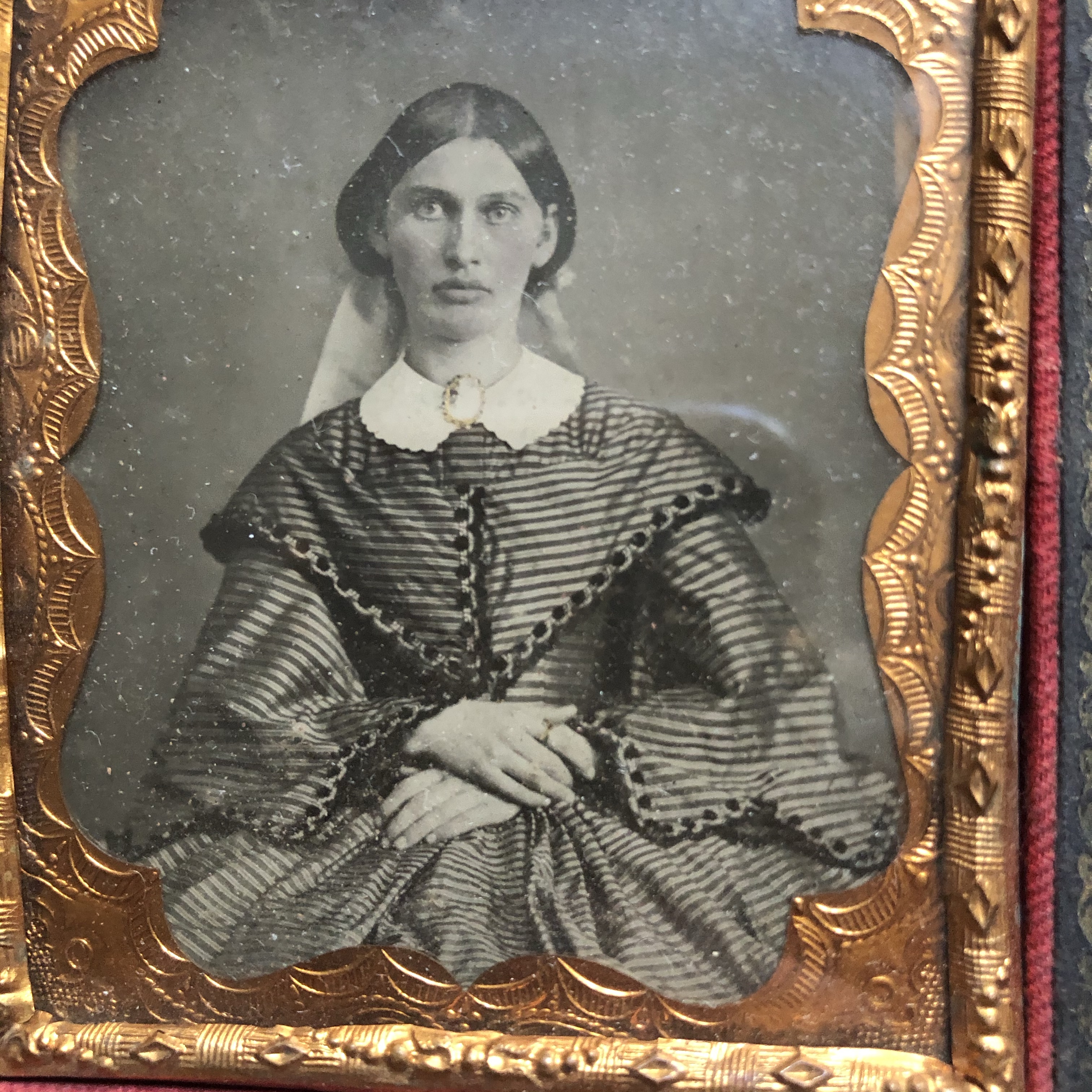
Mary Darian’s great-grandparents, Georgia and Thomas Cochran, circa 1890

“When my mamma and daddy started their family,” Mary began. “They didn’t have anything, so they had to work the farm.”

Mary, my childhood caregiver, and I were sitting together in her daughter’s home just south of Atlanta studying the notes Mary had spent days preparing. By “the farm” she meant a cotton farm owned by a white family who by the time Mary’s parents married employed her paternal grandmother as a laundress and her great-grandmother as a cook.

“Were they sharecroppers?” I asked. I was presuming, I suppose, but with good reason. It was 1935. Mary’s parents lived in Hurtsboro, a tiny town in a county pushed up against the Georgia border in Alabama’s “Black Belt,” so named for both its rich soil and its historic dependence on the labor of African Americans, originally as enslaved workers and later, as tenant farmers. These tenants, who during the Great Depression accounted for well over half of all farmers in Alabama, “shared” profits earned from the cotton and other crops they harvested for the farm’s owner.

Or that was the theory.

“Humph …” Mary said with a smirk. “Sharecropper? I don’t know about that. They didn’t share nothing.”

With this she let go a sharp laugh. I smiled, marveling at her sassy wit and how it had survived the yearsShe was spot on, too. The bits landowners shared were most often so meager that tenant farmers struggled to break even after each year’s harvest. Sharecroppers who tried to save enough to move on to some other life would labor years, decades even, before they felt secure enough to leave. Even then they rarely had the means to purchase land of their own.

“My grandmother Ellen Walker had married a Cochran,” Mary went on. “But it didn’t work out, so my daddy was the man of the house. He had to work in the fields even when he was just a boy, to help support the women.”

Mary’s women, strong women who would end up raising her, were her grandmother Ellen, Ellen’s mother Caroline—“but everybody called her Ca-line,” Mary added with a broad smile—and Caroline’s mother, also named Ellen Walker. I asked, but Mary wasn’t sure exactly where or when the first Ellen or Caroline were born. Hmmm. Perking up, I slid to the literal edge of the couch we shared. I tinker a bit with genealogy (ok, it’s my favorite rabbit hole), and with tingling fingers I asked Mary’s permission to do a little research into the Walkers.

“Why sure,” she said after a pause. There was a touch of something in her soft features, unease, maybe even worry, but I brushed it off.

Parsing out birth places and hidden relationships and surprising connections is a lot like solving a puzzle. Though following a hunch through the generations can take weeks, I love the warm and fuzzy feeling that a successful search brings. I fired up my Ancestry account later that day, and dug in. The 1930 census suggested that the older Ellen Walker, Mary’s great-great-grandmother, was 106 years old that year. 106!!! Alas, this detail is likely exaggerated … Ellen was alive when Mary was a young child in the late 1930s. Her actual birth year is reported in a different census as 1840, in another as 1835, and on and on. But no doubt, Ellen Walker the elder was at least in her nineties in 1930 and was born, in rural Alabama, decades before the Emancipation Proclamation. Ellen first shows up in public records, along with three daughters and a son, in the Census of 1880 as a farm laborer in a community called Glennville. A ghost town now, Glennville sat about twenty miles south of Hurtsboro at the northern tip of what was then Alabama’s most prosperous cotton producing region.

In spite of Ellen Walker the elder having been born in 1840 or before, she is not listed in the censuses of 1840, 1850, or 1860. Although free people of color are listed in these censuses, enslaved men and women show up as anonymous tick marks in separate “slave censuses” reported by landowners and identified only by race, age and gender. Odds are high, then, that in the antebellum years, Ellen’s existence was noted by one of these tick marks and that she worked as an enslaved laborer in the cotton fields of a Glenville plantation. At the end of the Civil War, she likely stuck around Glenville, as many of the formerly enslaved did, to work the same or another farm nearby with her young family, which included her second child, Mary’s Ca-line, listed in that 1880 Census as ten years old.

I kept burrowing, hoping to find a reference to the elder Ellen’s husband, or her parents or siblings, but came up empty. No census listings, no birth or death certificates, no marriage license. Feeling anything but warm and fuzzy, I paused my search. A deep loneliness filled me to think of Mary’s second great-grandmother, a woman who lived such a long, brave, rich life, perched alone atop the Walker branch of Mary’s family tree as if she’d self-birthed when in reality she had ancestors dating back hundreds of years, ancestors who had survived the cruelties of slavery, the unfamiliar environment and diseases of a new world, the brutality of the Middle Passage, but died unnamed and unheralded.

I thought of Mary’s hesitance about my search and sensed she wouldn’t be surprised to hear that members of her family were brought to this country against their will, forced into backbreaking labor, among other things, and treated as less than human. When we next met, we chatted a little about her great-great-grandmother. She confirmed the names of Ellen’s other children that show up in that 1880 Census. I probed her a bit to see if she might remember any other Walker ancestors. She didn’t and I left it at that. She knew where Ellen’s branch led and to dwell on it could only bring pain. A little at loose ends, I opened my phone and zoomed in on a few other things my search had turned up—a photo of her mother’s mother, Bettie Lou Tyner James. Born in 1879, she lived to 91. ”Why that’s Ma Bettie!” Mary exclaimed. Then a pic of her Cochran great-grandparents, Elias and Georgia, on their wedding day, and copies of several marriage certificates, her parents’ and grandparents’ and even one for Elias and Georgia, married in September of 1890.
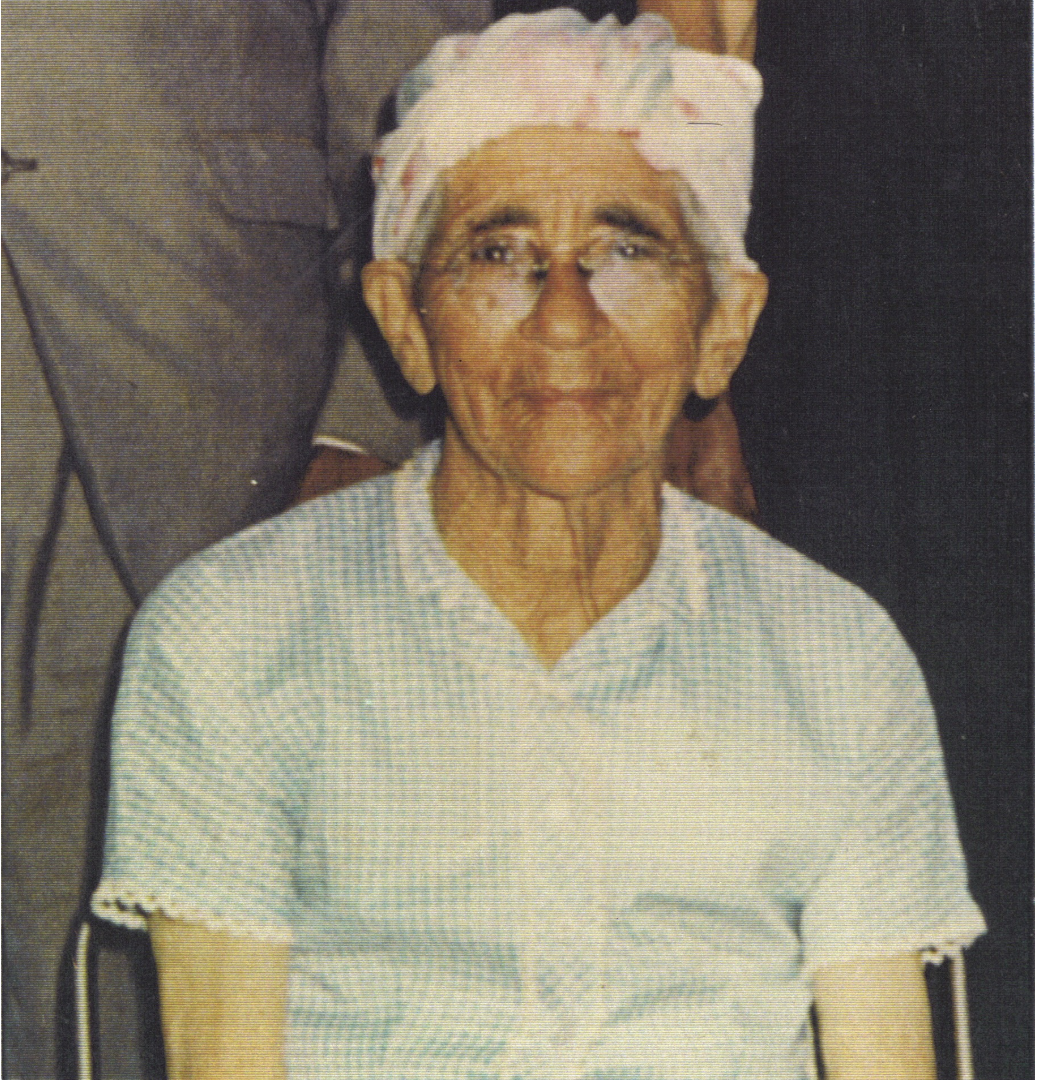
Bettie Lou Tyner James, Mary’s maternal grandmother

Holding the phone close to her face, Mary thanked me, her voice filled anew with her characteristic joy. I told her it was nothing. I liked genealogy and hoped to discover more. We both felt better for having looked over these images together, a little less lonely to think of Ellen Walker and her lost parents and grandparents, and of Mary’s many other unnamed ancestors, those whose blood she shared and whose strength and courage live on in her children and grandchildren.
A Tale of Two Cousins

During a late sweep through the dark corners of my mother’s attic, I stumbled upon a moldering shrine to one of my paternal great-aunts. Louise Bickers, a.k.a “Weezer,” was a feisty single woman whom I loved like a grandmother. With affectionate if drowsy interest, I dragged over a rickety wooden stool and dusted off her leftovers—stacks of limp letters, photos with curled edges, family trees scribbled on yellowed paper, and a decomposing shoebox of daguerreotypes.

Stumped? So was I. An early form of photograph produced by “fuming” mercury vapor onto silver-plated copper, the daguerreotype was introduced in 1839 and became obsolete by the 1860s. The 1860s! And there I sat, a hundred and fifty-plus years later, with several in passable shape. I ran my finger along the hammered tin frames, eyed the elaborate clothing, the formal, sometimes severe gazes. Where did these people—certainly family—live? What did they do? My curiosity piqued, I tucked the least fusty samples into a fresh plastic bin beside far too many of Weezer’s letters and photos and family trees, and moved on.

During the pandemic’s endless, vacant shut-in hours, I fetched up those family trees, rebooted my Ancestry.com membership, and typed in name after name. It was fun, by 2020 standards, learning how to create profiles for my long-lost blood kin and search for relevant documents and photos. When a grainy image of one of my great-great grandfathers popped up, I knew immediately it was—you got it—a daguerreotype. I fished out Weezer’s frames to compare and contrast. None of the faces matched exactly, but they favored, as my mother would say.

At once piercing and playful, my second great grandfather’s gaze seems especially, hauntingly, familiar. Born in 1825, Thomas Blake Bourne descended from a long line of tobacco planters in Calvert County, Maryland, a leg of land that kicks out into the Chesapeake Bay. The Census of 1850 valued his property at $2,500, equivalent to about $150,000 today, making his a healthy if small farm for its time. I can’t pinpoint the farm’s exact location, but odds are it was on or near Eltonhead, a tobacco manor along the instep of the county’s watery foot, tracts of which had belonged to Bournes since the late 17th century.

Thomas Blake Bourne, Lieutenant of the “CSA” and my second great grandfather

A city girl, I smiled to picture my great-great grandparents, Thomas and Margaret Louisa, living their quaint, rural 19th century lives. Soon a marriage record surfaced from May of 1848, a photo of Thomas’s gravestone, the inscription honoring him as “… a devoted husband and father, true to his friends and his country,” and a certificate proving that his maternal grandfather, Colonel Joseph Blake, fought in the American Revolution. Cool. I’m a DAR. I felt all rosy with pride. Then something else, less than quaint, caught my eye—a Slave Schedule, an appendix to the 1850 Census in which enslavers identified their “human property,” not by name but according to age, sex and color. I blanched, my ancestral pride dissolving as I counted the tick marks beside Thomas’s name: an even ten, six black males and four black females between the ages of six and forty-five.

I attached the Slave Schedule to Thomas’s profile and clicked back to his daguerreotype. That playful grin … might it be more a cunning smirk? My forehead heavy in my palm, I called my daughter in New York.

“We are from the South, Mom,” she said, unsurprised.

“But your grandfather came from humble roots,” I argued. “And Maryland’s hardly the South …”

“I know, Mom,” she said gently, knowingly. “But even small farmers enslaved workers back then.”

Which I knew, but this was our family, a whole different ballgame. I hung up and returned, dull eyed, to my laptop screen. Lined up in the right margin, I noticed tiny circular photos I’d missed before, profiles of other genealogists who’d saved Thomas Bourne’s image. I hovered over one, then another and another, and a pattern emerged—many belonged to people of color. What’s more, the family tree associated with each profile included a common ancestor, a man named Louis H. Bourne.

With clammy fingers, I typed Louis’s information into the Ancestry search engine. My first hit was the Census of 1860, which lists Louis H. Bourne, born 1830, as a “mulatto” head of household and farm laborer in Calvert County. More hits revealed that by 1880, Louis and his wife, Margaret, had purchased over thirty acres of land and settled down to farm tobacco in Island Creek, a breezy community along the Patuxent River that lies about fifteen miles from where Thomas Blake Bourne lived with his family. 

Calvert County in the Colonial Era

Or used to live. In 1855, amid rumblings of the war to come, Thomas had moved his household—including three children and at least nine enslaved persons—across four rivers and the Mason-Dixon line to a manor house near the James River in Virginia, a state he surely wagered would prove friendlier to his future as a planter. Eight years and three children later, Thomas enlisted to fight for the confederate states. He was thirty-eight. Around the same time, Louis H. Bourne, thirty-two, signed on with the Union Army. And so it was that second cousins, as I believe they were, took up arms against each other in a war rooted in misconceptions and greed. Were Thomas and Louis aware of this? I suspect so. It was a much smaller world then and Thomas still had family aplenty in Calvert County. Both men survived, though my great-great grandfather would die suddenly ten years later, the youngest of his nine children only eleven years old.

As intrigued as I was conflicted, I reached out to a few folks whose trees included Louis Bourne. Responses were scarce, but eventually I heard from Florencetine “Tina” Bourne Jasmin of Baltimore County. I hesitated–what right did I have to barge into her life?–then dove in and wrote to her that we could be related, somehow, through Louis Bourne.

“Oh my gosh,” Tina responded. “I’ve been hoping to find someone who might know something about my great grandfather!!!” Smiling again, I shared a little about my family. Tina sent photos of her son and daughter and grandchildren. She told me Louis Bourne had remained—thrived—in Island Creek until his death at seventy, as did many of his children, and some of theirs, and theirs and theirs right up to the present. Louis and Margaret had eleven children, among them trailblazers who stared down the fetters and hostilities of the Reconstruction and Jim Crow eras. One of their sons, Ulysses Grant Bourne, was among the first black physicians to practice in Frederick, Maryland. A grandson, James Franklyn Bourne, Jr, was the first black judge to serve on the district court for Prince George’s County. Quite a legacy, an improbable triumph in fact, and this was only the beginning.

Louis H. Bourne, 1830-1900

At some point, I told Tina I regretted the unspeakable abuses my ancestors had visited on hers. “This history is beyond our control,” she mused. “I want to believe our ancestors are pleased with us for trying to reconcile our past.” Awed by her tolerance and wisdom, I thanked her and we dug in, working to make sense of our family ties. Tina quickly shared her best clue–a digital copy of Louis’s death certificate which names his mother as “Gracey Mason,” and his father as “James Bourne.” James Bourne? Thomas’s father, my third great grandfather, was named James. But then so was his oldest son, and his first cousin, James Jacob Bourne. Which James fathered Louis? And did he enslave Gracey Mason and the son they shared? Hard to know. A pair of 19th century Calvert County courthouse fires destroyed wills and bills of sale that might have given us proof.

We called in help. Tiffinney Green of Baltimore, Delma Bourne-Parran and Patrice Evans of Prince Frederick, and another cousin in California, all descendants of Louis Bourne, joined our search. The emails flew. We shared trees, unpacked oral history. Hoping to discover shared DNA, we spit in vials, waited, and waited some more.

From the will of Jacob Bourne, my 5th great grandfather.

The results: Delma, Patrice and Tiffinney each match with at least one of my distant white Bourne cousins. And the kicker–Patrice’s sister and I share DNA. Heartened by this proof of our kinship, we analyzed and drew charts and at last wagered that James Jacob Bourne (1791-1850), an enslaver of twenty-two, most likely fathered Louis H. Bourne. This means our common direct ancestor is my fifth great-grandfather, Jacob Bourne (1721-1771), whose will survives with a full inventory attached. In the same figurative breath as a tea kettle, three old sickles, and the spinning wheel in the corner, Jacob names Grace, age forty-five, as one of several enslaved people to be “gifted” to his sons. Might this Grace have had a granddaughter who was passed down the line to James Jacob? It was common after all for baby girls to be named for a grandmother.

My ethnicity compared with that of a person of color who shares DNA with both Patrice Evans and me.

Due to those courthouse fires, for months we had little else to go on. Then Tiffinney found a Grace Mason, born 1807, listed in a Calvert County registry of Free African-Americans in 1832. She lived with a Hannah Mason, age forty. A Louis Mason, age two (just Louis Bourne’s age), also appears in the registry and seems to have been part of Grace’s household. Grace and Louis Mason then disappear. Free people of color were often servants in households that enslaved others, and our hunch is that Grace Mason worked for James Jacob Bourne. Maybe at some point, say when Louis was a child, James took in Grace and their son, maybe even enslaved them in some sort of twisted effort to control them. Did Louis Mason then become known as Louis Bourne? Did James Jacob later free his son who should have been free all along?

We’ll likely never know the full truth. The fact that Louis shows up in the 1860 Census means he was a free man well before Maryland officially emancipated its enslaved. Hannah Mason, the woman listed alongside Grace in the 1832 Registry, provides another clue. Louis’s 1860 household included a Hannah Mason, age seventy-four. Though the years don’t quite match up, they’re close enough for that era to suggest that Hannah was Louis’s grandmother, and that her daughter–Louis’s mother, Grace–died young.

Unless James Bourne sold Grace off.

“I pray that was not the case,” Tiffinney wrote to me.

I pray so, too.

Much work remains. Most of my family lines run back to the colonial era, where other fraught relationships lie in wait. Tiffinney and I have DNA matches in common that suggest we may also be kin through my Mattingly side, and I’m in touch with another young woman directly descended from Colonel Joseph Blake. Looks like the Colonel’s son had his violent way with her third great grandmother.

Broome’s Island at the mouth of Island Creek, not far from where Louis Bourne farmed tobacco and raised his eleven children.

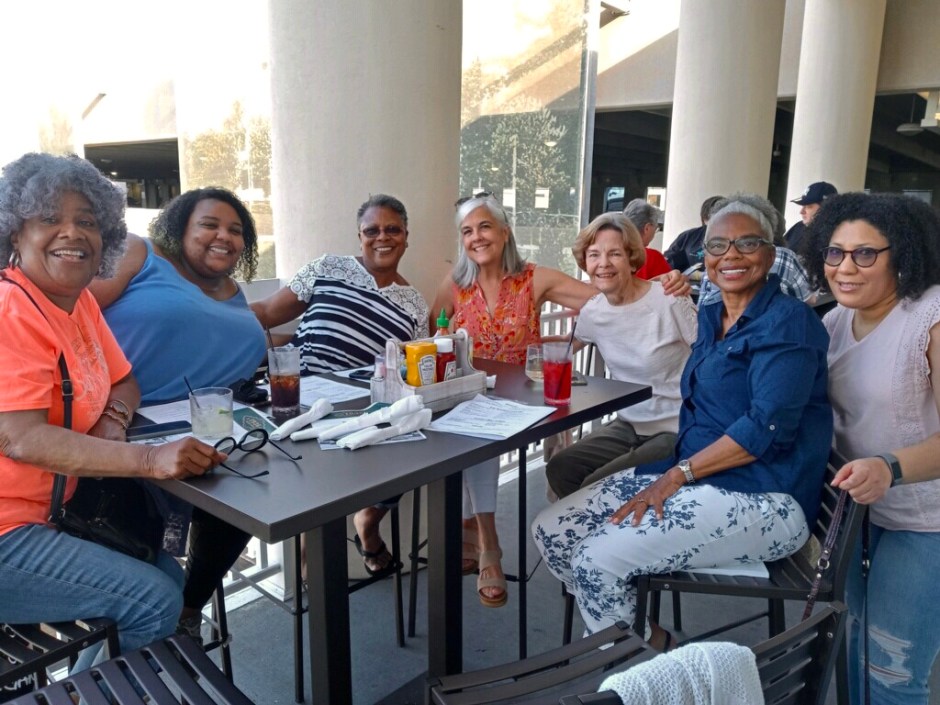
In May, my sister, JoJo, and I visited Calvert County. We researched alongside Tina and Tiffinney, and after, the four of us gathered for dinner with Patrice, Delma, and Marietta Bourne Morris, who still lives in Island Creek. We bored each other with family stories. We laughed over wine and margaritas. Humbled, JoJo and I accepted the kindnesses these women offered. Strong one and all, they overlook with seeming ease the troubled origins of our relationship and accept us as family. I’m proud to call them cousins, hopeful that Louis and James Jacob, Thomas and Grace Mason and my great aunt Weezer are indeed pleased.

Moving forward, I’m not naïve enough to expect from others the open-hearted welcome I’ve received from the Bournes. It’s nothing I deserve. One thing seems certain—this is not a tale of two cousins. It’s a tale of hundreds, thousands—dark-eyed and green and blue; blonde, red-haired, brunette; Irish and Bantu and Latin, Nigerian and Welsh and Congolese. Our skin shines ebony and alabaster and every hue between, and our cells quiver with the tangled threads of those who came before us, our human race.

Family

Postscript: If this sort of research project interests you, message me below or through Facebook. I’m happy to share tips and links to resources. There are many!