Afternoons with Mary: Strong Roots and Brittle Branches

In which I explore my beloved friend’s family tree and confirm a painful truth

Mary Darian’s great-grandparents, Georgia and Thomas Cochran, circa 1890

“When my mamma and daddy started their family,” Mary began. “They didn’t have anything, so they had to work the farm.”

Mary, my childhood caregiver, and I were sitting together in her daughter’s home just south of Atlanta studying the notes Mary had spent days preparing. By “the farm” she meant a cotton farm owned by a white family who by the time Mary’s parents married employed her paternal grandmother as a laundress and her great-grandmother as a cook.

“Were they sharecroppers?” I asked. I was presuming, I suppose, but with good reason. It was 1935. Mary’s parents lived in Hurtsboro, a tiny town in a county pushed up against the Georgia border in Alabama’s “Black Belt,” so named for both its rich soil and its historic dependence on the labor of African Americans, originally as enslaved workers and later, as tenant farmers. These tenants, who during the Great Depression accounted for well over half of all farmers in Alabama, “shared” profits earned from the cotton and other crops they harvested for the farm’s owner.

Or that was the theory.

“Humph …” Mary said with a smirk. “Sharecropper? I don’t know about that. They didn’t share nothing.”

With this she let go a sharp laugh. I smiled, marveling at her sassy wit and how it had survived the yearsShe was spot on, too. The bits landowners shared were most often so meager that tenant farmers struggled to break even after each year’s harvest. Sharecroppers who tried to save enough to move on to some other life would labor years, decades even, before they felt secure enough to leave. Even then they rarely had the means to purchase land of their own.

“My grandmother Ellen Walker had married a Cochran,” Mary went on. “But it didn’t work out, so my daddy was the man of the house. He had to work in the fields even when he was just a boy, to help support the women.”

Mary’s women, strong women who would end up raising her, were her grandmother Ellen, Ellen’s mother Caroline—“but everybody called her Ca-line,” Mary added with a broad smile—and Caroline’s mother, also named Ellen Walker. I asked, but Mary wasn’t sure exactly where or when the first Ellen or Caroline were born. Hmmm. Perking up, I slid to the literal edge of the couch we shared. I tinker a bit with genealogy (ok, it’s my favorite rabbit hole), and with tingling fingers I asked Mary’s permission to do a little research into the Walkers.

“Why sure,” she said after a pause. There was a touch of something in her soft features, unease, maybe even worry, but I brushed it off.

Parsing out birth places and hidden relationships and surprising connections is a lot like solving a puzzle. Though following a hunch through the generations can take weeks, I love the warm and fuzzy feeling that a successful search brings. I fired up my Ancestry account later that day, and dug in. The 1930 census suggested that the older Ellen Walker, Mary’s great-great-grandmother, was 106 years old that year. 106!!! Alas, this detail is likely exaggerated … Ellen was alive when Mary was a young child in the late 1930s. Her actual birth year is reported in a different census as 1840, in another as 1835, and on and on. But no doubt, Ellen Walker the elder was at least in her nineties in 1930 and was born, in rural Alabama, decades before the Emancipation Proclamation. Ellen first shows up in public records, along with three daughters and a son, in the Census of 1880 as a farm laborer in a community called Glennville. A ghost town now, Glennville sat about twenty miles south of Hurtsboro at the northern tip of what was then Alabama’s most prosperous cotton producing region.

In spite of Ellen Walker the elder having been born in 1840 or before, she is not listed in the censuses of 1840, 1850, or 1860. Although free people of color are listed in these censuses, enslaved men and women show up as anonymous tick marks in separate “slave censuses” reported by landowners and identified only by race, age and gender. Odds are high, then, that in the antebellum years, Ellen’s existence was noted by one of these tick marks and that she worked as an enslaved laborer in the cotton fields of a Glenville plantation. At the end of the Civil War, she likely stuck around Glenville, as many of the formerly enslaved did, to work the same or another farm nearby with her young family, which included her second child, Mary’s Ca-line, listed in that 1880 Census as ten years old.

I kept burrowing, hoping to find a reference to the elder Ellen’s husband, or her parents or siblings, but came up empty. No census listings, no birth or death certificates, no marriage license. Feeling anything but warm and fuzzy, I paused my search. A deep loneliness filled me to think of Mary’s second great-grandmother, a woman who lived such a long, brave, rich life, perched alone atop the Walker branch of Mary’s family tree as if she’d self-birthed when in reality she had ancestors dating back hundreds of years, ancestors who had survived the cruelties of slavery, the unfamiliar environment and diseases of a new world, the brutality of the Middle Passage, but died unnamed and unheralded.

I thought of Mary’s hesitance about my search and sensed she wouldn’t be surprised to hear that members of her family were brought to this country against their will, forced into backbreaking labor, among other things, and treated as less than human. When we next met, we chatted a little about her great-great-grandmother. She confirmed the names of Ellen’s other children that show up in that 1880 Census. I probed her a bit to see if she might remember any other Walker ancestors. She didn’t and I left it at that. She knew where Ellen’s branch led and to dwell on it could only bring pain. A little at loose ends, I opened my phone and zoomed in on a few other things my search had turned up—a photo of her mother’s mother, Bettie Lou Tyner James. Born in 1879, she lived to 91. ”Why that’s Ma Bettie!” Mary exclaimed. Then a pic of her Cochran great-grandparents, Elias and Georgia, on their wedding day, and copies of several marriage certificates, her parents’ and grandparents’ and even one for Elias and Georgia, married in September of 1890.
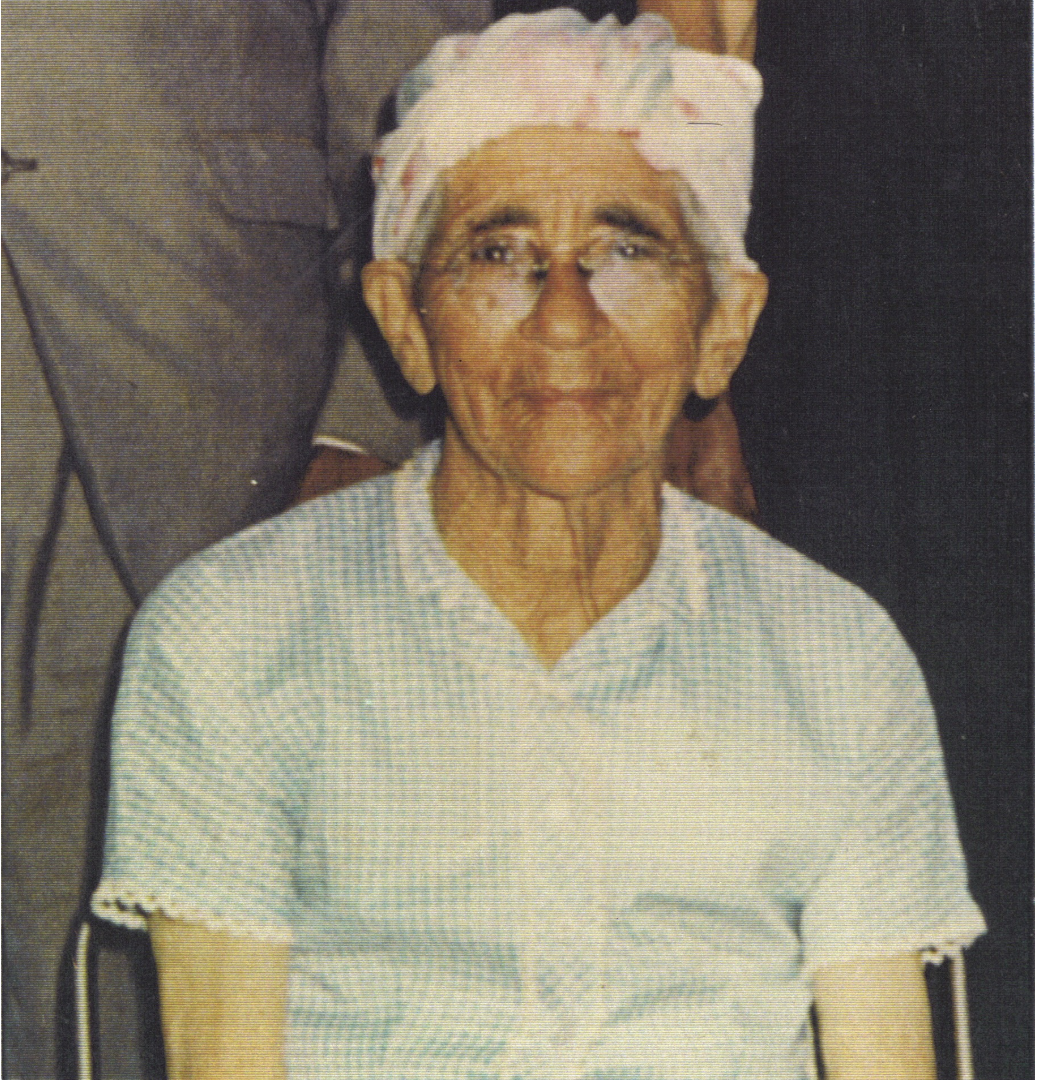
Bettie Lou Tyner James, Mary’s maternal grandmother

Holding the phone close to her face, Mary thanked me, her voice filled anew with her characteristic joy. I told her it was nothing. I liked genealogy and hoped to discover more. We both felt better for having looked over these images together, a little less lonely to think of Ellen Walker and her lost parents and grandparents, and of Mary’s many other unnamed ancestors, those whose blood she shared and whose strength and courage live on in her children and grandchildren.
Afternoons with Mary: “On my Mind and In My Spirit”

After nine long years of procrastination and skittishness, I’ve worked up the gumption to share the story of my rekindled relationship with the beloved caregiver of my youth. The story will unfold in several chapters. If you’d like to read the origins of this journey, just click here: I Am Mae Mobley


On a steamy afternoon during the troubled summer of 2016, I finally worked up the courage to call Mary Darian, the intrepid woman who half-raised me. Though I loved Mary dearly, I’d failed as an adult to stay in close touch. As each ringy-dingy sounded, I worried, whispering my introductory lines again and again. A waste of energy this. Mary knew my voice immediately—“Angel Face, is that you?” I pictured the tall, confident young woman who used to drive me to McDonald’s for a Big Mac after middle school, and let go a grateful sigh. I was no longer a school girl, of course, and Mary had long moved on from being our family’s housekeeper, but her voice still brimmed with warmth and affection.

I caught her up on family this and thats. We exchanged stories about my mother—“Now she was a real lady … ” Mary gave a chuckle. “And what a seamstress!” She’d long admired my mother’s knack with a needle, and one of her lively descriptions came to mind: Your mother made a white jacket for her new formal gown with shells around the midriff … she once penned to me at summer camp. Wow! When the lady moves, she gets momentum and never stops … I think she’s going to wear it with her sexy red sandals!

Though Mary had never much liked talking about herself, she finally told me she’d recently had a fall. “But Lou took such good care of me I’m already back on my feet!” Lou is Mary’s daughter, as loyal and kind as they come, and I noted as much. Hesitant again in light of this news (was this the time to worm my way into Mary’s life?), I took a deep breath and asked if I might drop by for a visit. “Why sure, anytime!” she said. Then a pause. “Well, anytime other than Wednesdays … I still get out for my Bible study on Wednesdays.” Smiling, I suggested the following Thursday and our plans were set.

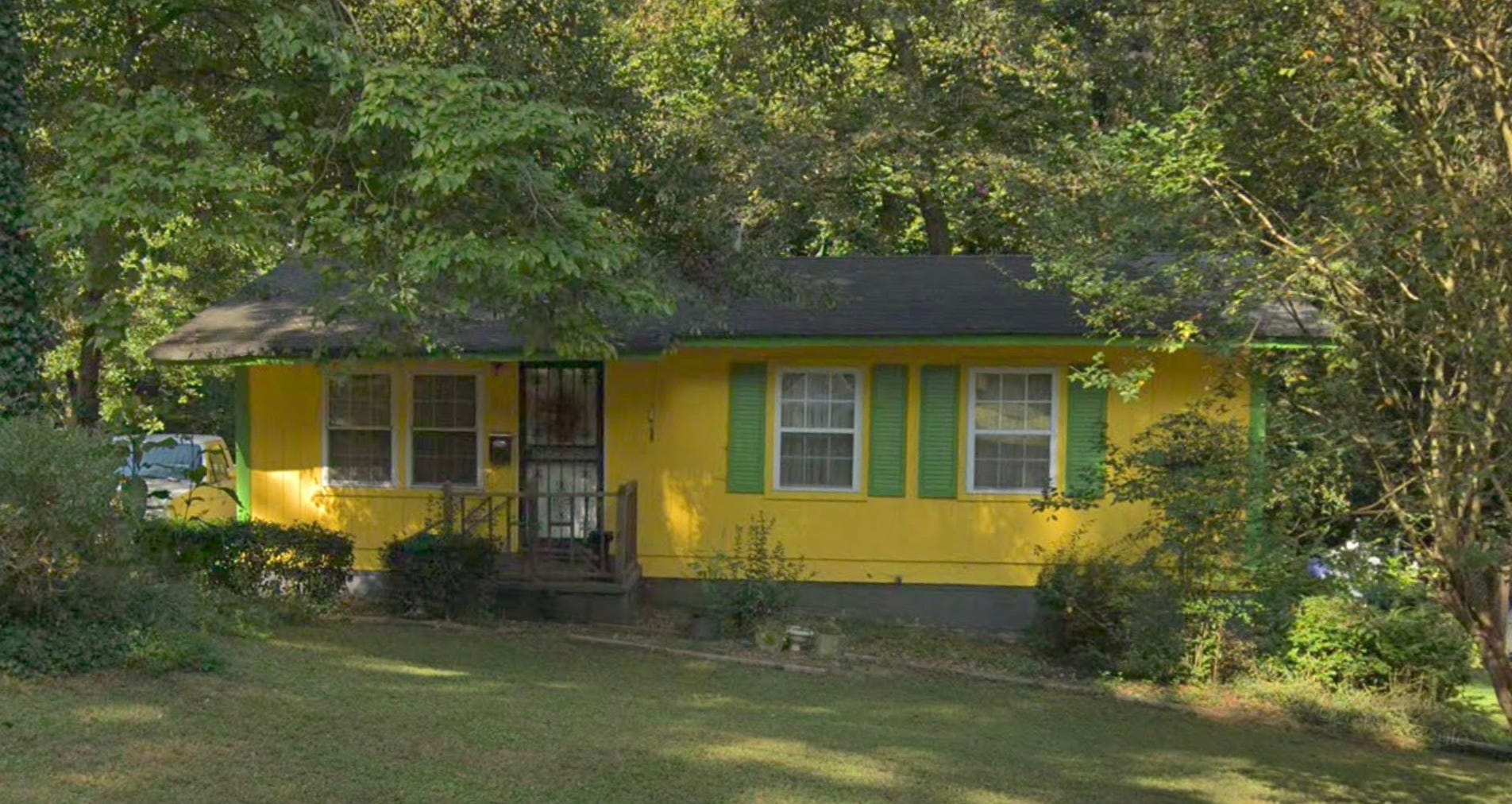
Eighty then, Mary lived alone in the home in west Atlanta that she and her husband had moved into in the late sixties. A one-story with wood siding and four inviting windows across the front, I’d been there as a child. As I drove between sprawling azaleas lining the driveway and parked beneath the shade of a generous hardwood, I found it as cozy and comfortable as it was back then, only better. Previously a neutral cream, it had been painted a bright banana yellow. The shutters and trim, dark navy before, had gone lime green. The effect was bold and welcoming, as if the house itself wore a wry grin for neighbors and strangers alike. Perfect, I thought. Mary through and through.

Mary’s home for over fifty years

“Come on in!” Mary said with a yelp of pleasure, and squeezed me tight. As we walked inside, she limped a little and gripped the back of a chair. I winced, reached to help, but she brushed it off. We sat side-by-side on her couch and studied the faces, many of them Mary-like, smiling out from the abundance of photos in her living room. One by one, she proudly identified family—the three sons I’d once known now become men, the late husband I never met, the many beloved grandchildren and great-grandchildren and of course, Lou, who showed up toward the end of our visit, sacks of groceries spilling from her arms as she corralled her little granddaughter through the door.

Mary had visitors most every day, family and more. She bragged on her neighbors and beaming, described the teenaged boy from her church who dropped in often to check on her. We reminisced about my parents. She asked about my children and my writing and just like that, the gap of years since we’d spent time together fell away. We joked about my older brothers’ teenaged exploits of long ago, and she said how sorry she was about the oldest, Ed, who’d been gone nine years.

“Your mama called me,” she said, her eyes damp. “More than once after he passed. Just to talk. A mother shouldn’t have to lose her child.”

“No, she shouldn’t,” I agreed, my voice wobbly. Mary took my hand and I mentioned that I’d been thinking about her a lot recently … “Especially since I rewatched The Help. Have you seen that movie?”

“Sure have,” Mary said, her tone wary.

“You know, it has its faults but it made me realize I never took the time to really get to know you … ” I began to sweat. “I guess what I’m trying to say is I’d like to learn your story, Mary. It’s something I should have done a long time ago. I’d like to know about you and your past, the way you’ve always known about me and mine.”

Her soft gaze clouded in bemusement, maybe disbelief. It wasn’t like Mary to be at a loss for words, and I looked away. Maybe I was being pushy. Maybe I should have kept my mouth good and shut.

“Well, honey,” she said finally, grinning. “It’s not all that interesting of a story, but I can probably come up with a thing or two.”

I laughed in relief, and we agreed I should return in two weeks armed with pen and paper and I-phone microphone. I wasn’t sure exactly what I would do with what she chose to share—blog? book? keep in my heart?—but I left excited about what lay ahead and hurried home to call my sister in Pennsylvania. Ten when our parents hired Mary at eighteen, JoJo loved Mary too, if in a different, maybe even deeper, way.

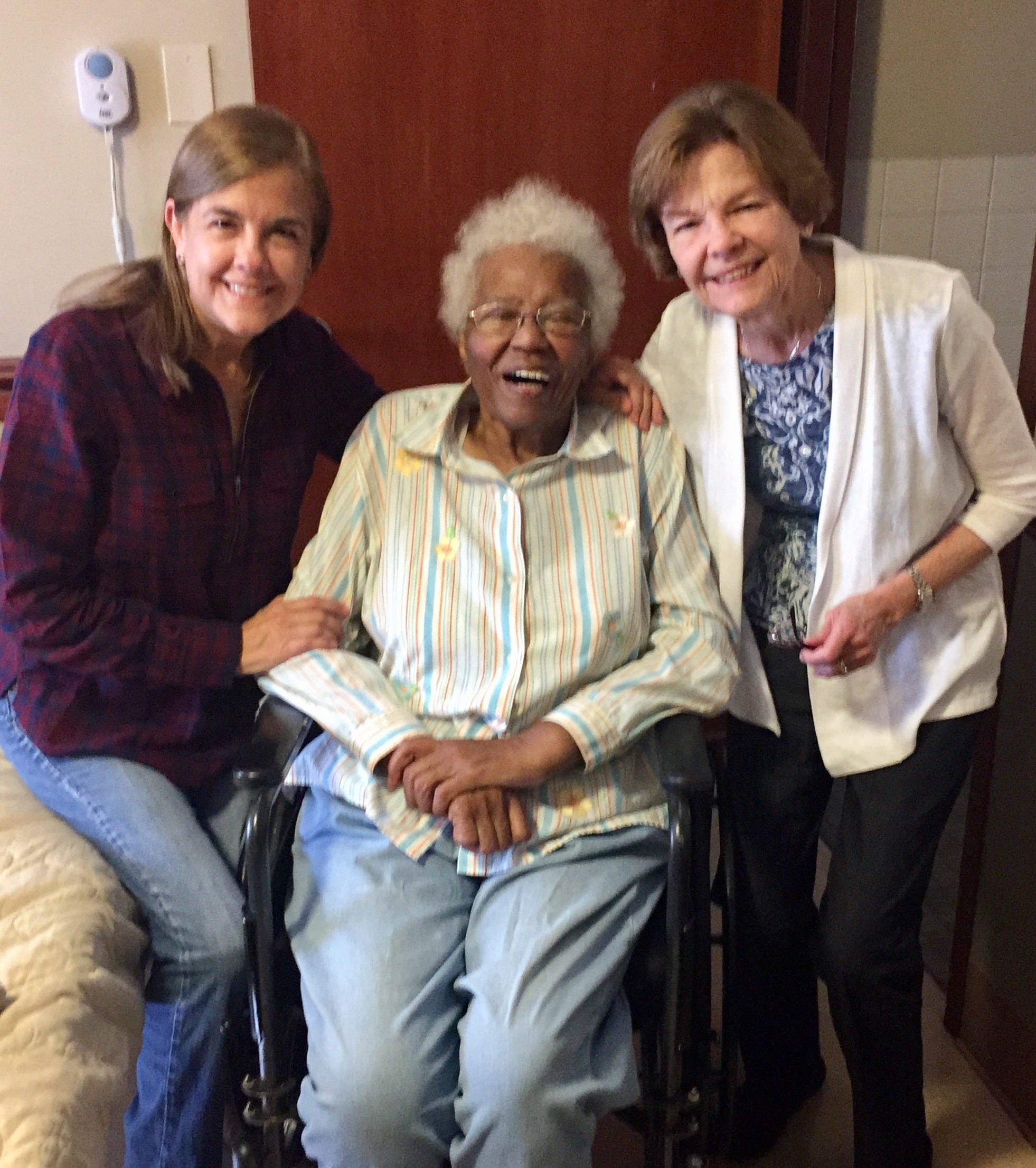
My sister and I visit Mary on her 81st birthday, November 11, 2016

A week later, Mary called, her voice subdued and full of pain, to cancel our get-together. Her oldest son, Lewis, Jr, had suddenly passed away of a heart attack, at fifty-seven. It was almost eerie, given what we’d recently said about mothers losing sons—such a cruel twist of time—and my heart ached for her. The fact that she’d lost her husband decades before in the same way and at roughly the same age only deepened her sorrow. My brother George and I attended Lewis’s funeral, a service filled with music and laughter and tears. During one of the soulful hymns, Mary, seated in a wheelchair in the front row, reached her hand toward Lewis’s casket and swayed in easy rhythm with the music. She was a woman of strong faith, among the strongest I’ve known, and I remember feeling that the air in the church seemed to shift, as if Lewis’s spirit had joined Mary’s own, and settled in to stay.

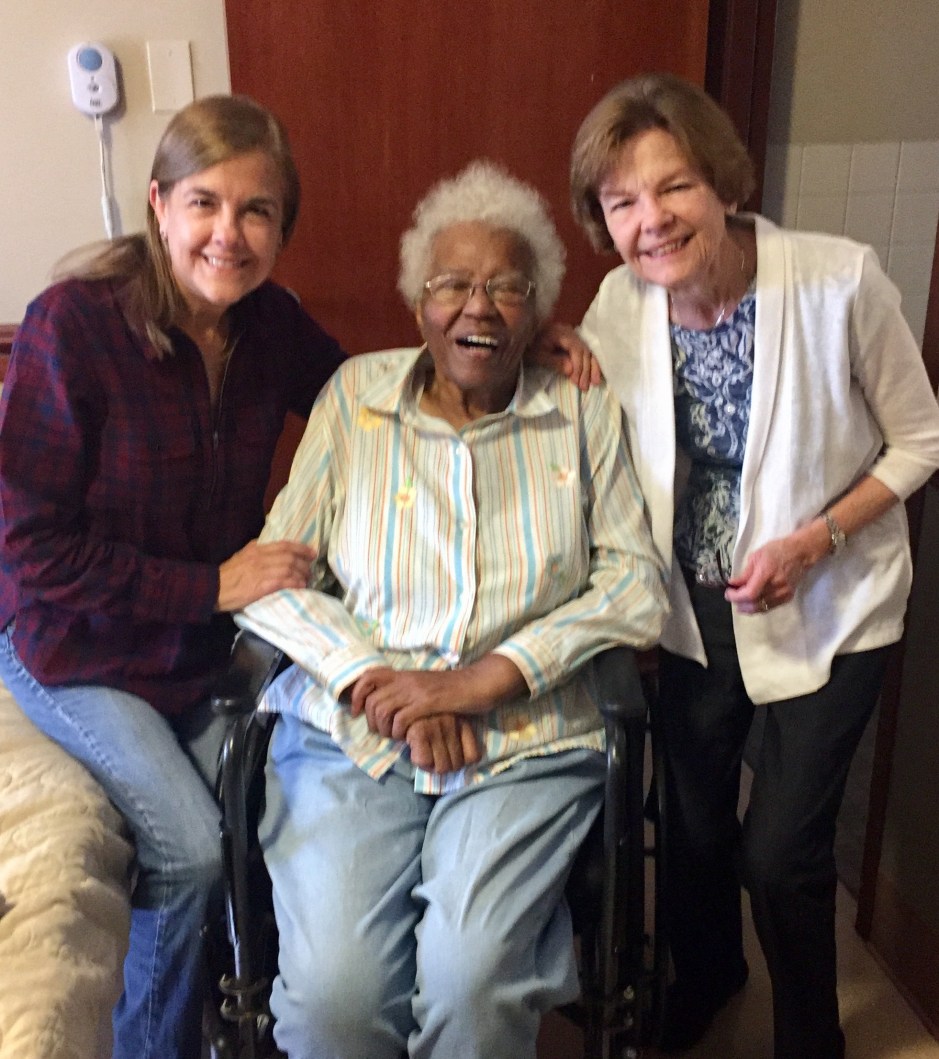
Not long after Lewis’s death, Mary had another stroke. I visited a couple of times at her rehab facility, once on her birthday when JoJo was in town, but we agreed to hold off with the note-taking and the rest until she grew stronger. The stroke had slowed Mary’s speech and in truth, I wondered if it might be best to leave well enough alone. We were back in touch, friends again, and Mary should save her energy to heal and live her best life. In the span of a few weeks, she’d given me a glimpse into her family life—who could ask for more? Tough as ever, Mary had something else up her sleeve. The next March, she reported she was much improved and ready to start getting together, only I would have to come to Lou’s house while she recuperated, which was peachy with me.

And so it began. Lou welcomed me to her home on our appointed day, and Mary, the walker she was learning to use close at hand, gestured me to join her on the couch.

“Angel Face,” she said, her trademark smile tinged with emotion. “His story has been on my mind and in my spirit.”

His story?” I asked.

“My daddy’s,” she said, touching the tight white curls around her still- smooth face. “I want to tell you my daddy’s story.”

She held up two pages of blue cursive notes written in the hand I knew from her letters, if a little uneven. I longed to hear about Mary’s life, and felt a touch disappointed.

“I’ve been trying to get it all down,” she said. “But I’m such a slow writer these days!”

“It’s hard for her …” Lou chimed in from the kitchen. “She spent days on it!”

Awed, I scanned Mary’s pages and it hit me: by sharing her father’s journey, she would be sharing her own in a manner she was comfortable with. Besides, do any of our lives make sense without the larger story of our parents and grandparents and on back?

“He was born in Hurtsboro, Alabama,” Mary began.

Hurtsboro—then a town of less than 900 residents wedged into a far southeastern lip of the state, deep in the Cotton Belt. Hurts to stay but it hurts to leave, Mary once quipped. The 1910s and 20s. The legacy of legalized slavery still shrouded the South, and Jim Crow was flexing his muscles. Mary’s father, Jimmie Lee Cochran, lived with his sister and their mother and grandmother on a white man’s farm. As early as the third or fourth grade, Mary explained, her father, “the man of the house,” often had to leave school early to go home and work the fields. Children being children, his classmates took note, in heartbreaking fashion, but a certain little girl understood Jimmie Lee’s predicament, and that would make all the difference.

Mary tells this best, so I’ll sign off for now with the brief clip above (apologies for the poor editing and annoying oohs and aaahs) in which she describes the moment her mother-to-be, Lue Milla James, first felt a pang of love for the boy who would become Mary’s father.

Shaking off the Dust

When I launched this site a decade ago (!), I expected to share a few posts about the exhausting, cathartic, sometimes funny and strangely exhilarating process of cleaning out my parents’ attic. One damp box of mid-20th century toothpicks led to another, and thanks to support and input from readers like you, I learned that sharing family stories not only kept my late parents alive, it sustained me through the joys and sorrows of the years that followed.

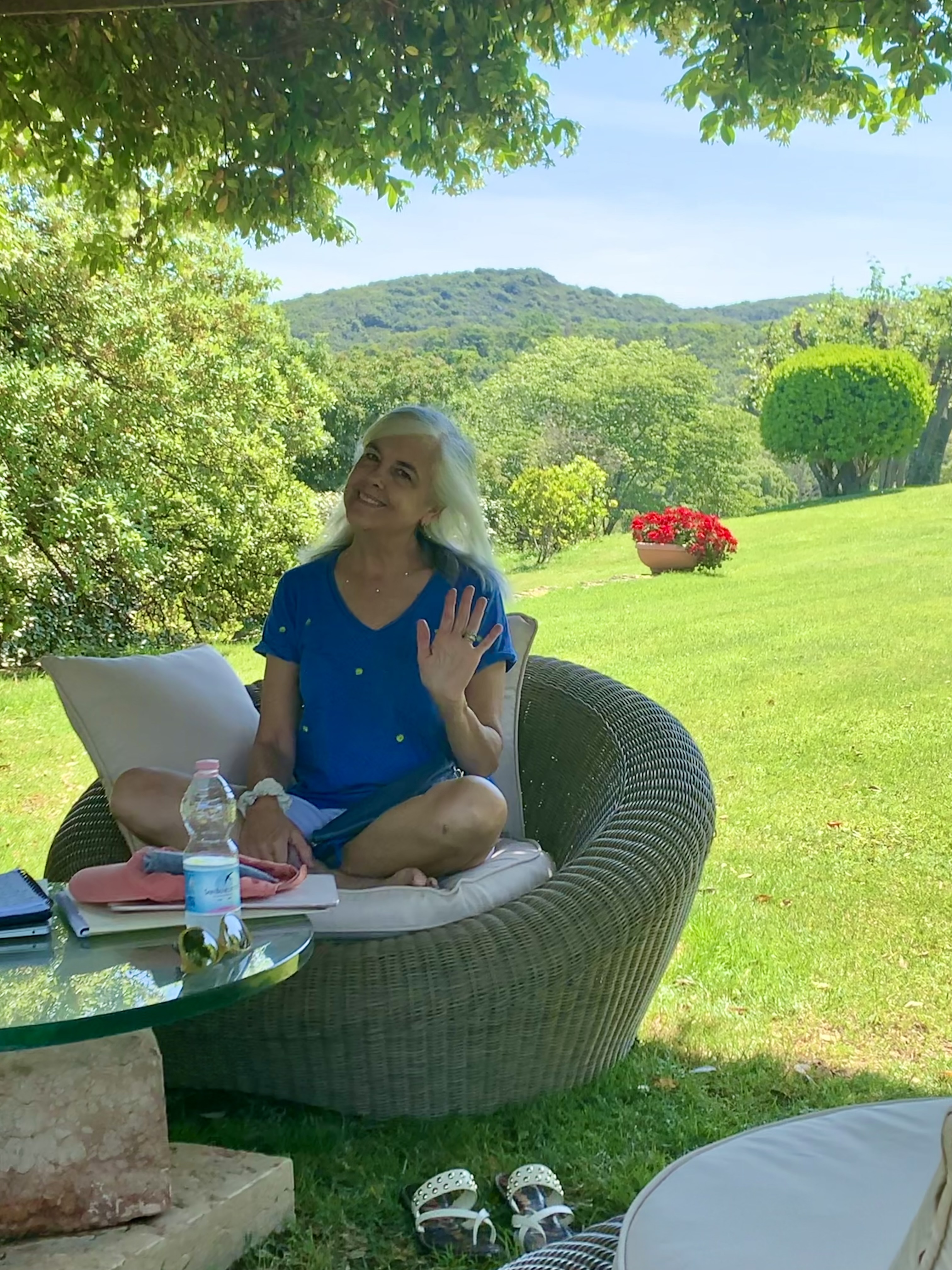
In that spirit, and because honestly, how much more can be said about faded photographs and mildewed button boxes, I’ve decided to creak shut the attic door and launch a new site. It’s called “Why the World Wags,” and in it, I plan to wax on about well, whatever grabs me as I move along through life. Ten years on (!!!) from that first post here in “My Mothers’ Attic,” I find myself teetering at the edge of what some call the golden years. Has there ever been a more obvious euphemism? Golden in the sense of being burnished by life perhaps, but there are days when the world around me seems cast in the gray light of dusk. And yet! At other times, that world seems to sparkle in a way I rarely noticed when I was younger–when a bluebird lights on a leafy branch in our back garden, his feathers aglow with morning light, or when I’m able to revisit a place I’ve come to love, like the brilliant waters off the coast of Belize pictured above, or when my toddler granddaughter reaches for me, smiling, and calls my name (which at her bidding, seems to be “Gaga”).

Golden moments, every one.

If you’d like to join me on my continued journey, here is the first newsletter/post from the new site. I’ll be migrating some of my more popular posts from here to there, usually with some editing, but I’ll leave the Attic open a good while, too. To visit the new site itself, just click below. If you like what you read, consider subscribing (s’il vous plaît!)!

https://marthamattinglypayne.substack.com/

Thanks for reading, always, and I hope to see you in Why the World Wags!

A decade! Maybe that explains the shocking loss of melanin 🙂

Home at Last

Like her father, once Mary earned the right to vote, she never missed the chance. Here she fills out her absentee ballot in October of 2018 for Georgia’s gubernatorial election.

Some of you met Mary Darian in “I Am Mae Mobley,” one of my early posts here in My Mother’s Attic. In part an outcry against an upsurge in race-related killings during the summer of 2016, that piece is at heart a tribute to Mary–the woman who helped my mother rise to the Herculean task of raising six children. Since I launched this blog, Mae Mobley continues to garner far more views than any other Attic post–testimony to Mary’s captivating character. In that earlier piece, I lamented that during the two decades Mary worked for our family, I failed to learn much about her life. I vowed then to make amends for this, to reach out to Mary, though I was more than a little nervous about cold-calling after so many years of silence. I might have known that was a waste of emotional energy. In the years that followed, in spite of facing one personal challenge after another, Mary shared detail after detail about her story, and more broadly, her family’s story, which to her were one and the same.

One morning not too long before the pandemic hit, I went to see Mary at the nursing home where she’d recently moved. Her room was small but comfortable–a sink and closet against one wall, a twin bed at the center, a broad window at the far side, the ledge below crowded with photos of her grand- and great-grandchildren. Mary’s devoted daughter, Lou, had a bird-feeder installed just outside the window so Mary could enjoy sparrows and robins and fiery red cardinals as they flitted about. By this point in her life, Mary was confined to a wheel chair, though I was soon to learn that in her case, confined did not apply.

I breezed through the door a little earlier than usual to find no Mary in sight. I heard a scuffle on the far side of the room and stepped closer. She had wheeled herself into the narrow space between bed and radiator and crouched low over her knees, her head nearly hidden between the bed and bedside table.

“Mary?” I asked, trying to control the worry in my voice. “Can I help?”

“Oh!” she said, her voice bright with enthusiasm as she looked up. “Angel Face!” (the pet name she coined for me as a baby). “Come on over here!”

I did just that. Mary craned about and reached her long arms around my neck. That’s when something shiny flashed in her lap–a long, thin metallic tool.

Celebrating Easter. April 2022

“Just give me a minute …” she said, ducking head under table again. “While I find my Puh …”

“Here, can I get it for you?” I asked, though I wasn’t sure what I was looking for. Her paper? Her pillow? I tried to maneuver between wheelchair and radiator but the space was tight, the bedside table happily cluttered–a card illustrated in blue crayon, a tub of Vaseline, a small glass vase filled with Alstroemeria, a stack of word puzzle books and a red leather Bible, its pages well-thumbed.

“What is it you need, Mary?”

No answer, just more poking at that shelf.

“Ah, here it is!” she cried at last. Turning, she sat up straight, her expression devilish and triumphant. “My Ponds!”

She held out the stick, which I then could see had a grip handle at one end and a sort of claw at the other, not unlike the mechanism in that arcade game in Toy Story (The claw is our master … ). Caught firmly in Mary’s claw was a jar of Ponds cold cream, same pale green cap and tulip logo as the ones my mother used to keep on her vanity table.

With easy dexterity, Mary twisted open the jar, scooped out a finger full, and chatting all the while, began massaging the silky cream into her still-smooth complexion. Her task complete, I offered to return the jar to its shelf. She laughed, waved me away, and did it herself, metal claw re-extended. Then she nabbed her hairbrush from the drawer, dropped it in her lap, and wheeled over to the sink. One of her feet–slightly swollen–nearly collided with the corner of the bed frame as she went.

“Mary, your leg–is it ok?”

“Oh that …” she mumbled as she set the hairbrush at the edge of the sink. “Some kind of blood clot in that old leg.” Then she plucked a cloth from a towel rod, wet it generously, and ran it across her short thick curls before brushing them out.

“Ok, now …” she went on, patting her head and smiling at my reflection in the mirror. “That’s better. I never know what it’ll look like in the mornings.” Then guttural laughter as she spun her chair around to face me. “Now tell me … What have you been up to?”

I gathered my thoughts, but before I got a word out, her eyes flew open wide and she cried, “Wait a minute! … I forgot my teeth!”

With that, and without a wrinkle of embarrassment, Mary spun back around, tugged a set of dentures out of a cup and slathered them with toothpaste. While she gave them a sturdy brushing under the faucet, I marveled at the independence, the lack of self-consciousness, and the serene acceptance of the time-consuming rituals of growing old that she possessed.

“Your mama liked Ponds, too,” she mused. “You know …” She paused and turned to me, that devilish smile restored. “She may have been the one who got me started with it!”

Whether this was true or its inverse–that Mary actually introduced my mother to Ponds–didn’t matter. This was a habit they shared, one I hadn’t known about, and something soft padded into my heart. Not a visit passed between us that Mary didn’t turn our conversations back to my parents, or one of my siblings–to those days she was part of the everyday workings of our busy household. She loved especially to wax on about my mother’s expertise as a seamstress, but then she’d been doing this since my summer camp days. Your mother made a white jacket for her new formal gown with shells around the midriff … she penned in a letter she sent off to Camp Merrie-Woode. Wow! When the lady moves, she gets momentum and never stops … Then, one of her witty after thoughts–I think she’s going to wear her sexy red sandals.

Back then, ten years old and homesick, I likely cried to read this, but it was a good cry. Mary was enfolding me from a distance into the home life I loved. I understand now that during our recent visits, she was doing much the same. Her smiles, her laughter, her stories, were keeping my mother, my father, in short, my childhood alive. She did me as much good–no, probably more–than I did her.

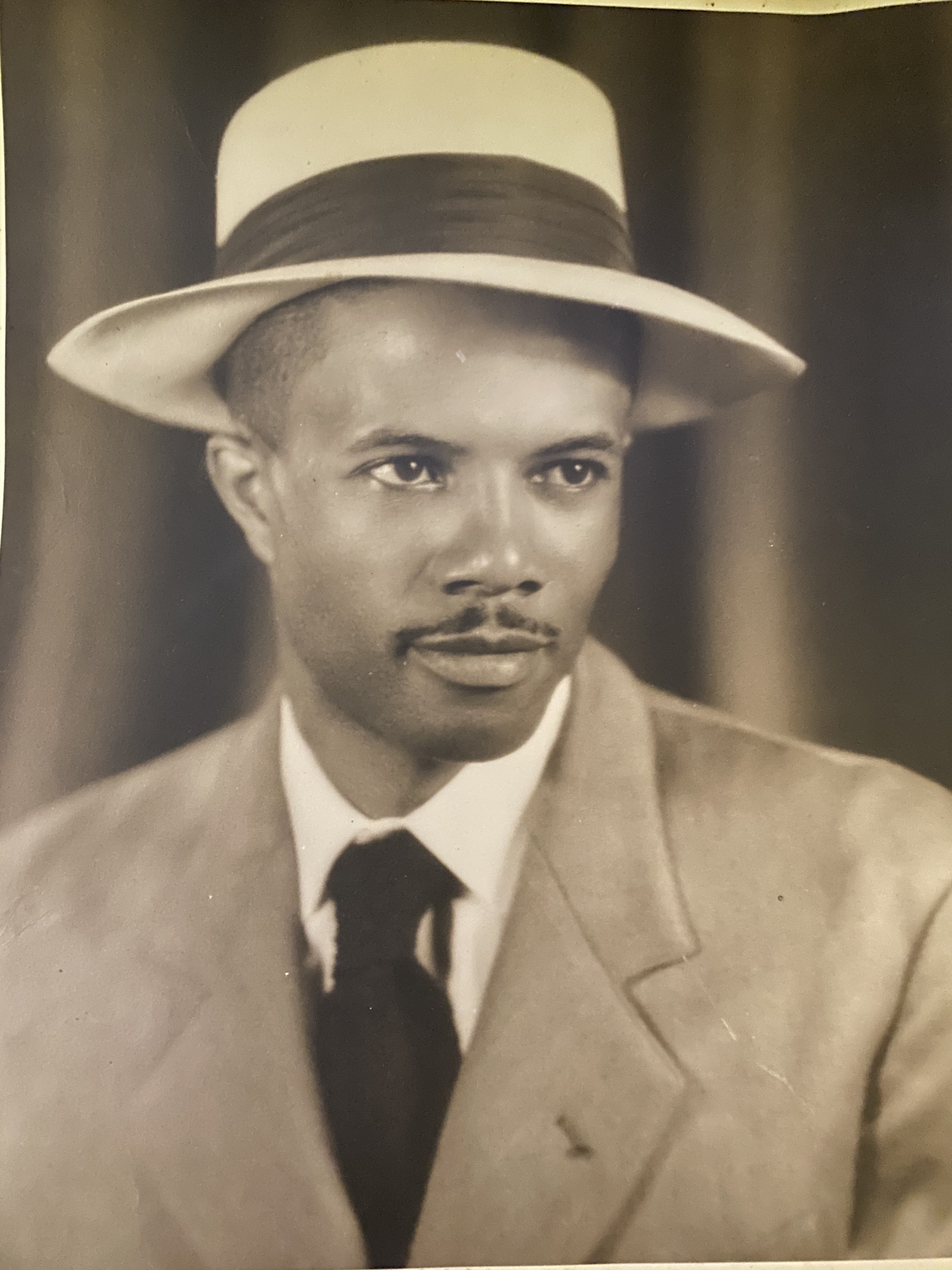
Mary’s father, Jimmie Lee Cochran, as a young man.

Though she lost her mother very young, Mary was eager to share her father’s story, too. In the 1920s, when he was hardly more than a child, Jimmie Lee Cochran worked the cotton fields of Hurtsboro, Alabama, where he lived on a farm with his mother and grandmother. In 1939, when Mary was four, Jimmie Lee came within an inch of being lynched. After a narrow escape, he managed to slip away to Atlanta, where he built a long career with Southern Railway. More importantly, a decade later Mary’s father brought her and her younger siblings to the home he’d built–literally built with his own hands–for his family. The twists and turns of Jimmie Lee Cochran’s story, and Mary’s alongside, paint a shimmering picture of courage, devotion to family, and perseverance. It’s a story that could fill a book. Maybe someday it will.

Born in 1935 in Hurtsboro, Mary Cochran Darian moved on from this world on April 18th, 2023. She worked those Alabama cotton fields herself before graduating from Atlanta’s Booker T. Washington High. She married her sweetheart, Lewis Darian, and after twenty years with our family moved on to an administrative career at Crawford Long Hospital. Through it all, Mary took care of people–her four children, her physically disabled brother, her neighbors and grandchildren, her church family (to them she was “Mother Darian”) and me and … well, the list goes on. Her family held a “Homegoing Celebration” last week at her beloved church. The service left room for sorrow but had joyful music aplenty and tributes full of love and hope meant to speed Mary along on her journey to the place she firmly believed was her true home. I think everyone who spoke of Mary mentioned that infectious smile that so warmed me during our visits in her last years. I’ve mentioned the knack Mary had for helping me laugh away my little girl challenges and preteen angst. Her ability to smile and laugh herself through the many trials of aging was to me more remarkable. My mother had her strengths, but facing old age with grace was not one of them. She raged against the dying of the light, and though there’s something to be said for that, the way Mary kept her spirits high in spite of the slings and arrows fortune tossed her way not only eased her days, it lightened the hearts of those who cared for her.

The pastor who gave Mary’s eulogy asserted that her smile set an important example. If you love God, he suggested, the least you can do is smile for the world to see. Mary’s resting face was a smile, a natural one, broad and vibrant in a way that said, Watch out because here comes a laugh, a big one straight from the belly! The photo below offers proof. I can hear my brothers and my father laughing with Mary even now.

Mary returns for a much-anticipated visit with my family, sometime in the 1980s.

The cover of Mary’s Homegoing tribute booklet features a couple of her favorite phrases. “I expect a miracle every day,” reads one of them. For those who consider miracles to be only raising the dead or turning water into wine, this may sound like hyperbole. Like the wisest among us, Mary knew that the simplest things could be miracles: The touch of her first great-great grandchild settling into her lap; the familiar taste of the meals Lou prepared at home and brought to her room; the right to vote safely and the freedom to shop where she pleased and sit at the front of the bus (freedoms she had to wait until age thirty to enjoy); the weekly Bingo games (she won a lot) with other residents in the nursing home common room; a skittish bluebird in the morning sun, darting close for a nibble from her feeder before the pushier birds moved in.

Miracles every one, just as Mary was to all who knew her. She is home now, flights of angels singing her to her rest.

Mary with her daughter, Lou Darian Qualls, on Mother’s Day, 2022

Lady Nona

Happy New Year! What a year it’s been. Like everyone else, I welcome 2021 and the hope and possibility it brings (yesterday’s horrific events in DC notwithstanding).

It’s been a while since I dipped in here to post, and I believe the last time I did I declared my intention to abandon my Attic blog altogether. Well, here I am again, but for something a little different. Today I share a short story, one I’d about given up on seeing published until The Dead Mule School of Southern Literature kindly included it in their January, 2021, issue. I’m grateful to the Mule. It’s a wonderful issue, by the way, in a lovely journal. You can check it out here: https://deadmule.com/

The setting of “Nona’s Gift”–a college town on a football Saturday–springs from my memories of UNC-Chapel Hill in the early 1980s. My late mother with her snobbish tendencies and ladylike grit inspired the character of Nona herself. It seems only right, then, that this story have a place in “My Mother’s Attic.”

Hope you enjoy!

Martha Payne: Fiction: January 2021

 PUBLISHED DATE:2021-01-01

Nona’s Gift

Nona reaches for the red beret hanging on the coat tree by her front door, and misses. Despite the ache in her joints, she rocks forward on the balls of her spectator pumps and gives it another whirl. The beret slips successfully off its hook. It’s a good Irish wool, soft. It warms her ancient fingers. Nona grips the beret gratefully as she gathers up her purse and walking stick, locks her door and totters up the carpeted hall of what her daughter calls “the home,” though it’s anything but. 

The elevator, thank Jesus, Mary and Joseph, is empty. Nona steps in, takes a sniff. Urine. She rolls her eyes. She’s had it with old people and their sloppy hygiene. Ground floor. Nona braces for the painful jolt as the elevator hits bottom. Then she settles the beret on her silvery head, checks the mirror on the back wall, and adjusts so as to center the beret’s rhinestone brooch above her left brow, the way she likes it. 

Outside, all is crisp and blue and breezy, perfect weather for the tailgaters who will soon be making merry at the stadium parking lot. To think of their Solo cups and onion dip makes Nona thirsty. She picks up a little speed, hoping to outfox the light at the corner of Magnolia and Main. It flashes yellow before she’s halfway there and she slows again. Not to worry. If they’ve run through the single malt by the time she arrives, Nona feels sure young Stuart will find her a decent glass of Dry Sack. She squints against the Carolina sun and steps to the curb. A crowd gathers behind her. To her left, a horn shrieks. Breathless, she clutches her purse against her bosom. Through a cloud of exhaust she watches a jeep sweep around the corner, its body splashed with paw-prints. Lengths of red and white crepe paper whip from its roll bars, and three—no four—barelegged girls balance on the running boards. Swaying left, then right, they shake pompons and cowbells and shout—GoCats! Numberwan

Her small feet splayed for good balance, Nona clucks her tongue and shakes her head. Then a thought, a terrible thought as young bodies jostle past, bumping her hips, her bony shoulders. Her heart aflutter, she opens her purse. All darkness. With trembling hand she fumbles past her wallet, a dusty lipstick tube, a blue lozenge and several loose aspirins and ah! There it is, beneath the glare of her compact. She hasn’t forgotten: Stuart’s gift, a box the size of a baseball wrapped in gold and tied with matching elastic ribbon. Nona touches a bent finger to the cool paper, lets go a sigh, snaps the purse shut. 

From a few blocks away comes drumbeat and blast of trumpet. Nona trains her eye on the signal across the intersection. It shines green. Shouts, chatter, the thump of a heart, her own. She wavers, her softly furrowed cheeks coloring beneath twin smears of crème rouge, then rights herself and steps off the curb, swollen knees and narrow hips cooperating with a grace she’d thought long gone. The electronic hand ahead flashes three times then becomes the number nine. Nona lowers her gaze and moves along, her cane ticking off with each measured step the manic neon countdown—six, five, four … 

“It most certainly is not a cane … ” Nona mumbles to the image of her daughter’s face that rises in her mind, stern and round as the moon. “A proper walking stick this is, been in the family since … ” She wets her lips and raises her voice, but Nona forgets exactly who it was, which of her grandfathers, or great-grandfathers, whittled the stick, carving it out of mountain laurel sanded soft as mink. “Well, I don’t care who whittled the thing. It’s positively not a cane, as anyone with half a lick of sense can see …” 

At the opposite curb, Nona pauses beneath the signal light, fingers the khaki piping at the collar of her peach-hued St. John’s knit, and eases up one foot, then the other. Her pale crooked fingers bear down on the walking stick’s handle and she just manages to scale the curb. Nona resents the stick’s handle, an ugly rubber affair Melinda’s husband attached, poorly, the day they moved her out of the house (an English Tudor on an acre lot) that she and Mr. Snyder saved twenty years to build. “Part of the deal, Mother,” Melinda announced while the glue dried, big bulbous globs of it that overflowed the handle’s edge, spoiling the walking stick’s lines altogether. “We retrofit that handle for safety, Missy, or you stay put.”

The sidewalk is moving! Nona plants her pumps at hip width. Then she sees—or hears—that it’s only music, rock music playing so loudly through the open windows of the columned house on the corner it vibrates deep into the earth and back up again. A plastic disc sails past Nona’s shoulder, then ziiiiing-pop! Something flies out a window and splats against the ancient oak tree to her right. A boozy mist falls over Nona’s face, mingles, glittery, with her finishing powder. 

 “Sorry, Granny!” screams a youthful voice through a window. Then, a chorus of deep-throated laughter. 

Pabst, Nona sneers, licking her lips and feeling all the more proud her grandson chose to pledge at the fraternity down the block, where for Game Day Brunch, the brothers serve sausage-cheese casseroles with pecan pinwheels and drink the way they did in her day. Bloody Mary’s, mimosas when it’s hot, whiskey straight up. They stock beer for those who must have it, mostly the climbers from the eastern counties, but serve it discreetly from a cooler on the stoop near the service entrance. 

It’s the front door for Nona, a tasteful Colonial with a modest transom. Once she’s scaled the porch steps, she raps the door with the rubber pad of her walking stick. Inside, a television blares: “Wear Nike and sweat like you mean it!” Nona knocks again, harder. Nothing. She shuffles back a step, then another, and lifts her walking stick high, aiming for the doorbell. Her shoulder creaks and her wrist downright wobbles with pain but ding-dong! She’s done it. She can just hear the chime above the din. 

A young coed—slender, doe-eyed, blonde—swings open the door. Her skirt is too short, her top too skimpy. 

“I’ve brought something for Stuart,” Nona declares. 

“Stuart?”

Nona gazes at the blonde through rheumy eyes. “Yes. Stuart Bridges, a third year. Come January he starts his term as president. Elected by unanimous vote. Today is his birthday.” 

“Who is it, Tink?” A voice from inside—Tink? What kind of a name is that? The voice is not Stuart’s, but Nona recognizes it. 

“Uh, um, a Missus … ?” The blonde gives Nona a look she doesn’t like. Pity-full. Who needs it. 

“Tell him it’s Mrs. Snyder,” she says, raising her voice, along with her chin, up and over the relentless music. The bass notes tremble, not unpleasantly, up her legs and spine.  

“A Mrs. Snyder!” calls Tink. She smacks something, gum maybe, or cud, and her eyes crinkle up in a smile. “Looking for someone named Stuart? Says he’s her, uh …” With a cheeky wink, the blonde leans close and whispers. “Grandson?” 

Nona nods, sniffs. Dime store perfume. “Stuart Snyder Bridges,” she declares, nose upturned. “After my late father-in-law, Stuart Jefferson Snyder.”

“Her grandson!” calls the blonde, smacking harder. “Stuart? Says he’s a junior?” 

“Thanks Tinkerbell!” A broad-shouldered young man with glossy hair slides a hand around the blonde’s hip and moves her gently aside. “I’ll take it from here.” 

The blonde smiles, gives a final triumphant smack, and trots away, ponytail bouncing. 

“Hi there, Mrs. Snyder. Glad to see you sporting our team colors today.” With a winning smile, the young man gestures at Nona’s beret with firm fingers that brush the brim ever so slightly. Nona grins, hesitant but proud. 

“Stuart had to run out …” the young man goes on. “Uh, for more mixers.” 

Her face pinched, Nona studies his eyes, his jaw line. She tilts so close she can feel the silky hairs along his forearm. 

“Now John, why didn’t you say that was you?” she says. Flushing with pleasure, she lowers her head and starts across the threshold while John, whose name is Cliff, steps aside to let her pass.

“I’m sorry, Mrs. Snyder. We weren’t expecting you so early. I think you’ve been walking faster this season.”

“You think nothing of the sort,” says Nona with a smirk. Walking stick tapping, she makes her way to the living room and sits on the ragged couch. It smells of dog.

“Single malt, neat?” shouts John who is Cliff.

“Splash of soda today. Thank you, son.” 

Her purse in her lap, Nona rifles through its fusty depths. She pulls out Stuart’s gift and cups it between her hands. Patient, she watches huge players moving across the huge gridiron on the huge television across the room until John who is Cliff appears again, a sweating lowball in one hand.

“I see you remembered Stuart’s birthday,” says Cliff with a wink. White cardboard peeks through at the corners of the box where the wrapping paper, which once had a sheen to it, has worn smooth and begun to split.

“Why yes I did,” Nona says, and for a moment all her aches and worries soften. “Thank you, John,” she says, and extends her hand. 

“Yes ma’am,” says John who is Cliff. He grasps her fingers, hands her the lowball and leaves. A deep gulp, and Nona settles in to wait. 

In his townhouse seven miles away, Stuart Snyder Bridges, a thirty year-old accountant with a March birthday, pulls his cell phone from his pocket. 

“Hello, Mr. Bridges. So sorry to bother you …” 

It’s a voice Stuart knows well. A brother, Cliff, if memory serves, though they sound younger every time. “I’ll be right over,” he says. 

In the frat house living room, Stuart’s grandmother drains her scotch. 

“Would you like another, Mrs. Snyder?” Different voice, different young man, one Nona feels less sure about.

“Don’t mind if I do, dear,” she says nevertheless. “I’m sure Stuart will be here soon.”

“Yes, ma’am, he’s headed back now.” 

“Oh, my. Thank you, son.” 

Panicked, Nona searches for her purse, which someone has set on the floor. Her foot bumps the patent leather bulk of it. As she reaches down, the hard edge of the gift box presses into her belly. 

There it is, Stuart’s gift. She hasn’t forgotten. 

Nona relaxes into the soft odorous sofa cushions. Beneath her fingers, the box in its gold paper feels cool and expensive. She can hardly wait for Stuart to see it.