After nine long years of procrastination and skittishness, I’ve worked up the gumption to share the story of my rekindled relationship with the beloved caregiver of my youth. The story will unfold in several chapters. If you’d like to read the origins of this journey, just click here: I Am Mae Mobley
On a steamy afternoon during the troubled summer of 2016, I finally worked up the courage to call Mary Darian, the intrepid woman who half-raised me. Though I loved Mary dearly, I’d failed as an adult to stay in close touch. As each ringy-dingy sounded, I worried, whispering my introductory lines again and again. A waste of energy this. Mary knew my voice immediately—“Angel Face, is that you?” I pictured the tall, confident young woman who used to drive me to McDonald’s for a Big Mac after middle school, and let go a grateful sigh. I was no longer a school girl, of course, and Mary had long moved on from being our family’s housekeeper, but her voice still brimmed with warmth and affection.
I caught her up on family this and thats. We exchanged stories about my mother—“Now she was a real lady … ” Mary gave a chuckle. “And what a seamstress!” She’d long admired my mother’s knack with a needle, and one of her lively descriptions came to mind: Your mother made a white jacket for her new formal gown with shells around the midriff … she once penned to me at summer camp. Wow! When the lady moves, she gets momentum and never stops … I think she’s going to wear it with her sexy red sandals!
Though Mary had never much liked talking about herself, she finally told me she’d recently had a fall. “But Lou took such good care of me I’m already back on my feet!” Lou is Mary’s daughter, as loyal and kind as they come, and I noted as much. Hesitant again in light of this news (was this the time to worm my way into Mary’s life?), I took a deep breath and asked if I might drop by for a visit. “Why sure, anytime!” she said. Then a pause. “Well, anytime other than Wednesdays … I still get out for my Bible study on Wednesdays.” Smiling, I suggested the following Thursday and our plans were set.
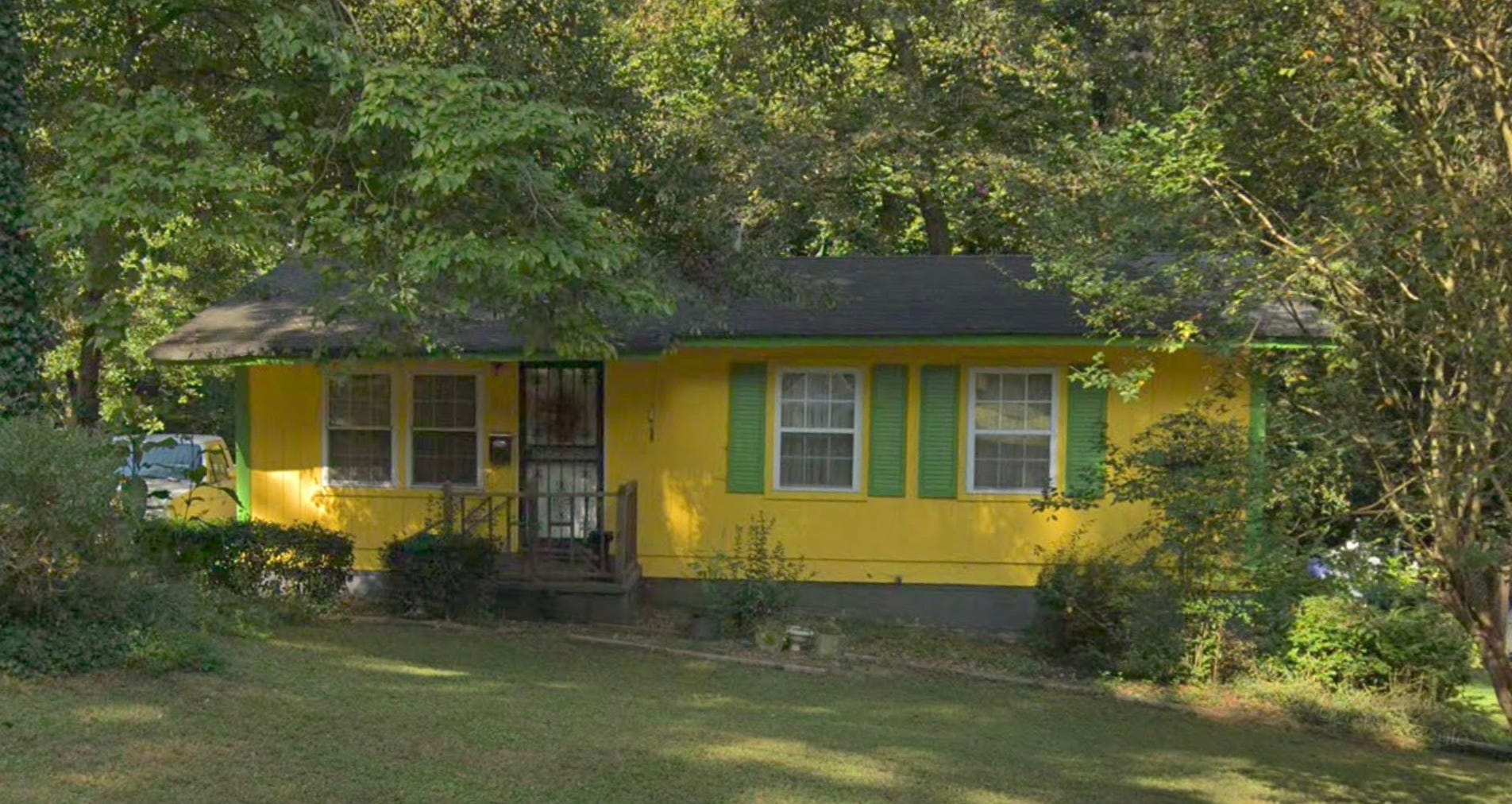
Eighty then, Mary lived alone in the home in west Atlanta that she and her husband had moved into in the late sixties. A one-story with wood siding and four inviting windows across the front, I’d been there as a child. As I drove between sprawling azaleas lining the driveway and parked beneath the shade of a generous hardwood, I found it as cozy and comfortable as it was back then, only better. Previously a neutral cream, it had been painted a bright banana yellow. The shutters and trim, dark navy before, had gone lime green. The effect was bold and welcoming, as if the house itself wore a wry grin for neighbors and strangers alike. Perfect, I thought. Mary through and through.
“Come on in!” Mary said with a yelp of pleasure, and squeezed me tight. As we walked inside, she limped a little and gripped the back of a chair. I winced, reached to help, but she brushed it off. We sat side-by-side on her couch and studied the faces, many of them Mary-like, smiling out from the abundance of photos in her living room. One by one, she proudly identified family—the three sons I’d once known now become men, the late husband I never met, the many beloved grandchildren and great-grandchildren and of course, Lou, who showed up toward the end of our visit, sacks of groceries spilling from her arms as she corralled her little granddaughter through the door.
Mary had visitors most every day, family and more. She bragged on her neighbors and beaming, described the teenaged boy from her church who dropped in often to check on her. We reminisced about my parents. She asked about my children and my writing and just like that, the gap of years since we’d spent time together fell away. We joked about my older brothers’ teenaged exploits of long ago, and she said how sorry she was about the oldest, Ed, who’d been gone nine years.
“Your mama called me,” she said, her eyes damp. “More than once after he passed. Just to talk. A mother shouldn’t have to lose her child.”
“No, she shouldn’t,” I agreed, my voice wobbly. Mary took my hand and I mentioned that I’d been thinking about her a lot recently … “Especially since I rewatched The Help. Have you seen that movie?”
“Sure have,” Mary said, her tone wary.
“You know, it has its faults but it made me realize I never took the time to really get to know you … ” I began to sweat. “I guess what I’m trying to say is I’d like to learn your story, Mary. It’s something I should have done a long time ago. I’d like to know about you and your past, the way you’ve always known about me and mine.”
Her soft gaze clouded in bemusement, maybe disbelief. It wasn’t like Mary to be at a loss for words, and I looked away. Maybe I was being pushy. Maybe I should have kept my mouth good and shut.
“Well, honey,” she said finally, grinning. “It’s not all that interesting of a story, but I can probably come up with a thing or two.”
I laughed in relief, and we agreed I should return in two weeks armed with pen and paper and I-phone microphone. I wasn’t sure exactly what I would do with what she chose to share—blog? book? keep in my heart?—but I left excited about what lay ahead and hurried home to call my sister in Pennsylvania. Ten when our parents hired Mary at eighteen, JoJo loved Mary too, if in a different, maybe even deeper, way.
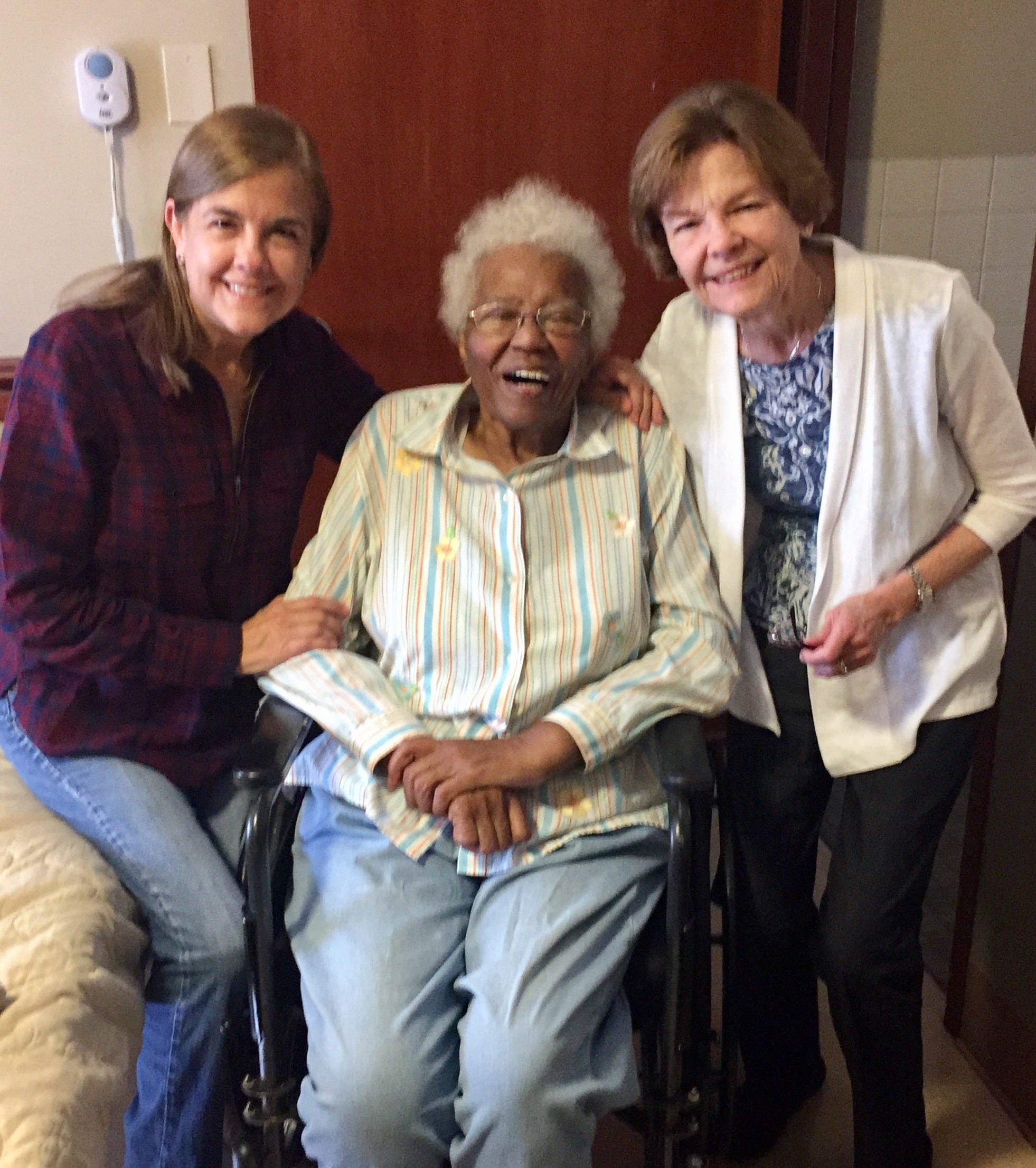
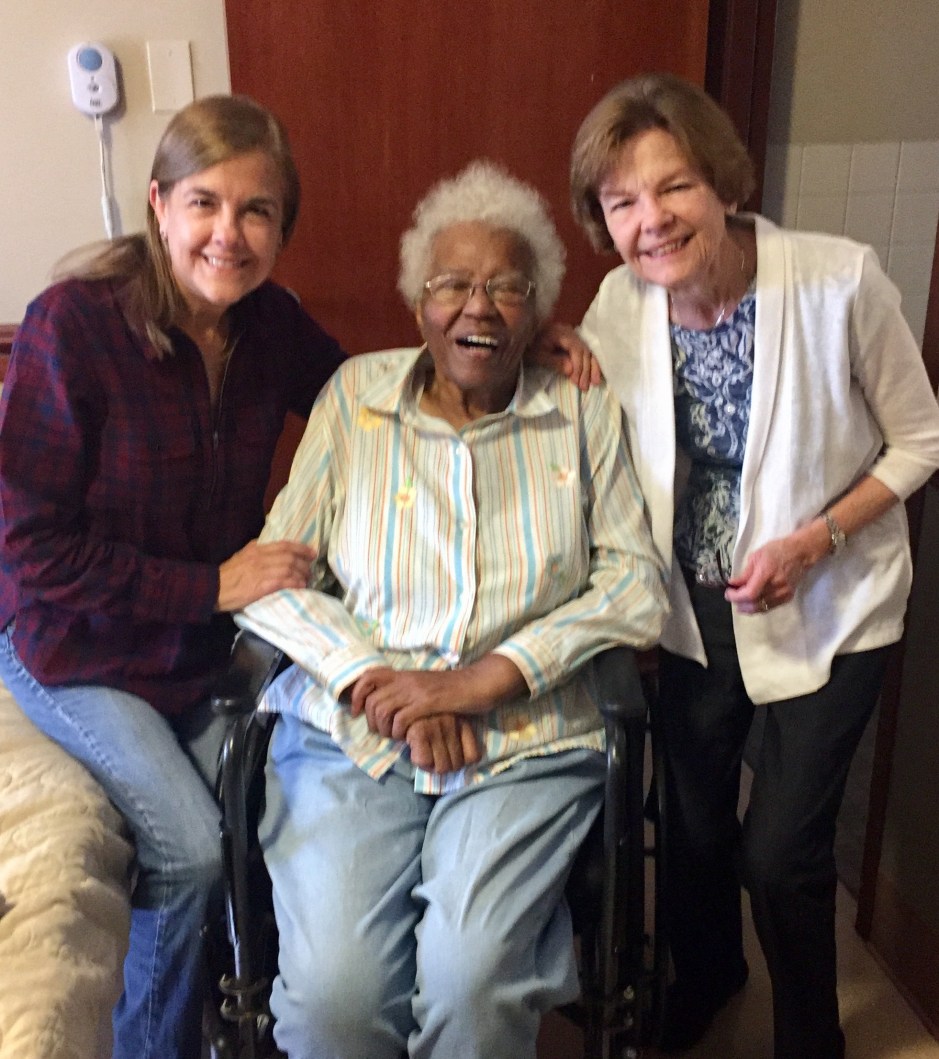
A week later, Mary called, her voice subdued and full of pain, to cancel our get-together. Her oldest son, Lewis, Jr, had suddenly passed away of a heart attack, at fifty-seven. It was almost eerie, given what we’d recently said about mothers losing sons—such a cruel twist of time—and my heart ached for her. The fact that she’d lost her husband decades before in the same way and at roughly the same age only deepened her sorrow. My brother George and I attended Lewis’s funeral, a service filled with music and laughter and tears. During one of the soulful hymns, Mary, seated in a wheelchair in the front row, reached her hand toward Lewis’s casket and swayed in easy rhythm with the music. She was a woman of strong faith, among the strongest I’ve known, and I remember feeling that the air in the church seemed to shift, as if Lewis’s spirit had joined Mary’s own, and settled in to stay.
Not long after Lewis’s death, Mary had another stroke. I visited a couple of times at her rehab facility, once on her birthday when JoJo was in town, but we agreed to hold off with the note-taking and the rest until she grew stronger. The stroke had slowed Mary’s speech and in truth, I wondered if it might be best to leave well enough alone. We were back in touch, friends again, and Mary should save her energy to heal and live her best life. In the span of a few weeks, she’d given me a glimpse into her family life—who could ask for more? Tough as ever, Mary had something else up her sleeve. The next March, she reported she was much improved and ready to start getting together, only I would have to come to Lou’s house while she recuperated, which was peachy with me.
And so it began. Lou welcomed me to her home on our appointed day, and Mary, the walker she was learning to use close at hand, gestured me to join her on the couch.
“Angel Face,” she said, her trademark smile tinged with emotion. “His story has been on my mind and in my spirit.”
“His story?” I asked.
“My daddy’s,” she said, touching the tight white curls around her still- smooth face. “I want to tell you my daddy’s story.”
She held up two pages of blue cursive notes written in the hand I knew from her letters, if a little uneven. I longed to hear about Mary’s life, and felt a touch disappointed.
“I’ve been trying to get it all down,” she said. “But I’m such a slow writer these days!”
“It’s hard for her …” Lou chimed in from the kitchen. “She spent days on it!”
Awed, I scanned Mary’s pages and it hit me: by sharing her father’s journey, she would be sharing her own in a manner she was comfortable with. Besides, do any of our lives make sense without the larger story of our parents and grandparents and on back?
“He was born in Hurtsboro, Alabama,” Mary began.
Hurtsboro—then a town of less than 900 residents wedged into a far southeastern lip of the state, deep in the Cotton Belt. Hurts to stay but it hurts to leave, Mary once quipped. The 1910s and 20s. The legacy of legalized slavery still shrouded the South, and Jim Crow was flexing his muscles. Mary’s father, Jimmie Lee Cochran, lived with his sister and their mother and grandmother on a white man’s farm. As early as the third or fourth grade, Mary explained, her father, “the man of the house,” often had to leave school early to go home and work the fields. Children being children, his classmates took note, in heartbreaking fashion, but a certain little girl understood Jimmie Lee’s predicament, and that would make all the difference.
Mary tells this best, so I’ll sign off for now with the brief clip above (apologies for the poor editing and annoying oohs and aaahs) in which she describes the moment her mother-to-be, Lue Milla James, first felt a pang of love for the boy who would become Mary’s father.
Discover more from My Mother's Attic
Subscribe to get the latest posts sent to your email.

Thank you for sharing this. You are a gifted writer and thank you for sharing Mary’s story with us.
LikeLiked by 1 person
You’re very welcome. Thank you so much for reading. Mary’s story is well worth sharing!
LikeLike