Whistling Warden

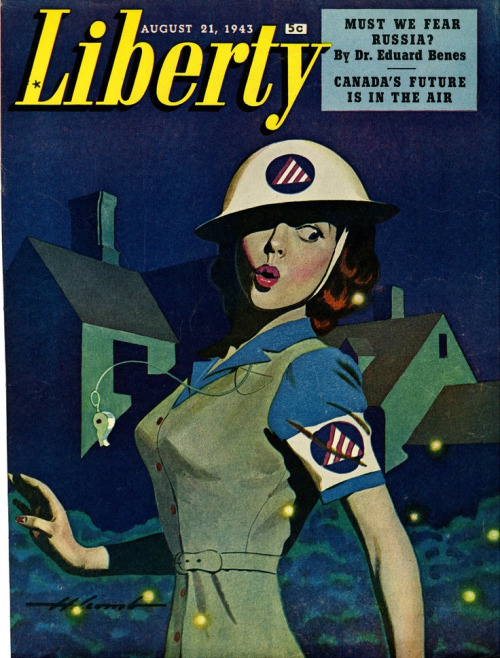
Rosie the Riveter ain't got nothing on this chick.
Rosie the Riveter got nothing on this chick.

For days I’ve been stuck in my parents’ post-Pearl Harbor correspondence, adrift in an age shrouded in confusion and fear. Maybe this is what it means to be a time traveler—not whisking back and forth in a souped-up DeLorian (though that would be more fun, and cleaner), but suspended outside of time, one foot in this world and the other elsewhere. It’s a little like visiting a live Nativity, or a battle reenactment, only more heart-stopping. Just when you begin to lose yourself, to be swept into the dream, someone steps onto the stage cloaked in a persona you half-recognize, and Mon Dieu, it’s the person who raised you.
image
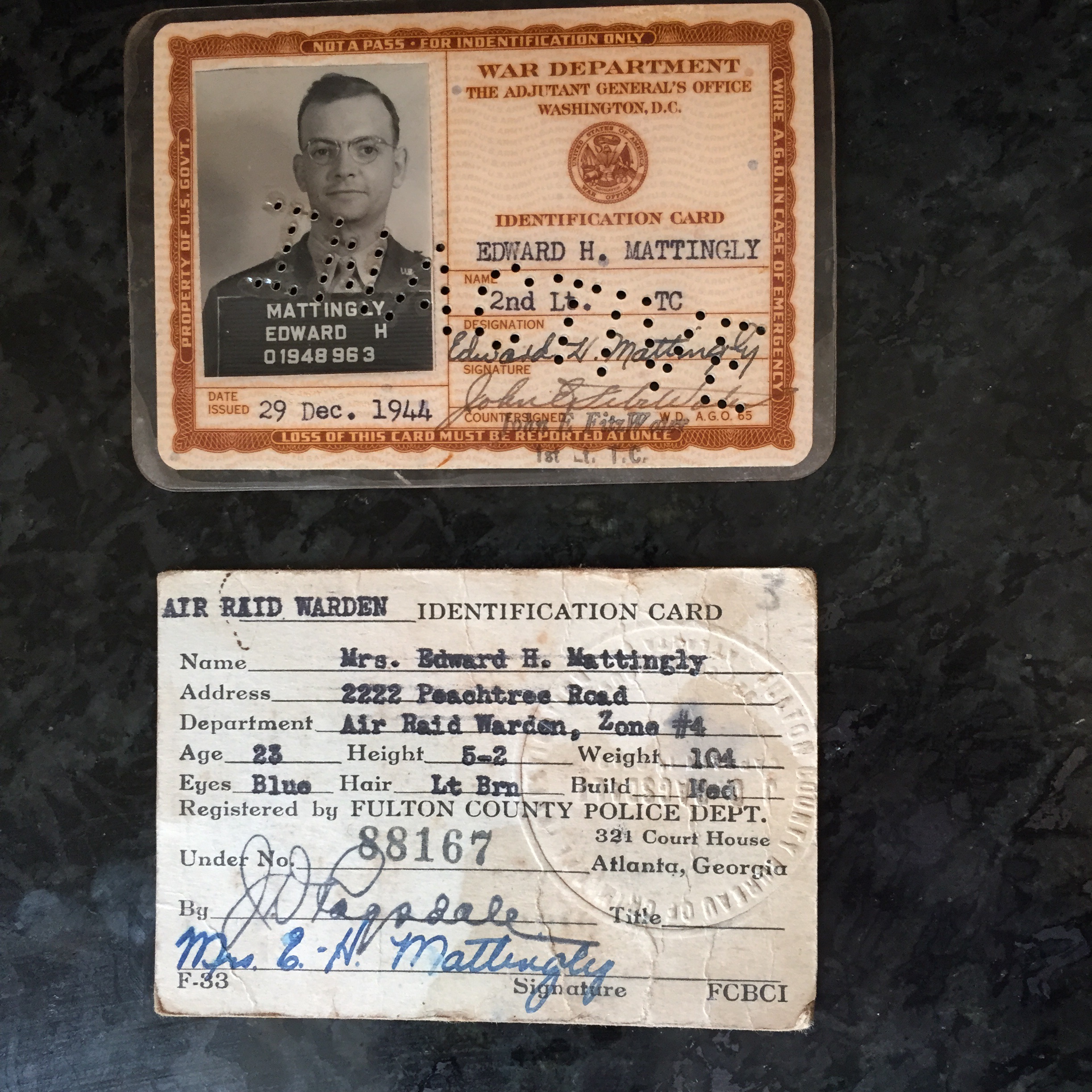
My father’s WWII ID card, December, 1944. He’d jumped from Private to 2nd Lieutenant by then. Pretty sure mom was a career Air Warden, and glad of it.

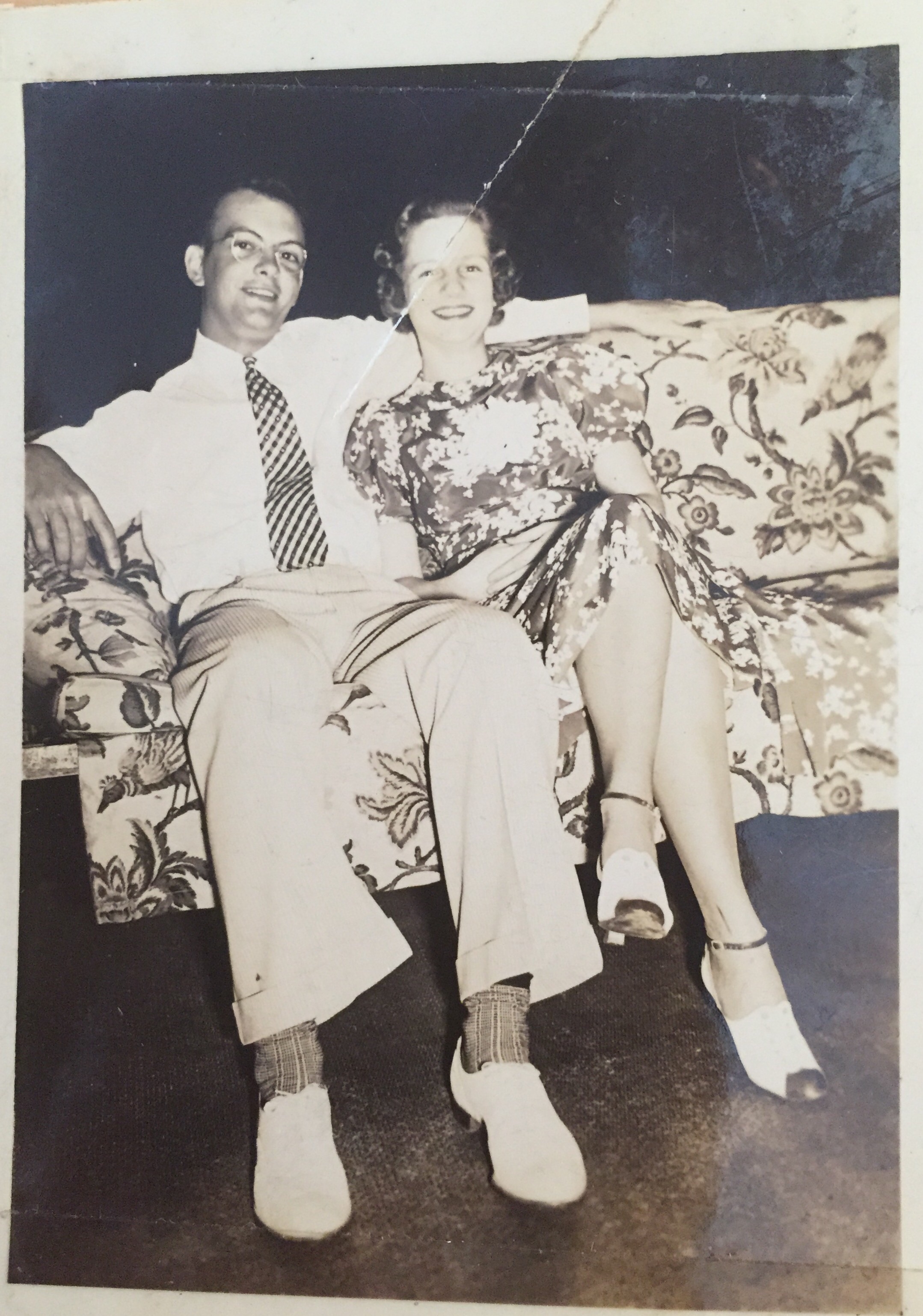
Here, a photo of a young man who looks familiar (if you dressed him in tee shirt and ball cap, he could be one of my sons), and wow, it’s my father. There, a crumpled ID card. I examine the signature and discover that within half a year of her breezy, flower-strewn nuptials, my mother traded out her veil of ivory tulle for an Air Raid Warden’s helmet.

An Air Raid Warden? This is nigh on impossible. My mother, the belle of the ball, outfitted in khaki, with a whistle around her neck and a gas mask cinched to her belt? Glory be! I’ll have to ask her about this, I think, forgetting for a moment that she’s no longer in a position to answer. This happens often here in the attic. We find something that piques our interest (the egg carton stored in plastic, the vodka in a mayonnaise jar, my father’s silk “honeymoon pajamas”?!?), and my heart tilts down the stairs to the den, where Mom ought to be perched in her favorite chair, enjoying her meatloaf and Chardonnay.
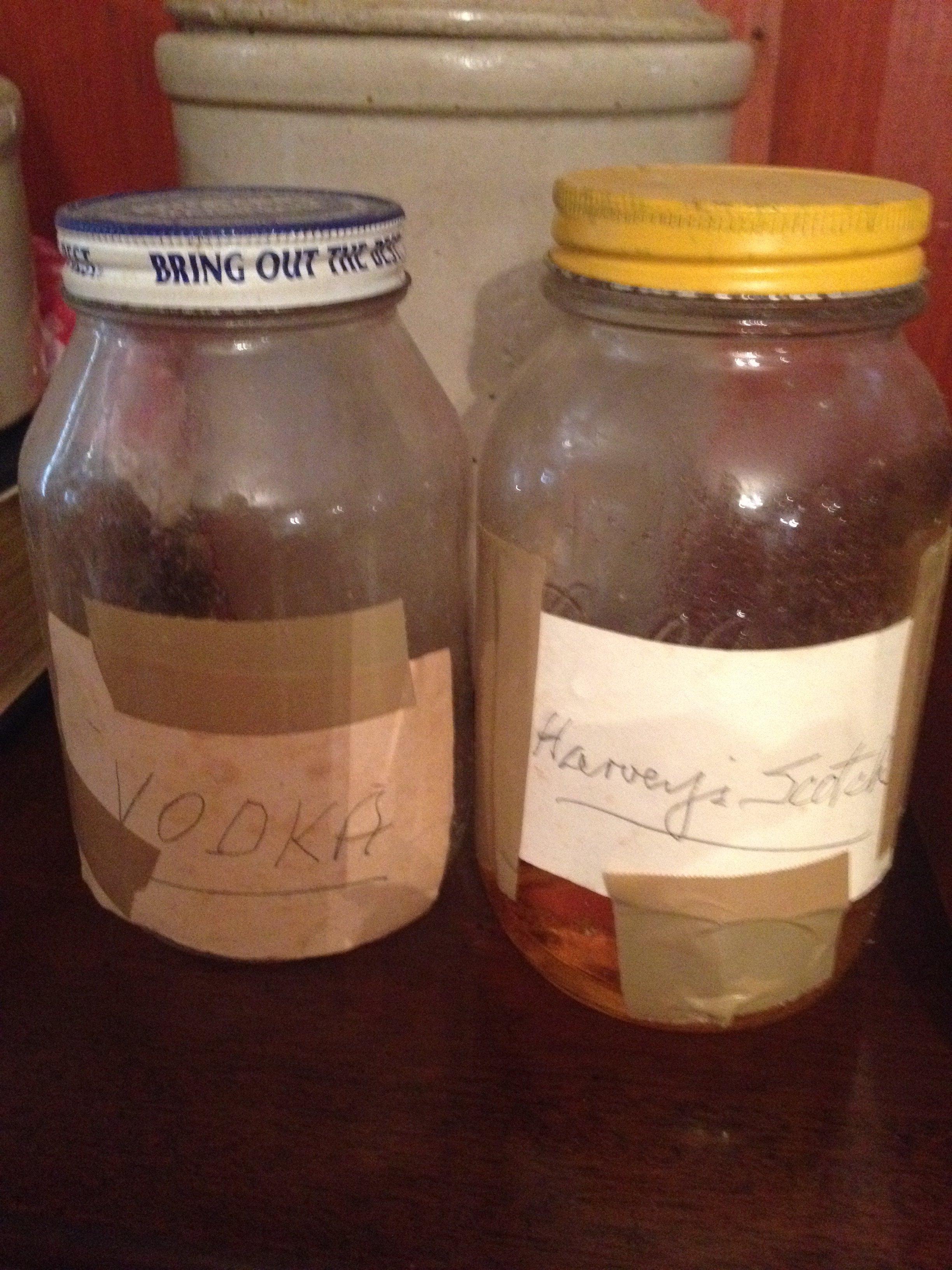
Vodka and Harvey's Scotch, labelled so by my father, who did not drink.
Vodka, and Harvey’s Scotch, labelled so by my father, who did not drink.
"Ed's White Honeymoon PJ's," presumably never to be worn again
“Ed’s White Honeymoon PJ’s,” presumably never to be worn again

If only we’d started this cleaning out business while she was still with us, you might say. If only, but alas, my mother wouldn’t have it. The very suggestion could bring her to tears. It was all my sister could do to toss the soured milk from the fridge during visits home.

You must know the people in your Sector well … reads the Handbook for Air Raid Wardens. To them, you are the embodiment of all Civilian Defense. You must seek to gain their confidence so that in any time of stress you may more easily reassure them and avert panic 

Uh, oh. Mom was a worry-wart, and somewhat prone to panic.

On patrol, your first duty is to clear the streets. People should be told to go to their homes. You must see that drivers park their automobiles at curbs and in such a manner as to leave a passage for fire engines and ambulances. Horses should be taken out of the shafts and tied to a lamp post 

Horses in shafts? In the streets of Atlanta, in 1942?

When the warning sounds after dark, the blackout will be enforced. You will warn householders of any light showing and if it is not at once turned out or covered, report the fact to the nearest policeman. 

This is so not my mother! She was well-liked, yes, charmer of bus driver and boss man alike, but she could order a dog to steal a bone and it would run the other way. And at five foot two and 104 pounds, could she be expected to direct traffic, and corral large animals? In disbelief, I dig around some more and there, in a stack of envelopes held together with a limp rubber band, is a pertinent letter penned by my father in Atlanta, who had yet to receive his orders, to my mother, in Florida at a friend’s wedding.

Dear Sweetie, I’ve just come from my warden’s meeting. My work as a warden is just beginning to interest me. Possibly it’s because I’m at last seeing the light–up until now I’ve had a very poor understanding of this war and our role in it. Perhaps in a few weeks I’ll begin to know what I’m supposed to do, but for now I’m sure of one thing–I’ve got to have an alternate warden, and there is only one person in this world I want as that alternate! 

Dad went on to point out my mother’s sweetness, reliability and strength of character. He was a persuasive guy, and sly like a fox, to coin one of his favorite clichés. I’ve found no evidence of my mother’s response, but the ID card is authentic, and dated June 1942, the same month as Dad’s letter. In fact, it’s dated before the postmark on the letter. I believe my father presumed, as he was wont to do. I imagine Mom didn’t much like that. I feel for her. The ink on their marriage license was hardly dry, their first apartment still lacking curtains–who knew what would be asked of them next? Many of her friends’ husbands had been shipped off. My uncle was about to be deployed to France.

I’m sure Mom bucked up. I bet she kept those khakis starched stiff, and her whistle polished to a sheen.

ARP2

Stardust Memories, Part II

From Mom, a week pre-wedding–“I begin to wonder if I am going to disappoint you. But then all at once I think about our love …”.

4:20 PM, November 8th, 1941. As my father predicted, it’s a mild, breezy afternoon. In my grandmother’s verdant back yard, there’s a hint of sulfur on the air, wafting in from the deep black waters of the Suwannee River a few miles away. The camellia bushes my grandfather tends with daily care bloom pink and red all around, and over there, near a trellised archway woven with ivy and white ribbon, a small pond swims with goldfish. Just back of the archway, a family friend taps out a tune soothing but playful on her piano as her violinist follows her lead. Behind them, the wedding cake lies whole and gleaming on a folding table covered in white linen.

A handful of friends down from Atlanta gather beneath a dogwood tree, where a clutch of Live Oak-ians greet them. With his best man, my grandfather Mattingly, at his elbow, my father moves confidently among his guests, laughing, charming them so that the Baptists have to wonder what gave rise to their misgivings about him and his faith. Inside, in the kitchen, my mother’s maternal aunts arrange deviled eggs on a platter, finger sandwiches on a tray. They stay busy, keeping their eyes off the clock, while in the front bedroom, my Aunt Bum, the maid of honor, fusses with my mother’s veil. My grandmother paces. My mother, standing to keep from wrinkling her ivory moire dress, holds back tears.

“Where can that man be …” says my efficient grandmother, her small heavy shoes creating a racket on the wood floor. “I’ve half a mind to send George (my grandfather) out after him.”

My aunt peers out the window, then at her watch—4:25 now, but no sign of Father McLoughlin …

Strangely, the attic has yet to give up photos of my parents’ wedding, only a portrait or two of my mother in her gown. I can picture it, though. I spent many summer days playing on that green lawn, poking at the goldfish, somersaulting in the grass, hiding and seeking my cousins from next door. And the Good Father did show up, of course, in a station wagon according to family lore, and for some reason, my mother always rolled her eyes at this detail. A priest in a station wagon? Driving a family car? But drive up he did, gunning along the unpaved driveway in a puff of dust. The radio blared through his open windows—Notre Dame football, and whether this endeared him to my father or not is hard to say. Dad and his friends were rabid Tech Yellow Jacket fans, so the football was good. Notre Dame, not so much. But he had made it. Stepping out grinning and rumpled, I imagine Father McLoughlin calming the wedding party with a light Irish brogue. From there, the ceremony proceeded without a hitch.

From the Atlanta Constitution: "…her finger-tip length veil of antique ivory illusion tulle was caught to her dark tresses by a coronet of pleated tulle."
From the Atlanta Constitution: “…her finger-tip length veil of antique ivory illusion tulle was caught to her dark tresses by a coronet of pleated tulle.”

Later, my parents were off on their honeymoon, to Pensacola and Mobile and New Orleans. The first evening, after my father hung his clothes in the hotel closet, he came out dressed for dinner, eyes brimming. He touched my mother’s arm and said, “Your clothes are lined up right next to mine!” She must have kissed him then. I’m sure she did.

A month and a day later, bombs rained down on Pearl Harbor and my parents world turned upside down, the way the world will. Before long, my father would be back on the road, for basic training and that sort of thing. They wrote more letters, lots more, back and forth from Live Oak and Atlanta to army bases around the South. They were lucky. My father, blind in one eye since childhood, couldn’t very well shoot a gun, so he served his time stateside while his cronies were sent off to France and Italy and beyond.

My parents had a good marriage, certainly a resilient one (62 years!).  They had their rough patches, their losses and heartaches. Mom could be stubborn, a little spoiled, but then Dad was the one who indulged her. And he could be controlling to a fault. Late in their lives together, as my father began to suffer the effects of Alzheimer’s, I saw cracks and fissures between my parents I’d never suspected before. This upset my siblings and me. They were our parents. Their devotion should have been strong enough to weather anything, even the dissolution of my father’s very personality. Maybe because of this, for a time after my father died I found myself feeling a little angry at my mother. Now, eleven years later with both of them gone, I’m grateful for the years we had with Mom alone, grateful, too, that she saved everything, all these letters and photos and yes, even the toothpicks. (She threw a great party, after all!) By leaving behind these mementoes, these ordinary objects that now seem magical, Mom has given us a glimpse into their past, their shining youth, where my parents will dance forever to the sounds of Glenn Miller and Bennie Goodman, my father’s heart swelling as he holds close this woman he knows will make his dreams come true.

And when the band eases into their mutual favorite, Stardust–well, they both knew nothing could stop them.

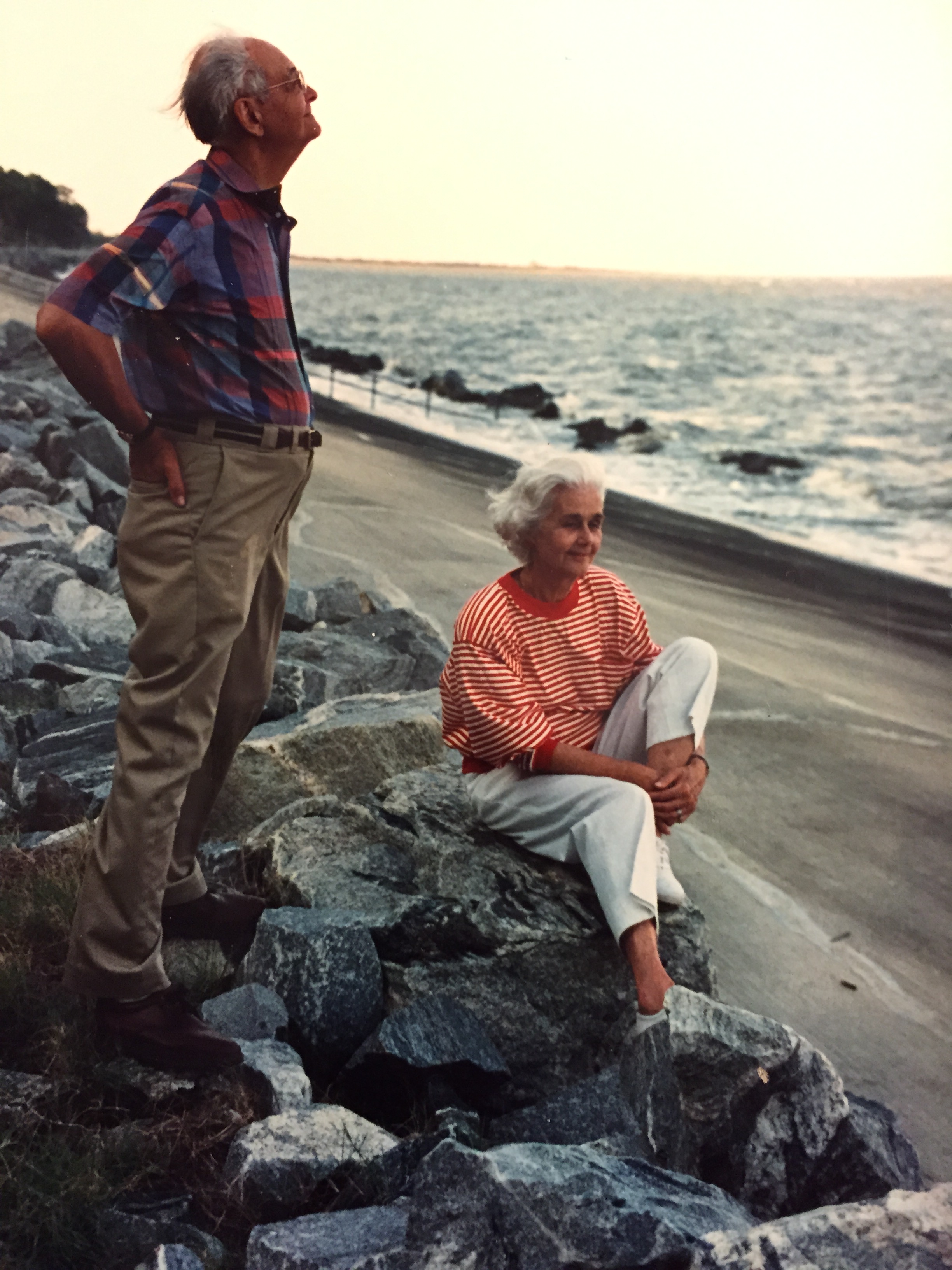
Mom and Dad in the early 1990s. Their children and grandchildren were gathered just behind the rocks.
Mom and Dad in the mid 1990s. Their six children and upwards to fifteen grandchildren–the family my father dreamed of–were gathered just behind the rocks.
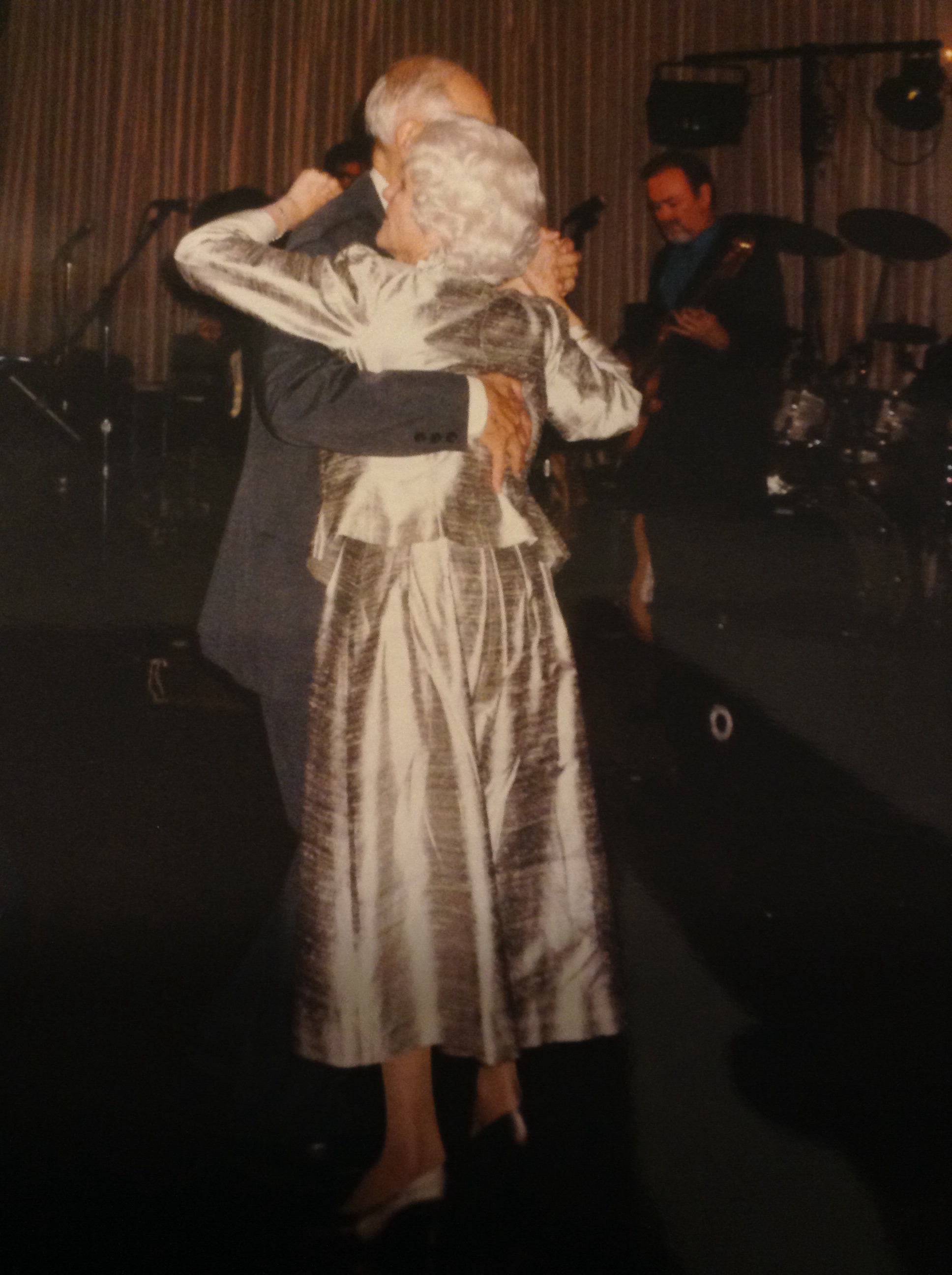
Perhaps their last dance, at my nephew's wedding in 2001.
Perhaps their last dance, at my nephew’s wedding in 2001.

… Though I dream in vain
In my heart it will remain
My stardust melody,
The memory of love’s refrain.

Stardust Memories

IMG_2887
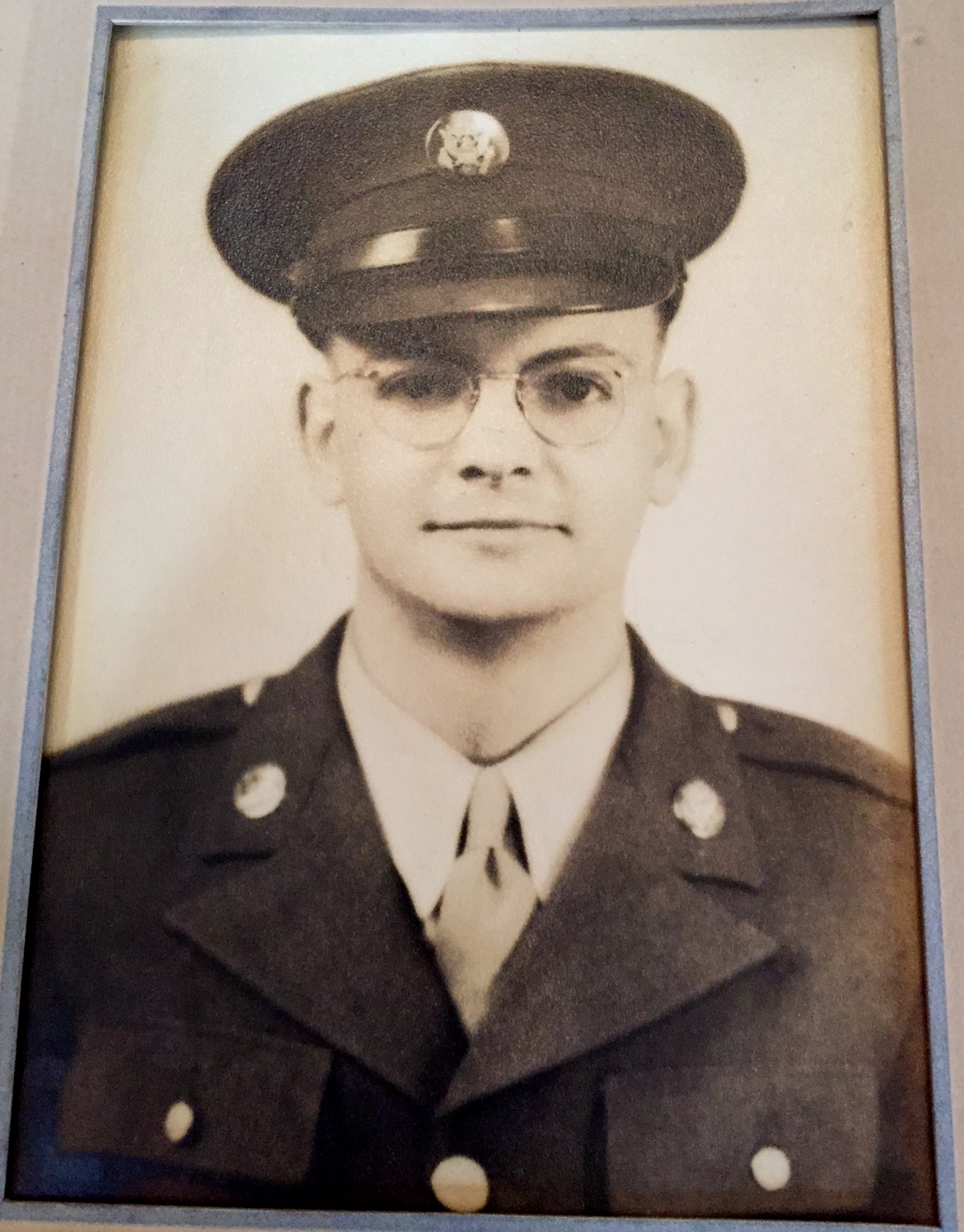
My father in his Army Dress, circa 1943

Meet my father–orphan, teetotaler, puller-up of bootstraps. WWII Veteran, Laundromat owner, Roman Catholic, one-eyed tennis ace. Successful man of business, devotee of Big Band music, swing dancer, and apparently, a closet romantic.

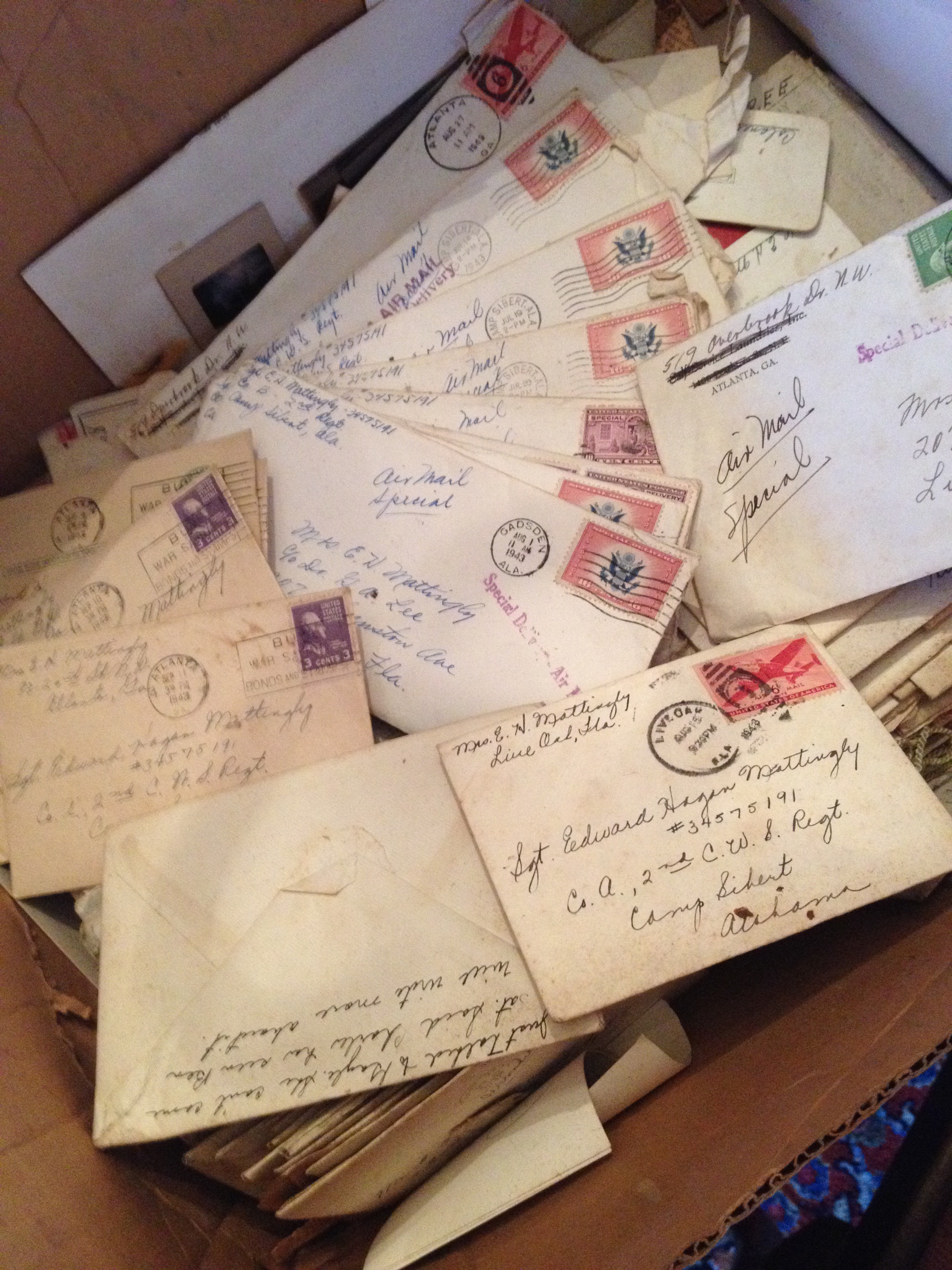
With Valentine’s Day on the horizon, it seemed high time I opened a few of the hundreds of letters we’ve found stashed willy-nilly in rotting cardboard under the attic eaves. There’s quite an array–notes from my grandparents to my mother, my mother to my aunt, my father to his aunt, my sister to my mother and my brothers and me and vice versa, my best friends to me and my cousin to my mother and back to their father. Then, take all these fine folks and shuffle them in whatever permutation you like, and I’d bet a crisp dollar my mother’s attic houses some sort of missive between them. It’s overwhelming, the reams of yellowed paper and the lines and lines of grimy print, overwhelming and dear and on some other day, I’ll fret over how sad it is to think our grandchildren won’t even know what they’re missing. Or will they? Maybe they’ll get a hankering to jet through cyberspace in search of our late children’s texts and Instagrams. At least their hands will stay dust-free, carpal-tunnel notwithstanding.

My Parents' Wartime Correspondence
My Parents’ Wartime Correspondence
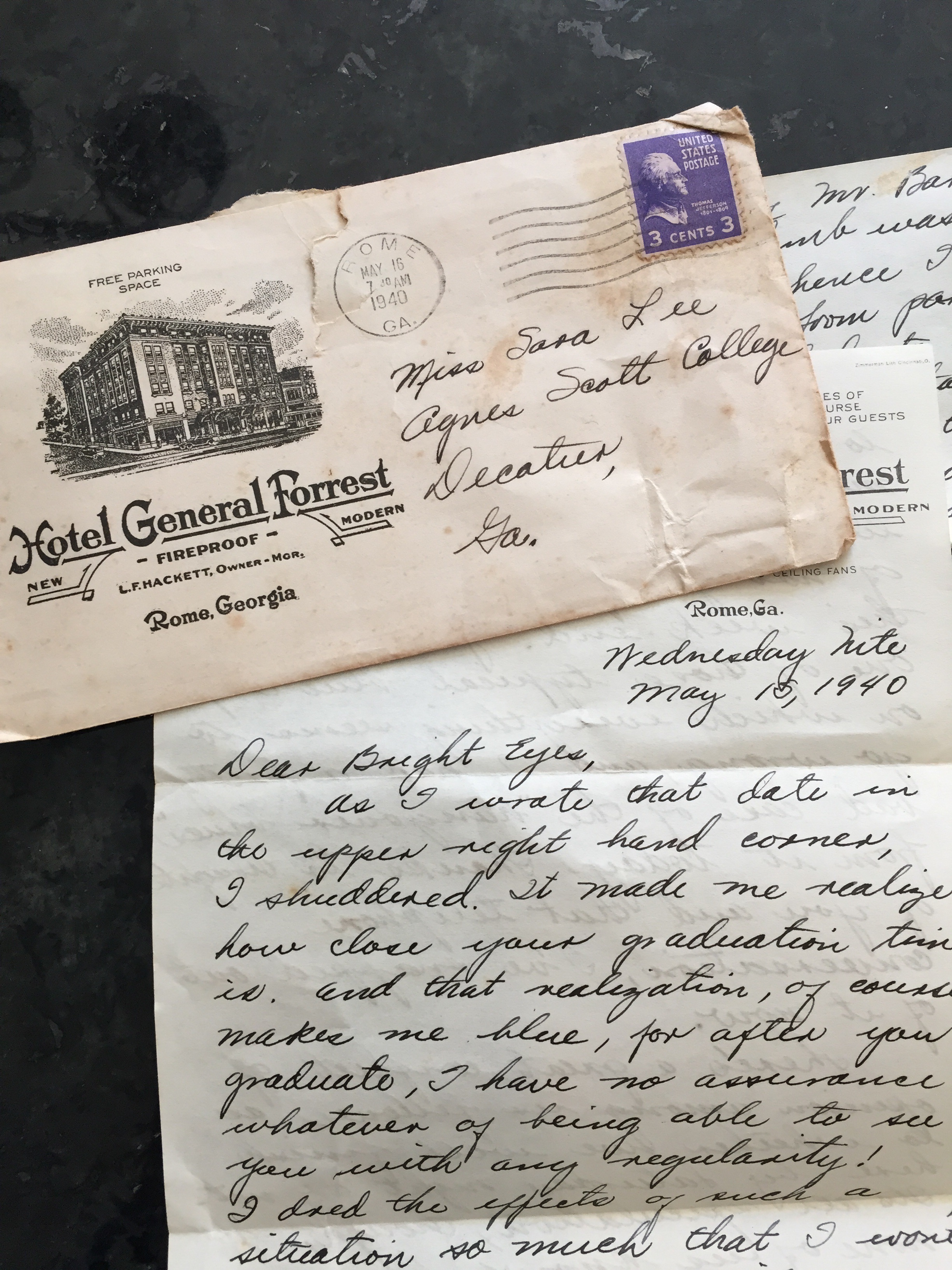
May 15, 1940, from the Hotel General Forrest in Rome, GA, to Agnes Scott College
May 15, 1940, from the Hotel General Forrest in Rome, GA, to my mother at Agnes Scott College in Atlanta

Where was I? Looking for love, actually, and for better or worse, I found it. It’s a little strange, in a mostly good way, to discover the people our parents were before we existed. For me as the youngest of six, born when my father was 46 and my mother 41, reading letters they exchanged in their twenties is a little dizzying. By the time I grew old enough to consider them a couple, my parents seemed like genial companions, loving with us and caring with each other but never showy. No PDA in our house! My sister, their first-born, confirms that though devoted to each other, they were reserved even in their youth. So imagine my surprise to read this letter my father penned six weeks before his wedding day, from The Eagle Hotel in Concord, New Hampshire, where he was on business with the Coca Cola Company–

In case you didn’t know–I’m in love with you, Young Lady! There’s something in my heart that keeps saying, Sara, Sara! I want to have you as my own, to make you happy, to love you the rest of my days! That voice rules me. I’m helpless under its spell–and terribly happy in being so!

Dad had a rough childhood. He lost his mother at four to the 1918 flu epidemic. His father, a sweet man when sober but mean when not (which was all too often) wasn’t up to raising three kids. Dad’s baby sister was sent to a convent, my father and his older brother to an orphanage, until the day his spinster aunt stepped in to adopt them, making do on her secretarial salary even through the Depression years, which hit, and hard, when Dad was a teenager. Yet somehow, my father emerged level-headed, steady as she goes, bound and determined to build his American dream, along with the stable family he never had.

But gushing with love?!? No, not him! And yet …

October 4th, 1941, five weeks shy of the wedding, from the Stratfield Hotel in Bridgeport, Connecticut–

I can see myself racing to catch the train. Everyone will wonder why I appear so excited. They would be, too, if they were going home to make final arrangements for marrying the loveliest, the sweetest, the grandest, the most wonderful girl in the world! (Pardon my exuberance–you see, I’m in love!). My mind will be glued on one thing–you–on the vision of your face, the sound of your voice, as you whisper in my ear that you love me! When I drive in at 207 Helvenston Street, you had better watch me! I’ll be so happy at seeing you I might sweep you in my arms and kiss you right there in broad daylight!

In seventeen four-page letters over the course of six weeks, often two in one day, my father thus expounded, with great urgency, on the attributes of true love (the fruits of life-long cooperation, finding the path to true happiness in each other …) My mother, oldest daughter of a small-town dentist, was home with her parents in north Florida, busy planning their big day. He addressed her as her My Sweetie and My Dearest and Bright Eyes (that one stuck), and he signed off as Matty, or Your Own Devoted, Ed. My mother answered, in more practical and compact prose, by confirming her devotion then moving quickly to the details of the ceremony. In fact, there’s an anxiety between the lines in these letters, one that had to do mostly with religion.

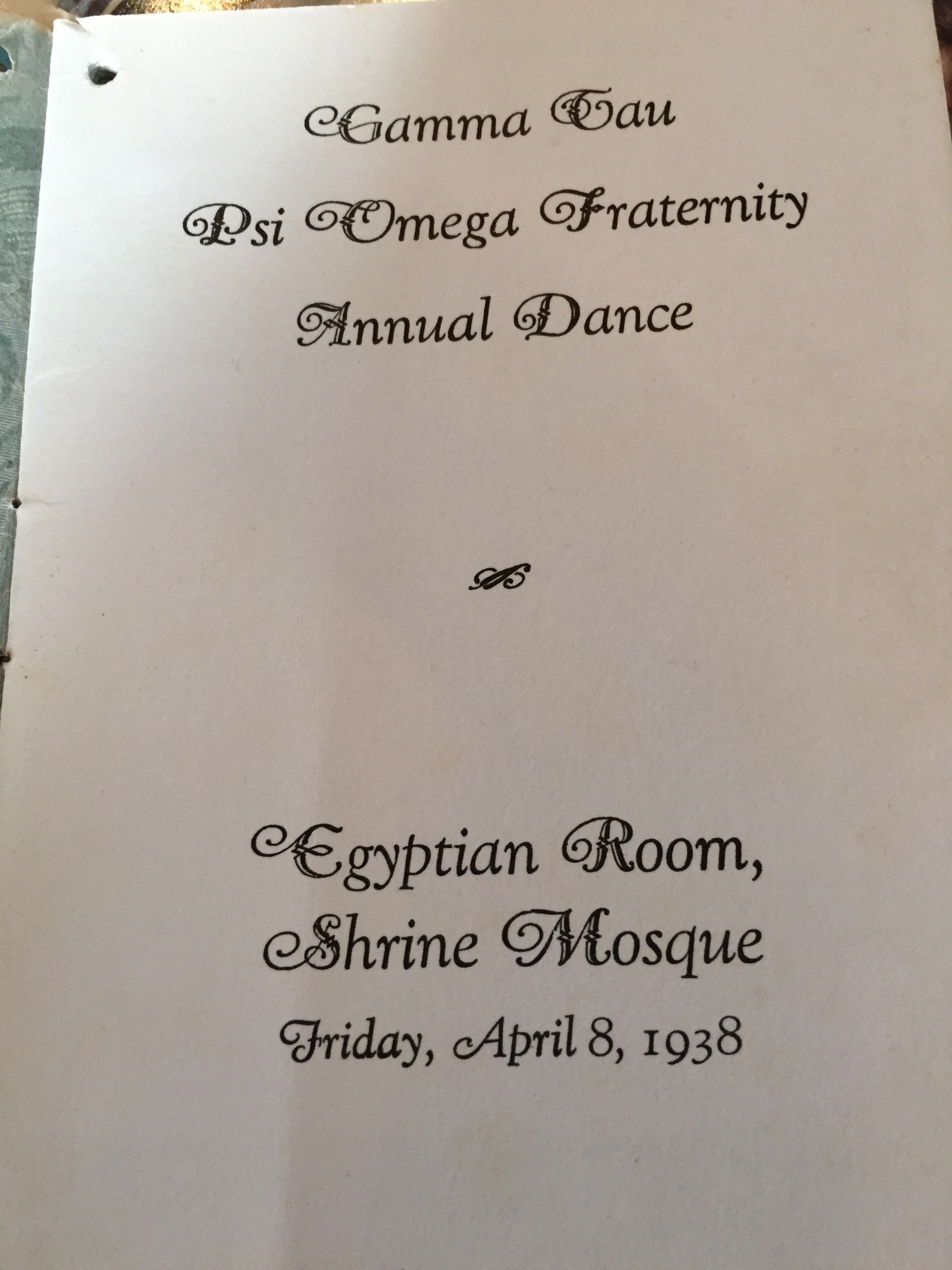
My mother was raised Southern Baptist, my father, Catholic. They met at a fraternity dance in Atlanta, Mom a freshman at Agnes Scott when Dad was a junior at Georgia Tech (he worked for three “gap” years to pay his way). My mother loved the city and the social life. She dated lots of boys, and danced with even more, but my father was the smartest of them all. “I knew I’d never be bored with him,” she used to say.

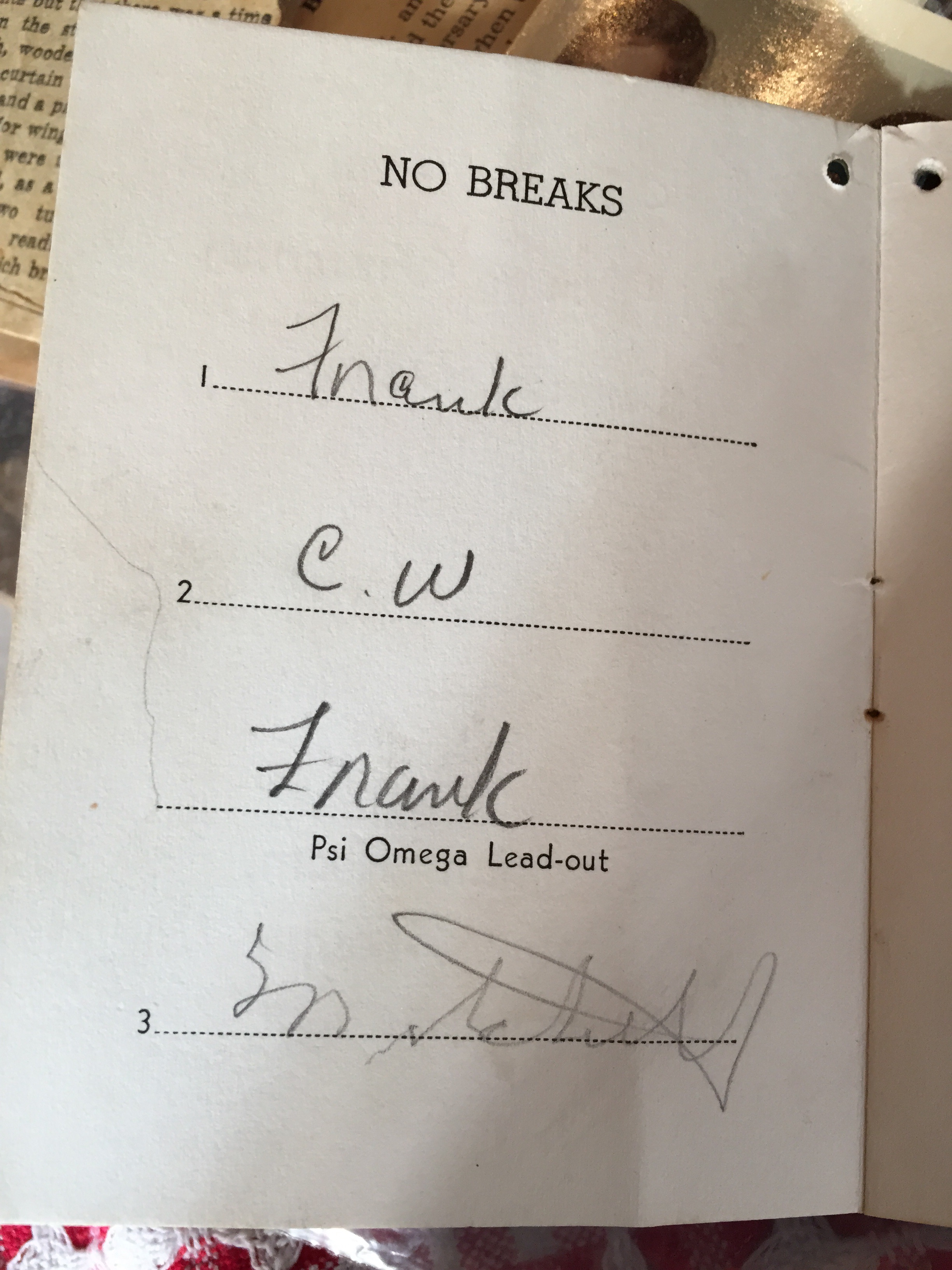
One of Mom's Dance Cards, April 8, 1938
One of Mom’s Dance Cards, April 8, 1938
And the line-up … Frank seemed a bit smitten. She kept a few of his letters, too.
And the line-up … This Frank was a bit smitten. She kept a few of his letters, too.

Though my Baptist grandparents liked my father, they didn’t cotton to Protestant and Catholic commingling. They would eventually come around, but thornier problems arose. There was no Catholic Church for miles. This was the Bible Belt. An itinerant Catholic priest made his rounds through town maybe once a month, but he was less than dependable and say they could get him there–where was there? Would they marry in the high school auditorium? The courthouse? The local 4H? Or maybe outdoors? The wedding date was set for November 8th, the announcements ordered, but this was north Florida. You couldn’t trust the weather.

My father, who loved little better than a clear blue day, wasn’t worried.

November 1st, 1941, from his aunt’s apartment in Atlanta—It looks like I was a bit off in my prediction about the full moon. Tonight, old man moon is almost full. He will have grown to his full size by Wednesday night, but he will still be pretty Saturday night, even if he does get up later. More important than the moon is the weather in general! We can very well sacrifice the moon for two beautiful days Friday and Saturday!

Well, like my father and his moon, I’ve waxed on far too long today. I mean, you know the ending, right? So go take a spin around the dance floor this Valentine’s Day Eve, and feel free to tune in tomorrow to learn how ol’ Matty manages to win his best girl.

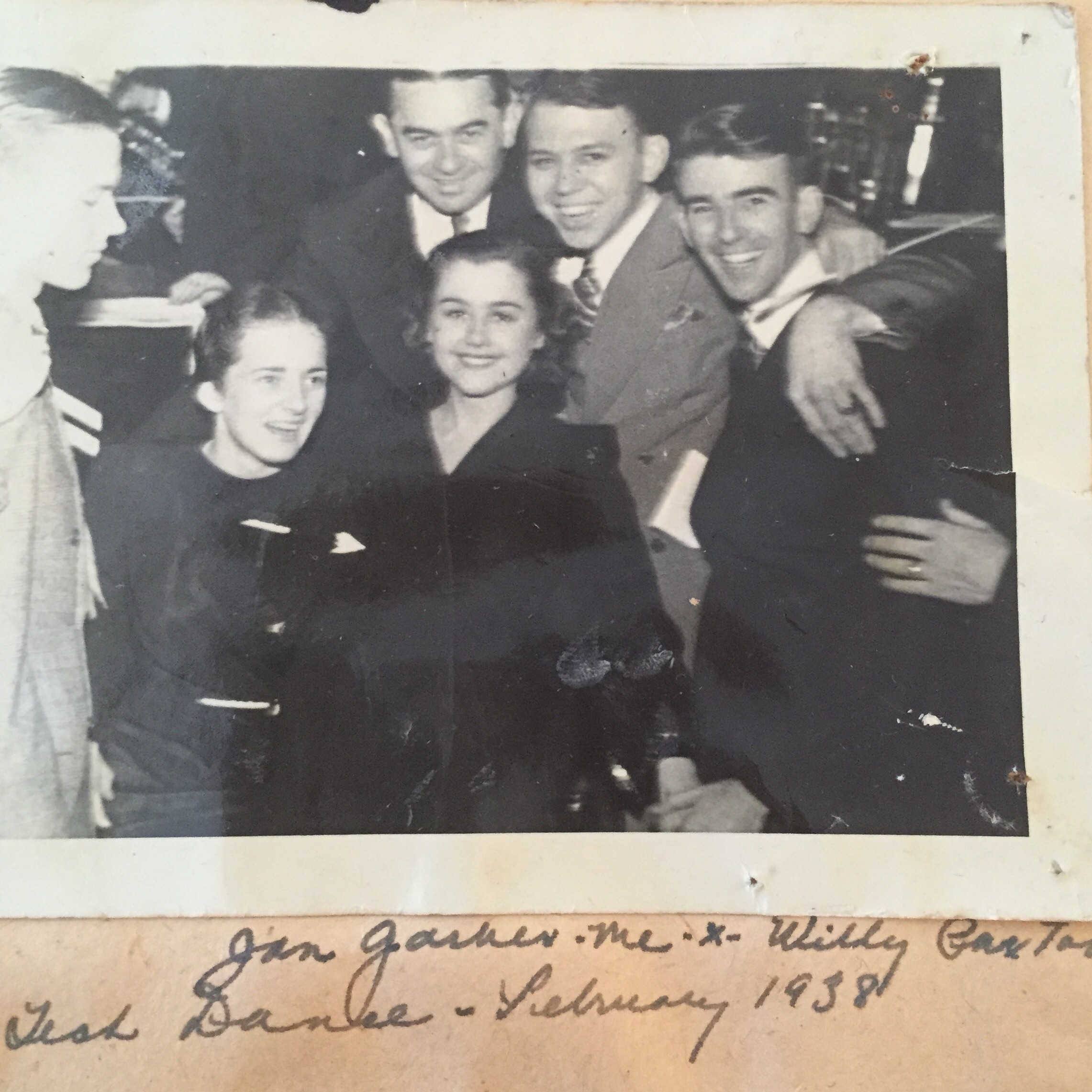
Sara Lee and her gaggle of guys
And with a gaggle of guys, all not my father
image
Mom on the right, beaming up at a chap named Billy Paxton
Dad with someone not my mother!
Dad holding his own